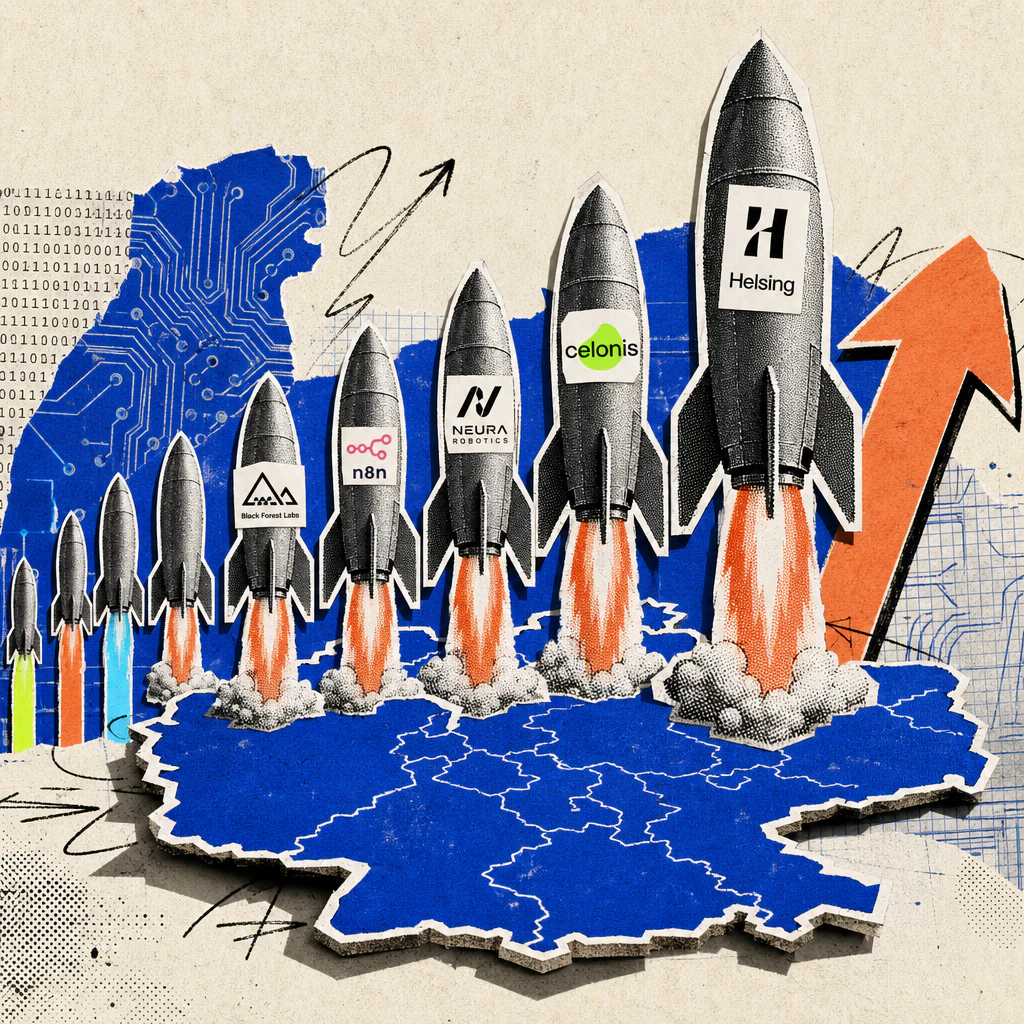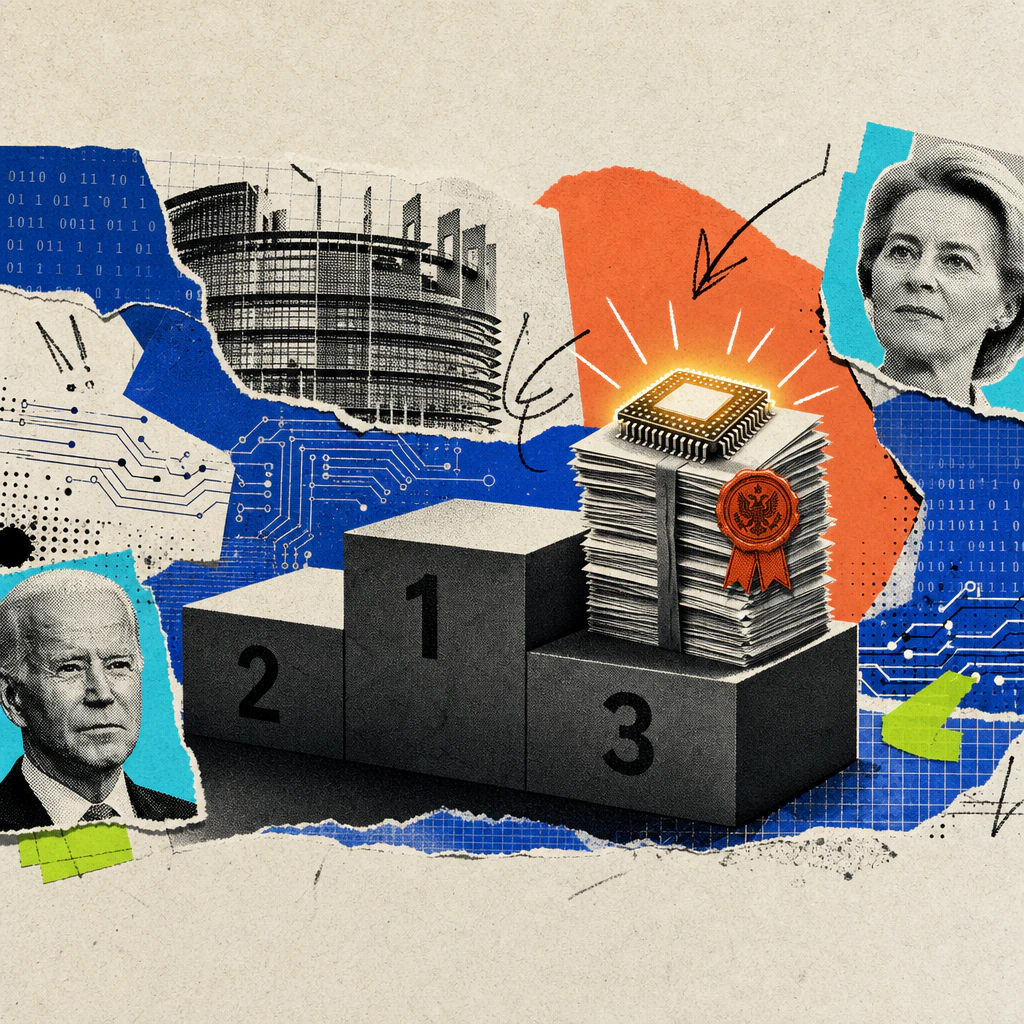
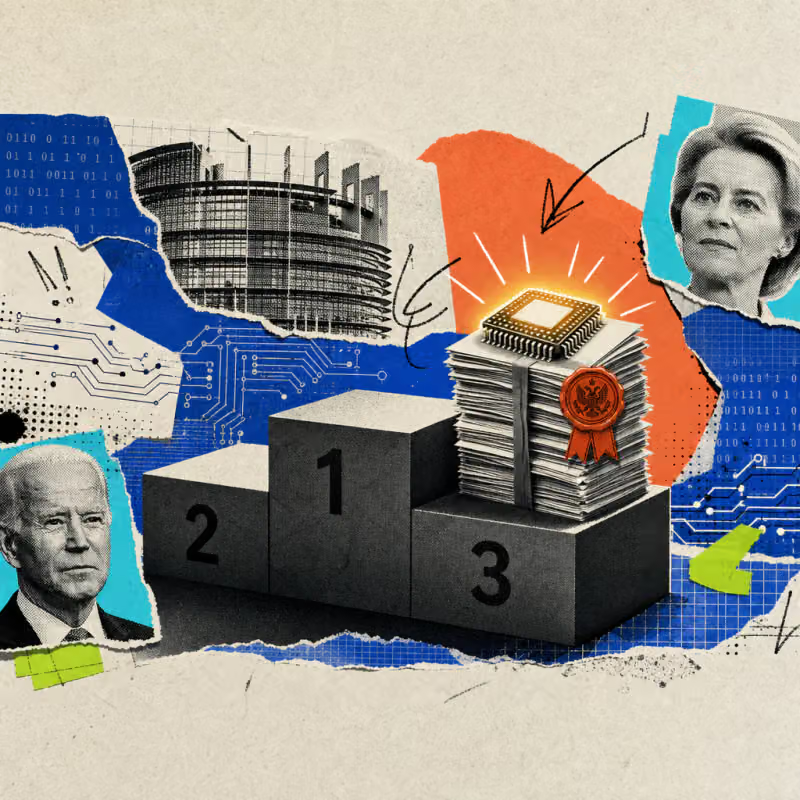
Digital Minister Karsten Wildberger formulated a new interim goal for German AI policy on August 25, 2026, during the cabinet retreat of the federal government in Neuhardenberg: third or fourth place in the global ranking instead of a claim to the top position.
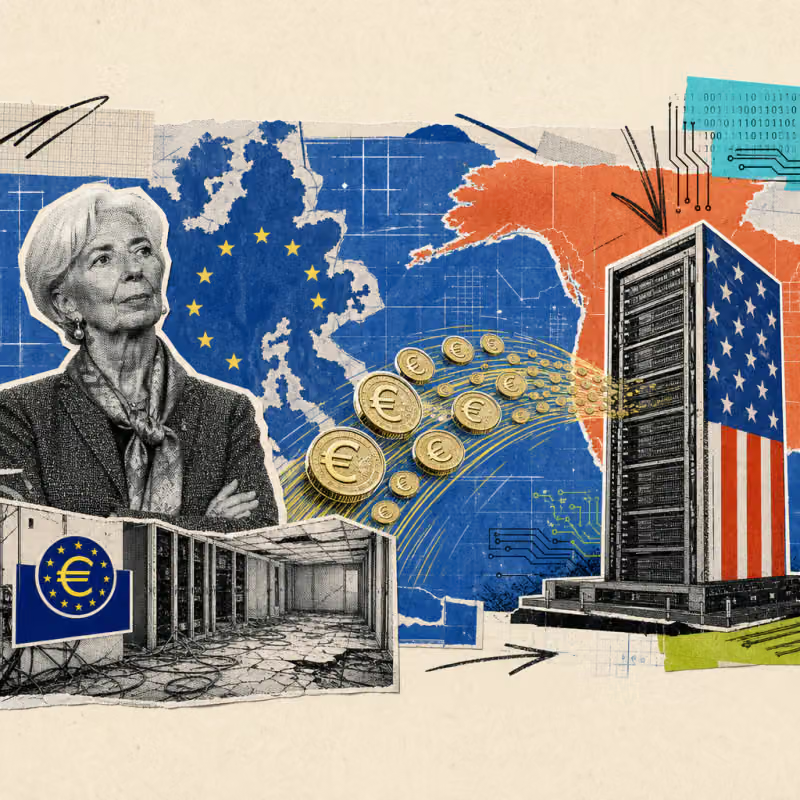
The basis is the large gap to the AI base models from the USA and China.
Government Links AI to Economic Course
The two-day retreat at Schloss Neuhardenberg on August 24 and 25 was themed around competitiveness, growth, and bureaucracy reduction; artificial intelligence was one of the three focal points. Chancellor Friedrich Merz, Vice Chancellor Lars Klingbeil, and Interior Minister Alexander Dobrindt gave a positive assessment of the discussions, according to the press release from the federal government.
As external guests, Siemens CEO Roland Busch and Cohere CEO Aidan Gomez advocated for stronger industrial AI usage; Research Minister Dorothee Bär described innovation policy as future-proofing for the country's technological sovereignty.
The Federal Criminal Police Office and Customs demonstrated their own AI applications at the retreat, including an app for automated identity checks; the company Tytan Technologies additionally showcased drone technology.
The demonstrations were meant to show that AI is already in practical use at security agencies, not just announced. Wildberger's interim goal is a political assessment by his own ministry, not an independently verified placement in a recognized AI ranking; no such ranking for countries exists yet in a comparable, widely accepted form.
The minister justified the shift with the technological lead of the two leading AI nations in powerful base models.
Wildberger Warns Against Comfortable Excuses
"It's not always just about being number one," Wildberger said, according to a report by the news agency Reuters.
An overly ambitious goal risks becoming a comfortable excuse not to even attempt catching up. As the world's third-largest economy, third or fourth place is a good interim goal, he said.
As evidence that catching up is possible, Wildberger pointed to China, which closed the gap to the USA despite having fewer resources. Why should that not also succeed for Europe and Germany, he asked rhetorically.
The minister also cited closer cooperation with partners in France and Canada as a way to pool European strength, without giving further detail on the cooperation. He sees particular strengths in the industrial application of AI systems, for instance in manufacturing, mechanical engineering, and the automotive industry – sectors where German companies have traditionally led and where the gap in pure AI base models is easier to close.
For German AI policy, the new target marks a shift in yardstick: success will increasingly be measured by industrial benefit rather than the size of homegrown AI base models.
Gigafactory Bid Aims to Narrow the Gap
Alongside the strategic realignment, the federal government is sticking with its bid for one of up to seven European AI gigafactories, for which it raised its funding share to one billion euros in August.
Each gigafactory is meant to bundle around 100,000 AI chips; the EU expects total investment of more than 30 billion euros, at least 20 billion of it from private sources. The EU tender's application deadline ends on November 12, 2026, with the European Commission expected to decide on site allocation in early 2027.
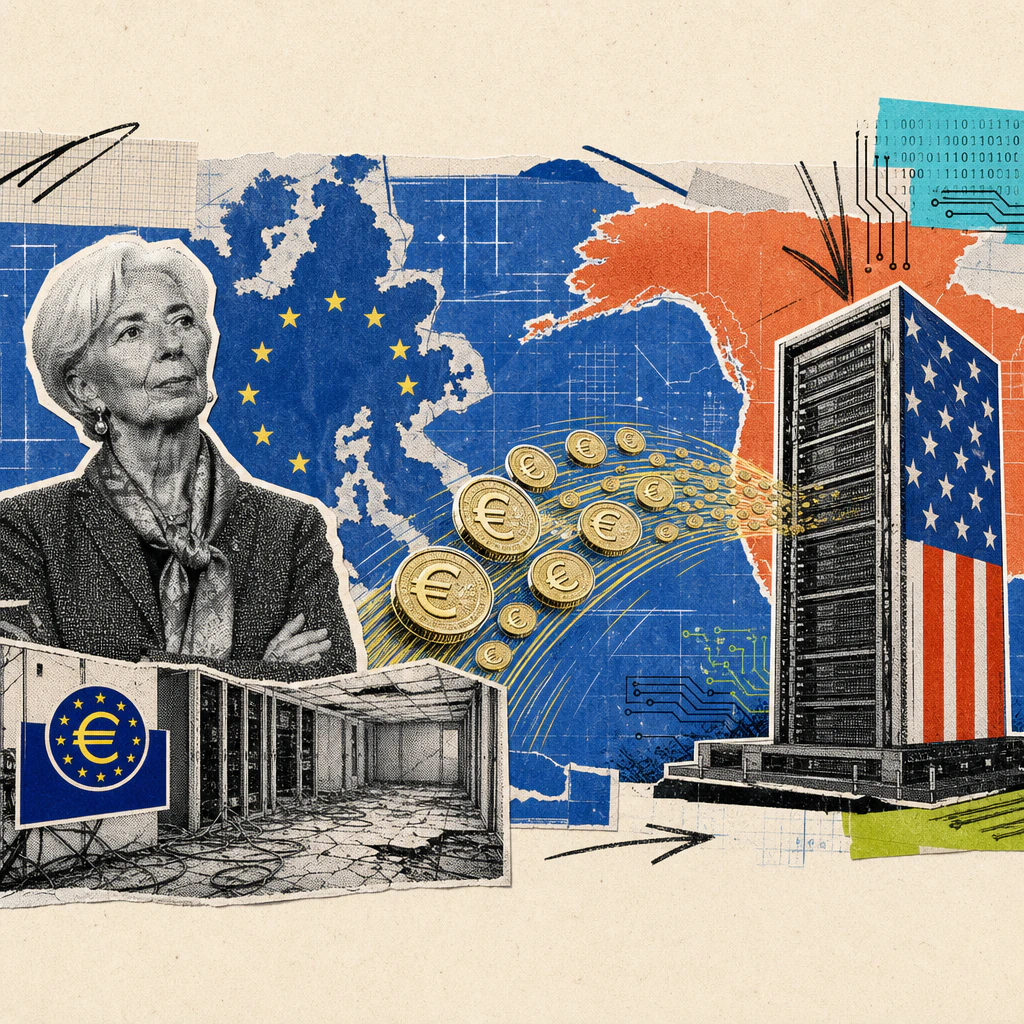
The tender complements the existing EuroHPC supercomputer network and aims to strengthen Europe's technological independence from American and Chinese providers.
An earlier joint German bid had already failed over conflicting corporate interests; Telekom, Ionos, and the Schwarz Group have since filed separate applications, while Bavaria is independently promoting a site in Schweinfurt.
Wildberger's ministry is now pushing to narrow the gap through targeted infrastructure funding rather than homegrown AI base models – a course that may not close the distance to the USA and China but aims to strengthen industrial application.
What will matter is whether the new target translates into verifiable metrics or remains mere expectation management. The interim report from the federal government's AI task force, set up in July and due at the end of August, should offer the first indications of which concrete measures Germany plans to reach third or fourth place.