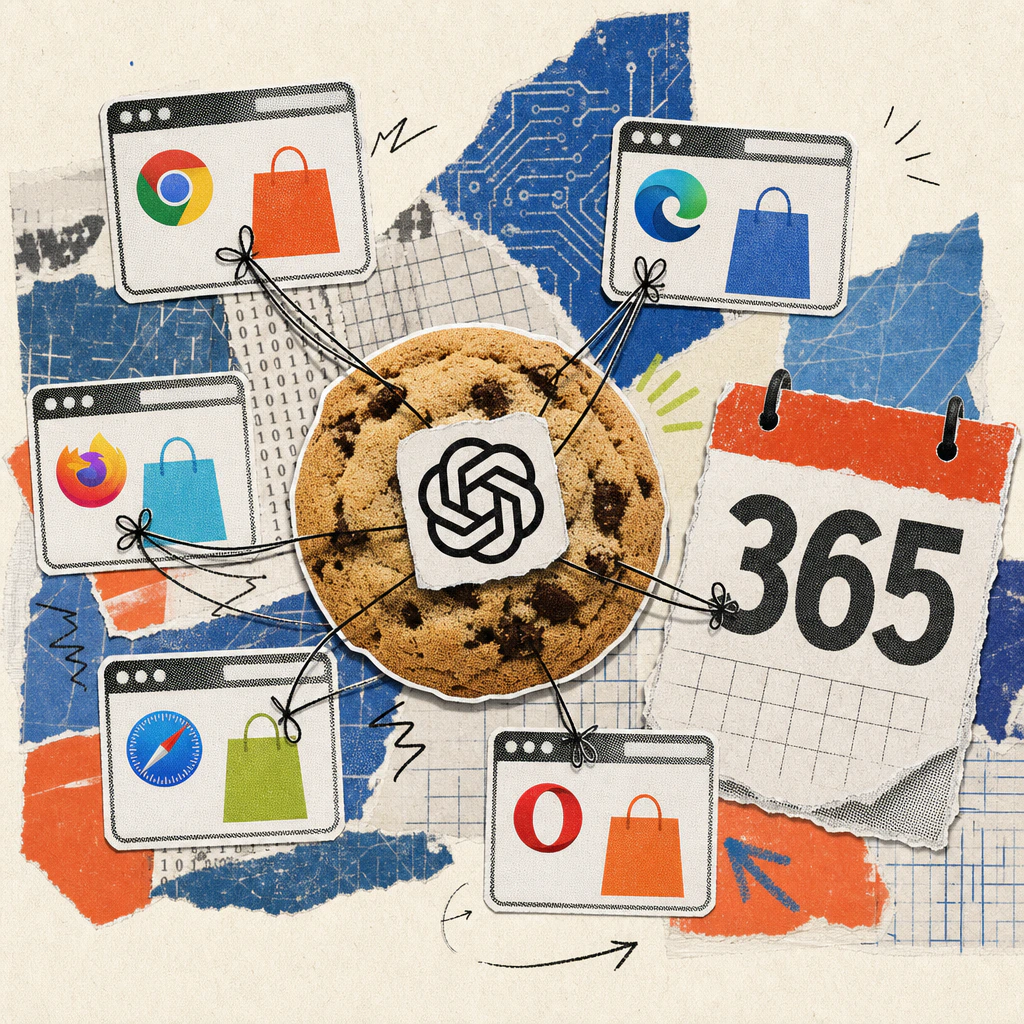
Update, September 22, 2026: An independent analysis shows that a tracking cookie called "__obi" links user activity on advertising partner sites to a ChatGPT account for up to a year – classified by OpenAI as an analytics rather than a marketing cookie.
Update, September 17, 2026: OpenAI has further expanded its advertising business, testing a new conversational ad format called Sponsored Agents in ChatGPT – initially only in the USA – along with new integrations for HubSpot and Shopify.
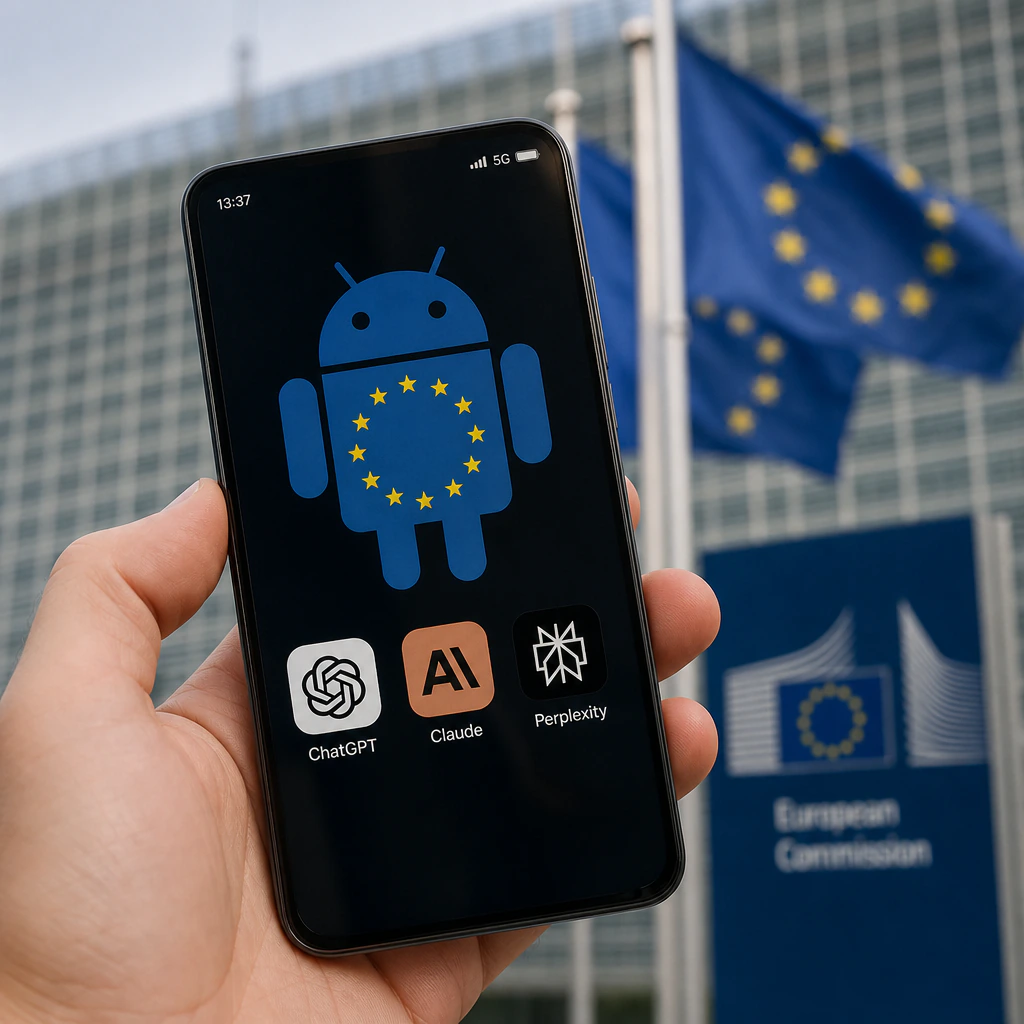
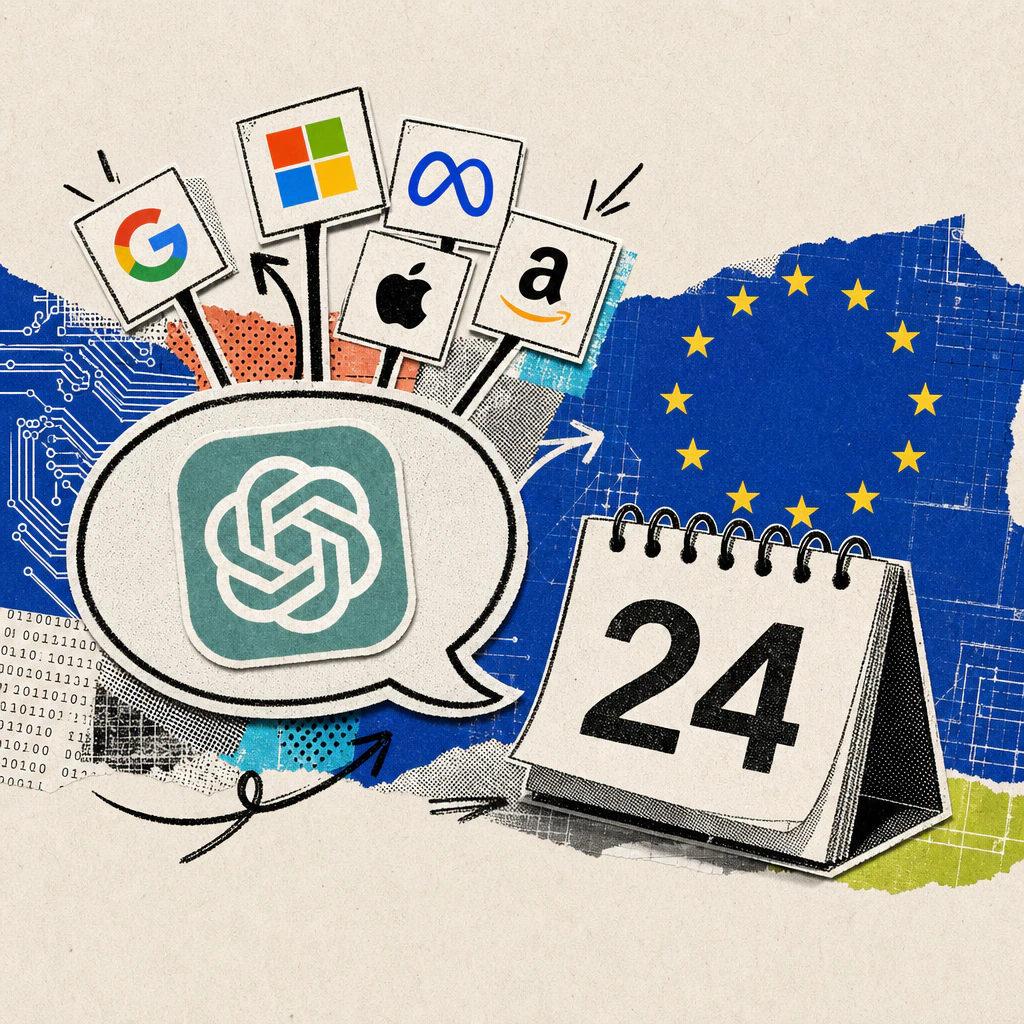
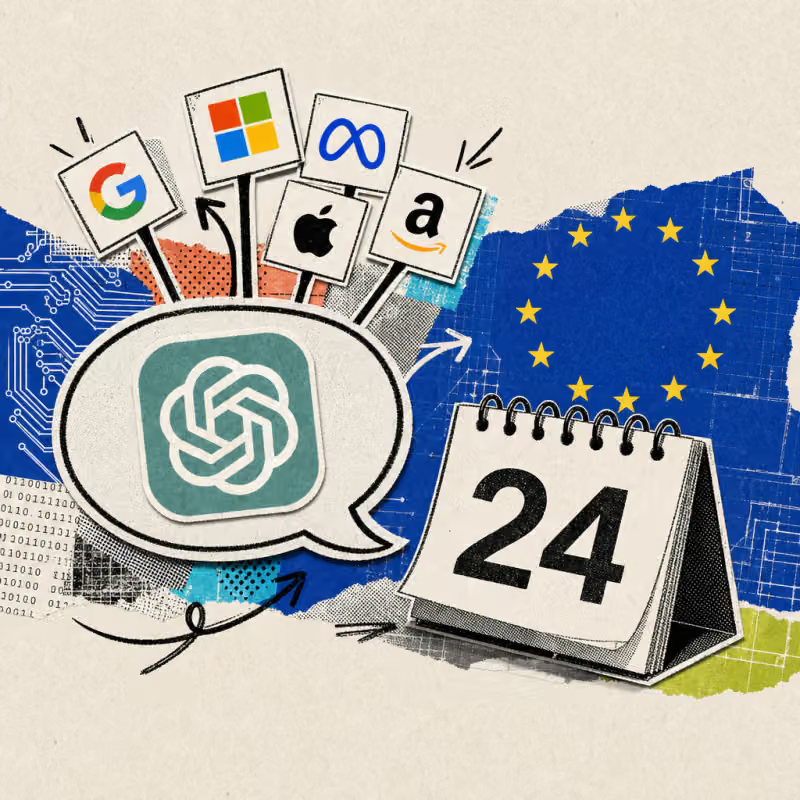
OpenAI will turn on ads in free ChatGPT starting Monday, August 24, 2026, for 31 European countries – after the vague mid-August announcement, this marks the first fixed date. Only the Free and Go plans are affected, while Plus and Enterprise accounts remain ad-free.
According to OpenAI, ad revenue has already grown 25 percent since early August.
31 Countries Gain Access to Ads on Monday
The 31 countries include, according to OpenAI, Germany, France, Spain, Italy, and Austria, as well as the Benelux and Scandinavian countries; the company has not yet published a complete list of all 31 names.
The rollout is said to be OpenAI's largest geographical ad expansion to date, raising the total number of served markets worldwide to 40, following the February 2026 launch in the US and the gradual expansion to the UK, Mexico, Brazil, Japan, and South Korea.
Ads will appear only in the Free (no cost) and Go (eight dollars a month) plans; anyone on Plus, Pro, Business, Enterprise, or Education will continue to see no ads. As already promised in the mid-August announcement, ad selection at launch runs without personalization: OpenAI uses only the conversation topic, a rough location, and device type, while past chats and saved memories stay out of the mix.
Ads are said to be clearly labeled and separated from ChatGPT's actual answers; advertisers reportedly get no access to individual conversations, and ad selection does not influence the chatbot's answers.
Ad Revenue Grows Ahead of Planned IPO
OpenAI's ad revenue has grown 25 percent since August 1, 2026, as Marketing Brew reports, citing a conversation with OpenAI advertising chief Colin Fleming, who has been in the role for about 80 days.
Fleming describes three parallel goals: value for end customers, usefulness for advertisers, and revenue for the company. He names knowledge workers, developers, and business decision-makers explicitly as the ad business's target groups.
Advertisers initially get access through OpenAI's in-house Ads Solutions team as well as agency and technology partners; self-service access through the so-called Ads Manager is expected to follow later this summer. The timing falls into a phase in which OpenAI is targeting an IPO for the fourth quarter of 2026, at a proposed valuation of $852 billion – independently unverified.
ChatGPT counts one billion weekly active users by the company's own prior figures, of whom, according to OpenAI, roughly a fifth show commercial purchase intent in their conversations. The ads are also meant to help fund the recently lifted message limit for free accounts over the long run.
EU Commission Reviews Classification as a Major Search Engine
At the same time as the rollout, the European Commission is examining, according to Euronews, whether ChatGPT's search function counts as a "very large online search engine" under the Digital Services Act.
That classification would kick in above 45 million monthly users in the EU and would bring additional transparency and audit obligations, similar to the requirements the EU has already placed on Google over AI rivals.
The review is part of a broader series of EU proceedings against large AI providers. Whether ChatGPT has already crossed that threshold remains unclear; OpenAI has not commented publicly on it so far.
Advertising is also governed by the European Data Protection Board's opinion 08/2024 on so-called consent-or-pay models, which bars companies from forcing users to either accept personalized ads or pay – one reason Europe gets the ad launch only after seven other markets and starts without personalization.
OpenAI Ireland Limited, based in Dublin and supervised by the Irish data protection authority, remains responsible; individual usage data for ad selection is said to be deleted after at most 30 days.
Whether Europe's reluctance on personalized advertising will mean permanently lower revenue per user than in the US, where OpenAI could work with more data from the start, remains open. It will also be decisive whether the Commission actually classifies ChatGPT as a very large search engine – a step that would bring further audit and reporting duties for which OpenAI has not yet given a timeline.