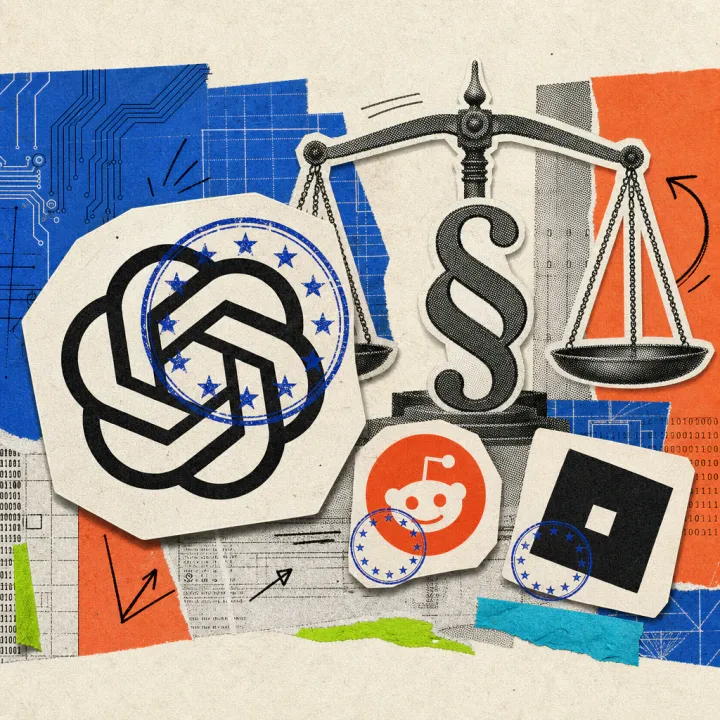
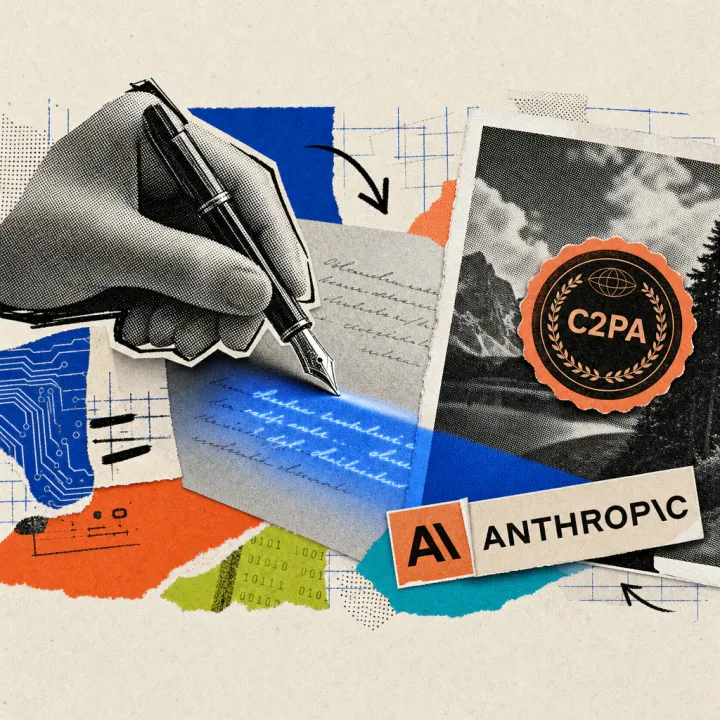
As of today, August 2, two independently enacted but deliberately simultaneous labeling obligations for AI content take effect in the EU and California. In the EU, violations of Article 50 of the AI Regulation face fines of up to 15 million euros; in California, large AI providers must now offer a free detection tool for AI content.
EU Regulation Requires Machine-Readable Labeling
Article 50 of the AI Regulation has been in force since August 2024 but only becomes directly applicable and enforceable as of today’s deadline. As beckmann.ai reported in July, chatbots must be clearly identifiable to users as non-human. Providers of generative AI systems must also ensure that synthetically generated image, audio, video, or text content carries a machine-readable label. Deepfakes and AI-generated text on topics of public interest additionally require a label visible to humans, unless a person bears editorial responsibility.
Anyone operating AI systems for emotion recognition or biometric categorization must also inform affected individuals. The European Commission published final guidelines on Article 50 on July 20, 2026, to give authorities and providers a uniform interpretation. The so-called Digital Omnibus postpones high-risk obligations to 2027 and 2028 but leaves Article 50 untouched. Only for systems already on the market before the deadline does the machine-readable labeling obligation carry a transition period until December 2, 2026. Violations face fines of up to 15 million euros or three percent of global annual revenue.
California Law Requires an Additional Detection Tool
At the same time, California’s AI Transparency Act (SB 942) becomes effective. The law was originally set for January 1, 2026; AB 853, signed by Governor Gavin Newsom in October 2025, explicitly pushed the start date to August 2, 2026 – the same day as the EU rules. It covers so-called Covered Providers: providers of generative AI systems with more than one million monthly users in California. According to legal analyses, the law effectively captures nearly every major provider – from OpenAI and Google to Meta and the music service Suno, which was also found liable in a Munich court for copyright infringement. California publishes no official list of covered companies; the specific assignment is independently unverified.
California’s rules require a freely accessible detection tool that can identify AI-generated image, audio, and video content. Providers must also offer a visible label and embed a latent marking within the content itself. Per the statutory text, these duties also extend to licensees who merely reuse third-party AI systems – so responsibility reaches beyond the original provider. Starting January 1, 2027, the rule tightens further for generative AI hosting platforms that merely make third-party models available without developing them themselves.
Two Jurisdictions Aligned Their Deadlines
The shared deadline is no coincidence: California lawmakers specifically moved the date to align with the EU rules, as the materials for AB 853 show. Two of the world’s largest AI markets are thus adopting comparable labeling rules on the same day. Other US states are taking different paths: Illinois requires AI companies to undergo annual external security audits starting in 2027, a different regulatory approach than the pure content labeling used in California and the EU.
Internationally, the picture stays uneven. China has required comparable labeling since September 2025, while a federal AI-labeling bill remains stalled in the US Senate. The EU and California are thus the first major jurisdictions where such rules apply in parallel, each with its own enforcement power, starting today.
Whether the mandated detection tools can reliably distinguish real from AI-generated content in practice remains an open question – a technical problem that neither the EU guidelines nor the California law fully solve. The next test comes on December 2, 2026, when the transition period for EU systems already on the market ends and it becomes clear how strict the first inspections really are.