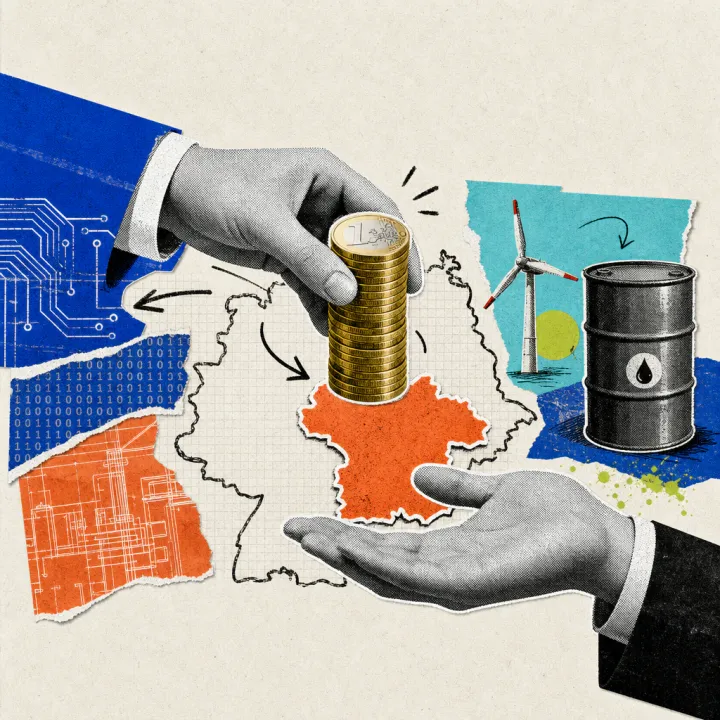
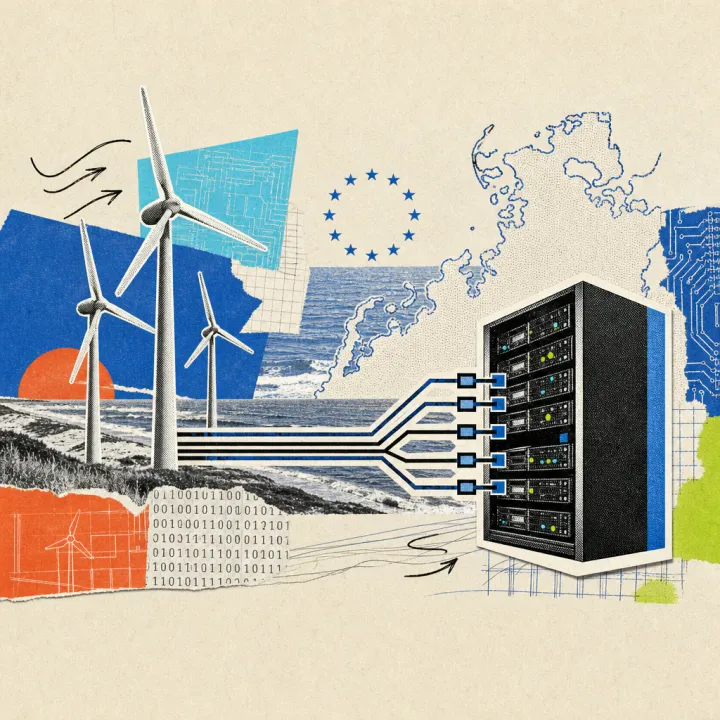
The federal government is increasing its funding commitment for a German AI gigafactory by around 200 million to one billion euros. This was announced by the Federal Ministry of Research according to a report by the news agency dts on August 7. The additional funds come from the special fund for infrastructure and climate neutrality and are intended to strengthen German applicants in the EU-wide competition for up to seven gigafactories.
The increase comes from the climate special fund
Previously, the federal government had estimated its contribution to the project at around 805 million euros. With the increase, it is adjusting the planning to the considerations at the EU level, as the ministry stated, without naming the figures of these considerations itself. The additional roughly 200 million euros will flow from the special fund for infrastructure and climate neutrality, abbreviated as SVIK, and are already included in the current budget planning. The ministry justifies the step by stating that it supports the establishment of a large AI gigafactory in Germany and emphasizes the “high ambition level of the federal government.” The ministry does not mention a separate funding amount for individual German applicants. The funds will only be disbursed when a German location is awarded the contract. The commission had only published its call for tenders a few days earlier. The total amount of one billion euros mentioned has not been independently verified so far – it comes solely from the ministry’s response to the newsletter.
The EU call for tenders for seven gigafactories has been running since July
The framework for the German funding commitment is the call for tenders from the EU joint venture EuroHPC, which opened the competition for up to seven AI gigafactories in Europe on July 30, 2026. In total, the facilities are expected to trigger investments of more than 30 billion euros: up to ten billion euros in public funds from the EU and member states, plus around 20 billion euros from private investors. Only consortia or specially established purpose companies can apply via the EU procurement portal. Individual companies are excluded. The application deadline ends on November 12, 2026, and the commission is expected to decide on the locations in early 2027. The selected facilities are to commence operations no later than 18 months after the contract is signed. For every euro of public funding, around two euros of private capital are expected to come in. EU Digital Commissioner Henna Virkkunen calls access to computing power a “strategic necessity” for Europe. We have already extensively covered the lots, participation conditions, and the unresolved chip issue of the tender here.
Several German consortia are vying for the contract
In Germany, several applicants are forming to compete for one of the coveted spots. According to research by Table.Media, consortia around Deutsche Telekom, Schwarz Digits, and Ionos are in talks. In Bavaria, the consortium Blue Swan is positioning itself with the location in Schweinfurt, and according to the ministry, two consortia from North Rhine-Westphalia are in discussions with the federal government. Research Minister Dorothee Bär (CSU) stated that it is a clear goal of the federal government for Germany to become the location of a gigafactory. “Now the consortia are called upon to assert themselves in the competition,” she said according to dts. Bär expressed confidence that strong German applications would emerge in the end and pointed out that the framework conditions had already been created by the federal government. An earlier attempt, initiated by OpenAI, for a German AI data center failed due to unresolved power supply and regulatory issues. The project is independent of the EU-funded gigafactory initiative but shows how much location decisions in Germany depend on grid connection and electricity prices.
It remains open whether the additional federal funds will be sufficient to actually compete in the European competition: of the up to ten billion euros in public EU funds, only a fraction is currently secured from ongoing programs, while the rest depends on the future EU financial framework for the years 2028 to 2035. It will be crucial which of the German consortia submits a viable offer by the application deadline on November 12, 2026 – the EU Commission intends to select the locations based on the current status in early 2027.
Update, August 31, 2026: One of the named consortia has since turned concrete: Schwarz Digits has announced its own AI data center in Dummerstorf near Rostock worth up to €5.6 billion, which also serves as its bid for one of the seven EU gigafactories.