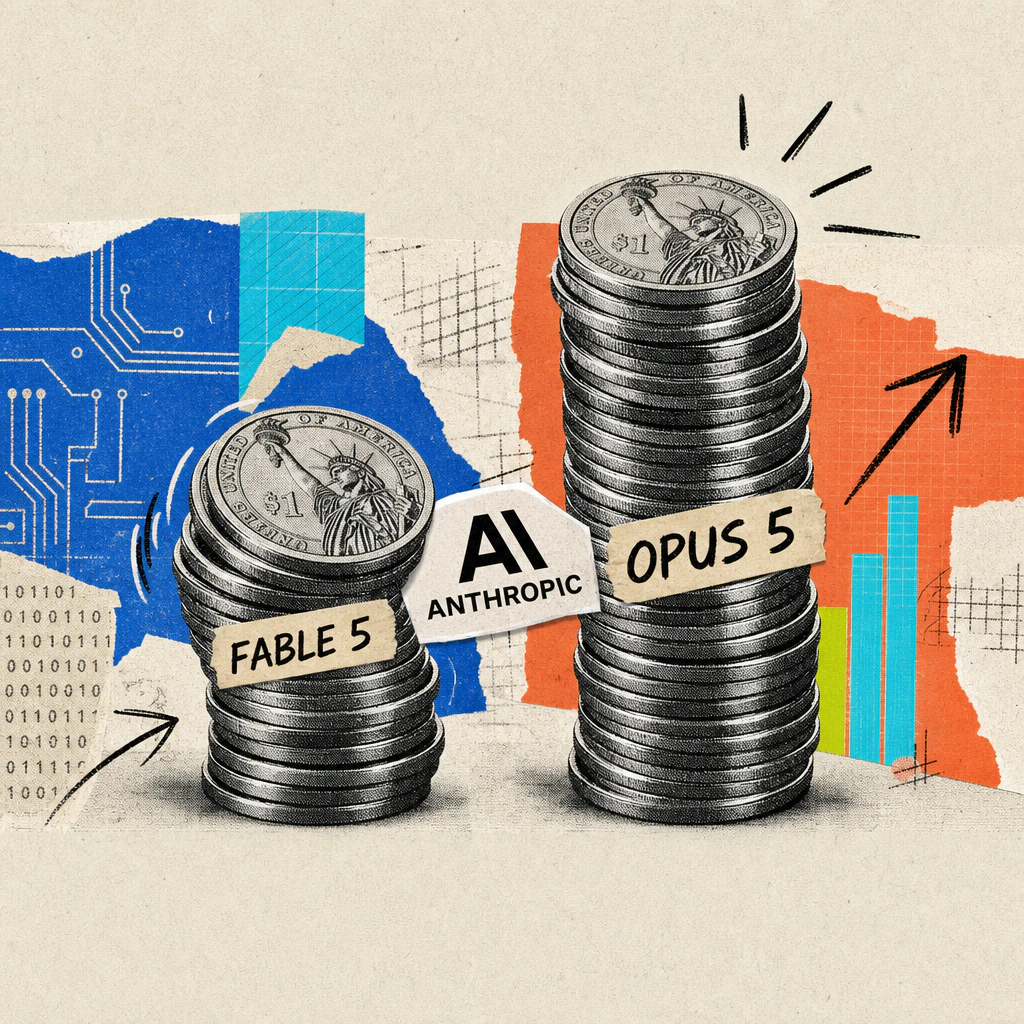
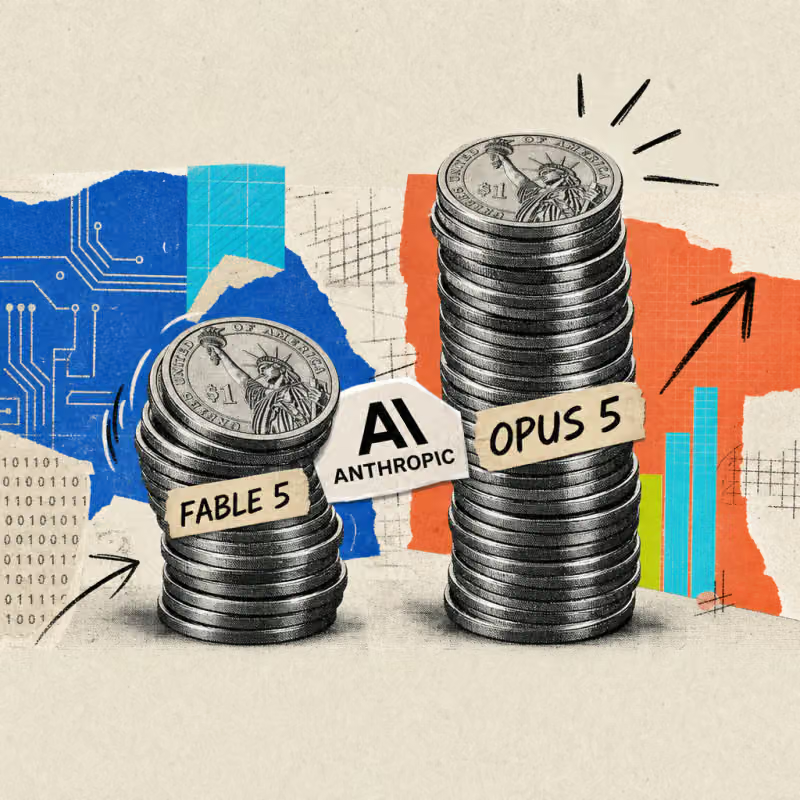
Anthropic customers are now spending more on the cheaper model Claude Opus 5 than on the more expensive flagship model Fable 5, an analysis by payment provider Ramp covering 70,000 companies shows.
Fable 5 accounts for about eleven percent of Anthropic spending, even though it represents only six percent of purchased tokens.
Fable 5 stalls at eleven percent of spending
For its AI Index, Ramp continuously analyzes payment data from 70,000 companies that book Anthropic models through its own token-spend management product. Two months after its June launch, Fable 5's share of all Anthropic costs sits at roughly eleven percent, while the model accounts for only six percent of actual token consumption — a sign that it gets booked for individual, especially demanding tasks but rarely becomes the everyday default.
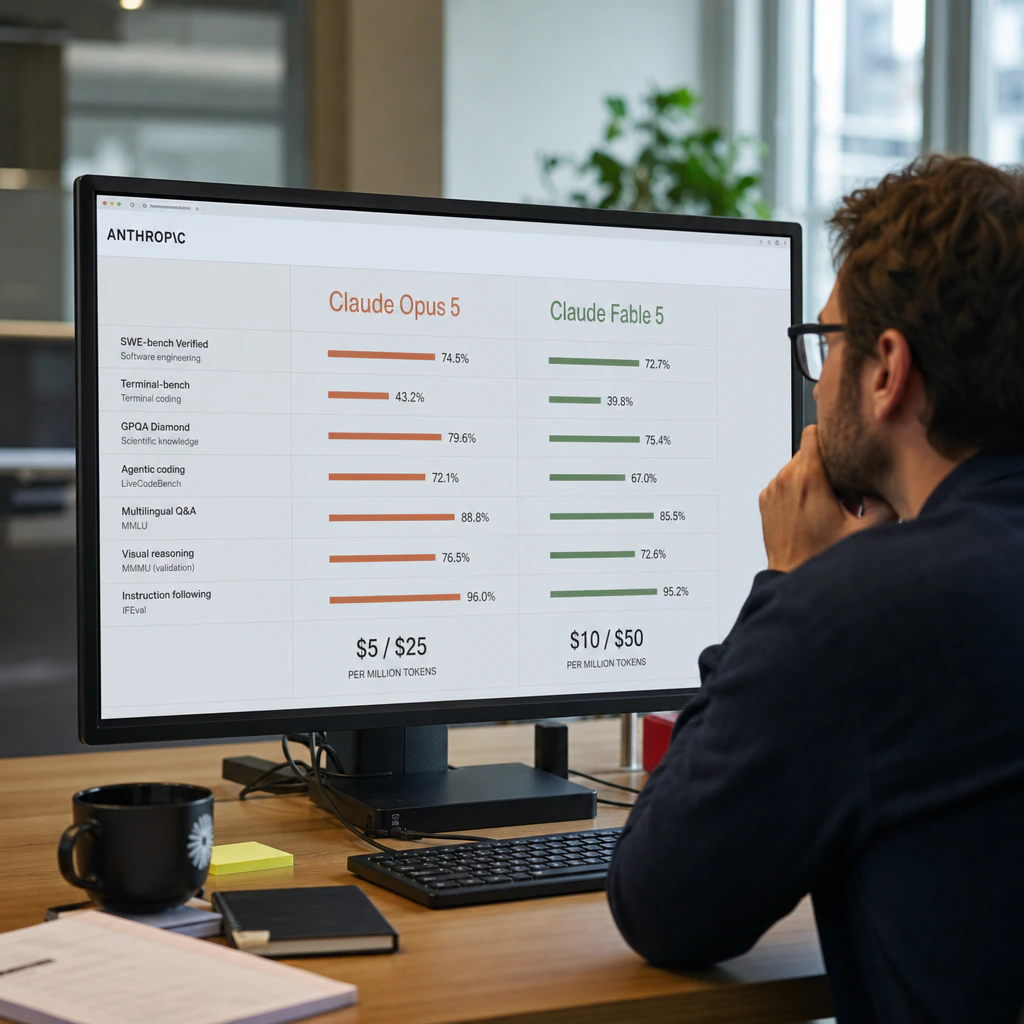
Pricing explains part of the gap: Fable 5 costs ten dollars per million input tokens and 50 dollars per million output tokens, while Opus 5 costs only half that.
Independently of Ramp, infrastructure provider Vercel confirms a similar figure through its own billing platform, where Fable 5 accounts for 13.2 percent of total model spending. In July, Fable 5 also generated only 75 percent of the revenue that OpenAI's GPT-5.6 Sol produced at roughly half the price.
Anthropic still leads among businesses overall
Fable 5's muted uptake does not mean Anthropic is losing ground overall. In July, 43.5 percent of the US companies Ramp tracks used Anthropic products, up 1.1 percentage points from the prior month — ahead of OpenAI's 39.7 percent.
Anthropic's annualized revenue rate rose over the same period from 47 to 65 billion dollars. The Fable 5 shortfall is therefore mainly about which model companies pick internally, not about Anthropic's standing against rivals.
One added friction point, according to Ramp, may be Fable 5's 30-day data-retention requirement, which Anthropic tied firmly to the pricier Max and Team Premium plans in July — a move that reversed earlier plans to discontinue the model.
Investors read the trend as a pricing test
Among investors, the shift is seen as an early test of whether AI providers can keep charging premium prices for their most capable models indefinitely. As trade outlet Implicator reports, Accel partner Miles Clements told the Financial Times that "most people don't need to operate at the frontier." The figures also echo benchmark results published in July: Opus 5 had already beaten Fable 5 in three of four comparison tests there, trailing only on multi-day autonomous tasks — an edge apparently few customers are willing to pay double for.
What matters now is whether Anthropic responds to the numbers, for instance with a cheaper Fable successor or a price cut for the existing model. For a company reportedly courting investors at a valuation in the trillions, the finding is uncomfortable: overall revenue keeps growing strongly, yet its most expensive, highest-margin model contributes only a small slice of it.