
Update, August 13, 2026: SpaceXAI has released Grok 4.6, an updated version. Pricing stays unchanged, while the model ties GPT-5.6 Sol on agentic benchmarks according to Artificial Analysis.
SpaceXAI released a new AI model, Grok 4.5, on July 8, 2026, explicitly tailored for programming and agentic tasks. The announcement comes in a week when OpenAI is also rolling out its GPT-5.6 more broadly – several frontier labs are simultaneously presenting publicly accessible models. As Axios first reported, Elon Musk announced the launch on X and positioned the model less as a consumer chatbot and more as a tool for software development.
What SpaceXAI has introduced
Grok 4.5 is the first major model release since SpaceXAI's IPO, which emerged from the xAI acquisition in February 2026. Musk describes the model as being on par with Opus class, but faster, token-efficient, and cheaper.
In internal comparisons, it is said to be roughly on the level of Anthropic's Opus 4.7 – not the latest version 4.8.
The context window encompasses 500,000 tokens, making it smaller than the previous generation; above 200,000 tokens, increased rates apply. SpaceXAI states the processing speed is around 80 tokens per second.
Price and availability
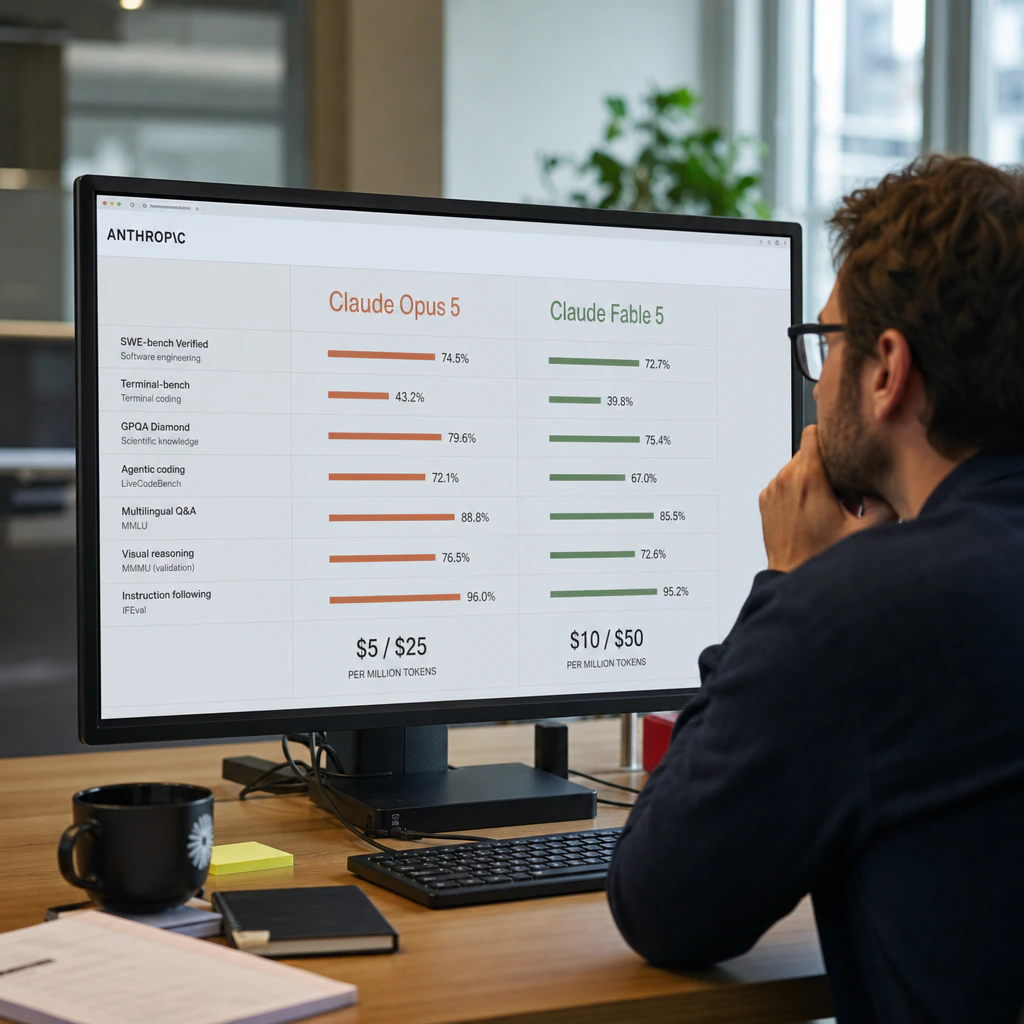
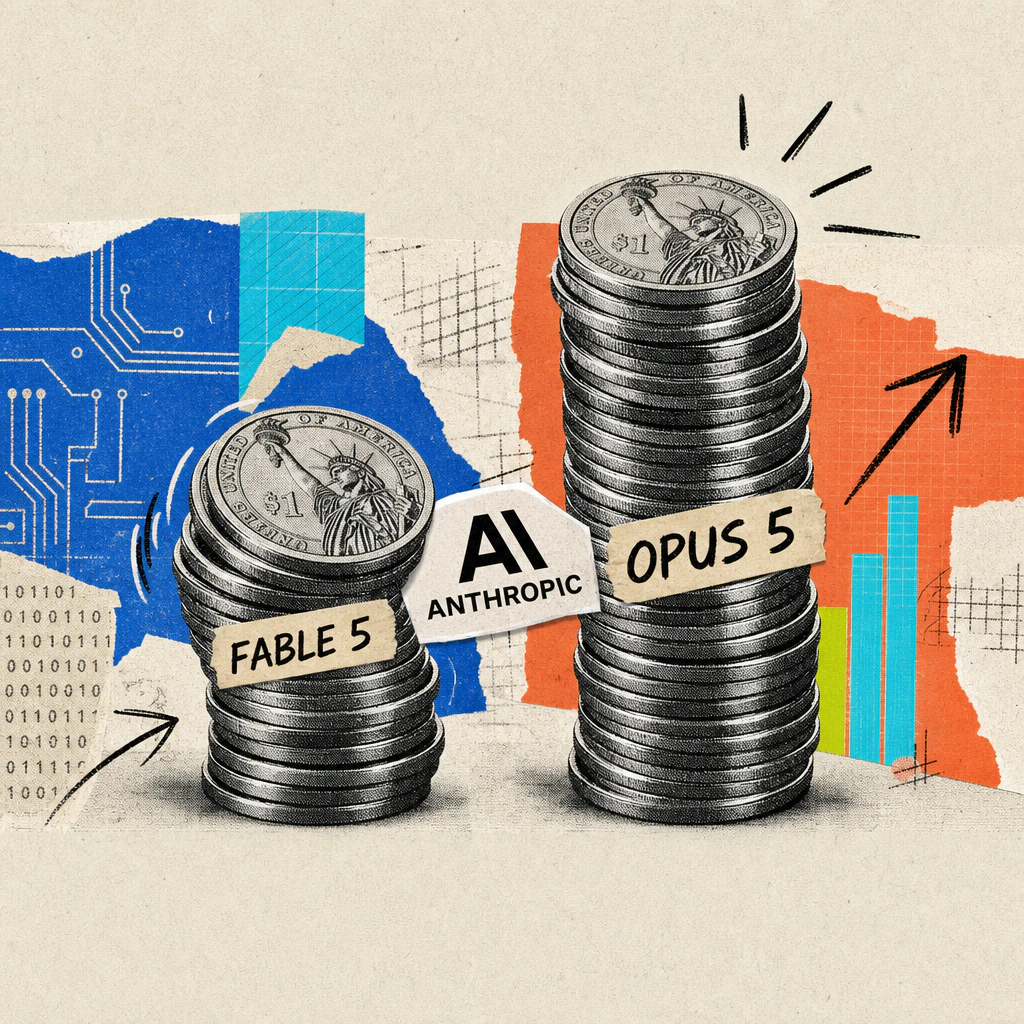
The API price is $2 per million input tokens and $6 per million output tokens, with cached input costing $0.50. This significantly undercuts Anthropic's Opus 4.8 ($5 input, $25 output) and is close to OpenAI's cheapest GPT-5.6 tier. As InfoWorld reports, the Coding Agent Index from Artificial Analysis estimates the cost per programming task at $2.49 – compared to $5.07 for GPT-5.5 in Codex and $11.80 for Claude Fable 5 in Claude Code.
The model is available through the SpaceXAI console, Grok Build, and the coding tool Cursor. In the EU, Grok 4.5 was not activated at launch; availability is expected by mid-July.
The benchmark question
When it comes to performance claims, a closer look is warranted. SpaceXAI has published four benchmarks, and the results are mixed: Grok 4.5 wins against Opus 4.8 in DeepSWE 1.0 (62.0 vs. 55.75 percent) and Terminal-Bench 2.1 (83.3 vs. 78.9 percent), but loses in DeepSWE 1.1 (53 vs. 59 percent) and SWE-Bench Pro (64.7 vs. 69.2 percent).
Claude Fable 5 leads all four tests according to these figures.
An independent analysis by roo contextualizes the marketing language: Musk's phrasing "Opus class" is something different from "beats Opus," even though the latter is often reported in the news cycle.
The choice of testing environment is also crucial – Grok 4.5 performs better on vendor-specific harnesses than on neutral ones. Important for context: None of the four values have yet been independently verified by third parties; they should initially be read as manufacturer claims.
According to data from Artificial Analysis, Grok 4.5 ranks 4th overall behind Fable 5, Opus 4.8, and GPT-5.5. Notably, the efficiency: The model consumes about 14,000 output tokens per task, which is approximately 60 percent less than Opus 4.8 – a significant reason for the low costs per task.
The Cursor partnership
Grok 4.5 was trained in collaboration with the AI coding tool Cursor. According to the companies involved, extensive usage data from the tool was incorporated – interactions of developers with codebases and software tools. Investing.com reports that SpaceX has agreed to acquire Cursor at a valuation of $60 billion; this claim has not been independently confirmed and should be treated with caution.
Context
Grok 4.5 fits into a pattern that SpaceXAI has pursued in recent months: putting pressure on competitors primarily through price and speed, rather than claiming a clear top position in pure performance. Musk himself had admitted that the company initially lagged in coding capabilities.
With an aggressive price, high token efficiency, and close integration with Cursor, the provider is now targeting professional developer workflows – a field where Anthropic has so far been strongly positioned with Claude Code. Whether the benchmark claims hold up will be shown by independent tests in the coming weeks.