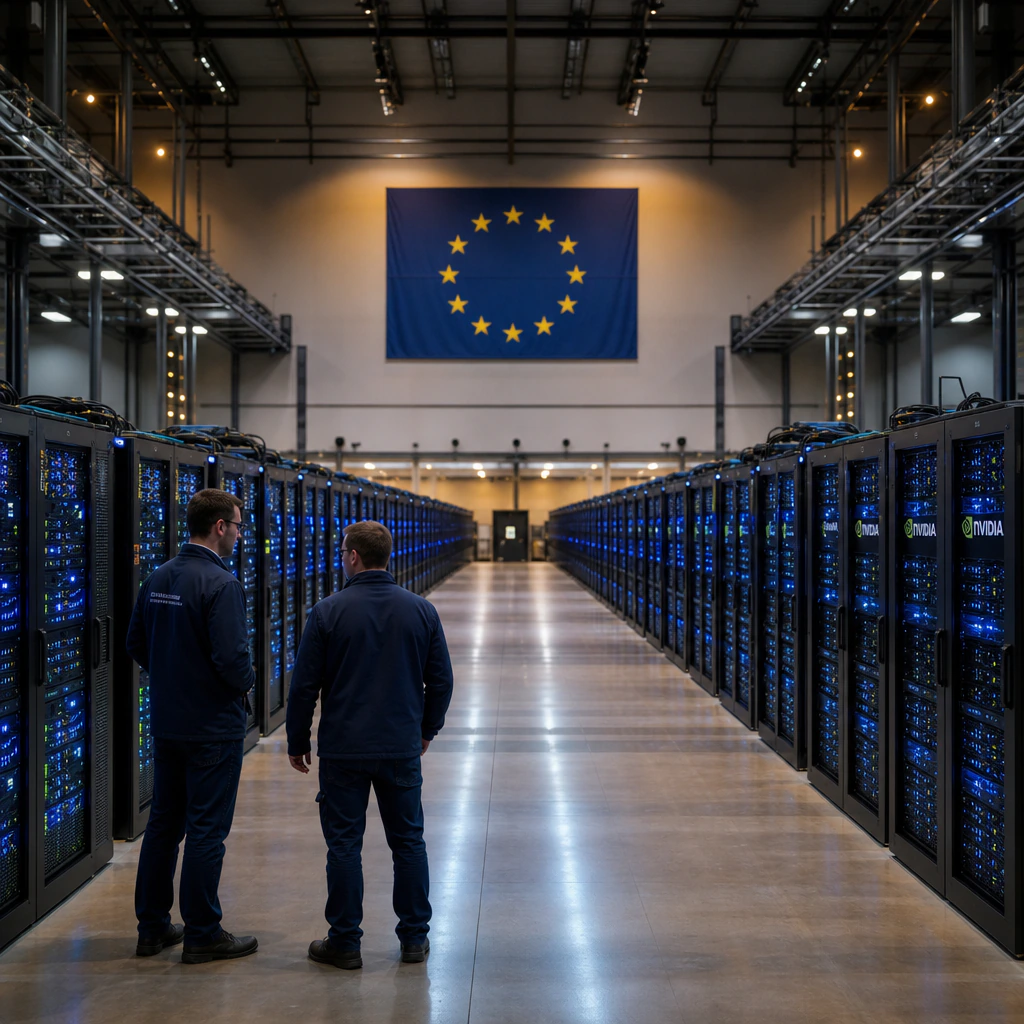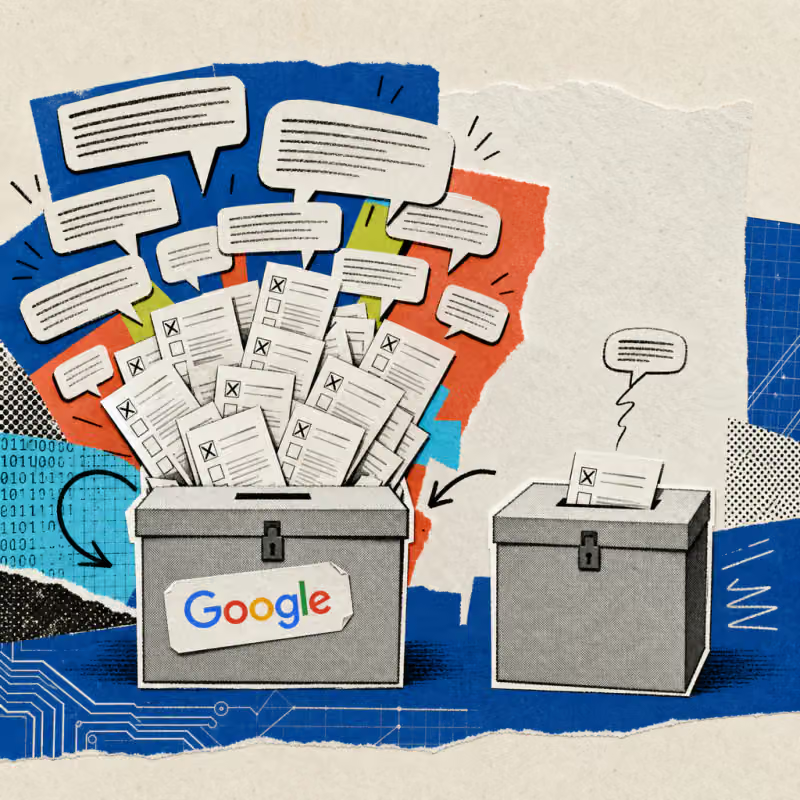

Germany's state data center register remains full of gaps: more than half of the reporting operators have not submitted consumption data for 2025. At the same time, the federal government wants to allow such figures to be classified as trade secrets in the future through a legislative amendment.
The organization AlgorithmWatch describes this as a disgrace.
Register only captures a fraction of the facilities
Since 2024, operators of data centers with a non-redundant connection capacity of 300 kilowatts or more must submit their energy data annually by March 31 to the Data Center Register (RZReg), which is maintained by the Federal Office for Energy Efficiency on behalf of the Ministry of Economic Affairs.
By early July, however, only 482 reports had been received for the 2025 reporting year. Estimates suggest there are around 2,000 data centers in Germany, of which a good 1,000 could be subject to the reporting duty – a figure that is itself not independently verified.
According to research by netzpolitik.org, some operators do not even appear in the register with facilities they publicly advertise.
Julian Bothe from AlgorithmWatch calls the situation a "disgrace for the federal government." Consumption and water data, he argues, are prerequisites for grid planning, fair location comparisons, and crisis preparedness.
Late submissions remain possible at any time, but they have so far done little to close the current gap. How incomplete the basis already is becomes clear from an evaluation of water consumption.
Even with the available partial data, German data centers post a water-usage-effectiveness value of 0.49, worse than the EU average of 0.4.
Amendment would significantly relax reporting duties
The federal cabinet approved the draft law accelerating implementation of the Energy Efficiency Directive on June 24, 2026, reforming the Energy Efficiency Act (EnEfG). The amendment also raises the threshold at which a facility counts as a data center at all – smaller sites would then fall out of the reporting duty entirely.
Permitted limits for energy consumption effectiveness would loosen too: existing facilities could reach 1.6 instead of 1.5 from 2027, while new buildings would still need to hit 1.3 rather than 1.2. Central to the reform is a new exemption: operators could withhold consumption and efficiency figures from publication by citing trade or business secrets.
The Ministry of Economic Affairs justifies the reform as cutting bureaucracy and aligning with the EU's minimum requirements; by its own account, this would eliminate roughly 2.9 billion euros in one-time compliance costs for companies.
The backdrop also includes an EU infringement procedure over Germany's delayed transposition of the underlying efficiency directive, which Berlin responded to in January 2026. The Bundestag and Bundesrat will debate the cabinet draft in the fall of 2026; no final date has been set.
Lobbying research shows close textual overlap with corporate demands
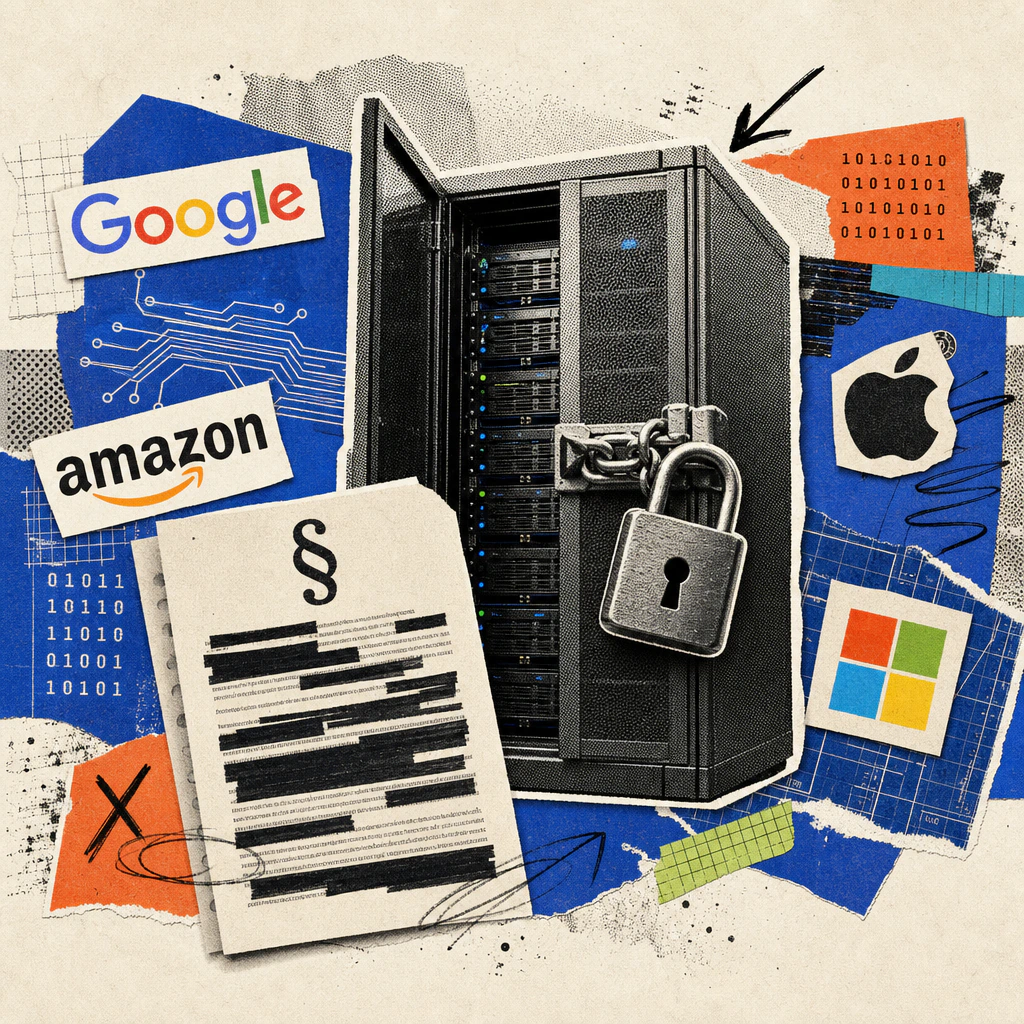
A study by LobbyControl and Campact from February 2026 compares a leaked ministry draft with position papers from Google, Microsoft, the digital industry group Bitkom, and the German Datacenter Association.
It draws on publicly accessible entries in the Bundestag's lobby register. Several passages on the trade-secret exemption and looser limits, it finds, match corporate demands almost word for word.
An email Google sent to coalition negotiators in March 2025, the researchers note, reappears in substance in the later coalition agreement of CDU, CSU, and SPD. Industry groups such as Bitkom argue the opposite case: individual-site publication, they say, already infringes on trade secrets protected under EU law and puts Germany at a disadvantage as an investment location.
In April 2026, AlgorithmWatch, together with four other organizations including the German Business Initiative for Energy Efficiency and the Munich Environmental Institute, called for the existing reporting duties to be kept.
The federal government counters by pointing to a shortfall. According to the analysis institute Prognos, Germany is meeting only 56 percent of its 2023 energy-efficiency targets and ranks among the lower tier of EU states on efficiency progress.
Whether the weaker reporting duty takes effect will only be decided in the parliamentary process – the Bundestag and Bundesrat can still amend the cabinet draft. It also remains open how reliable grid and heat planning can be for the planned doubling of German data center capacity by 2030 if today's data basis is already full of holes.
The debate joins a string of recurring doubts about Germany's AI location policy.