Update, August 18, 2026: Since August 17, Nvidia has additionally guaranteed up to 105 billion dollars for an OpenAI data center in Ohio – the company’s largest single commitment to an AI customer to date. Whether that project runs through the platforms announced here is not stated in the participants’ announcements.
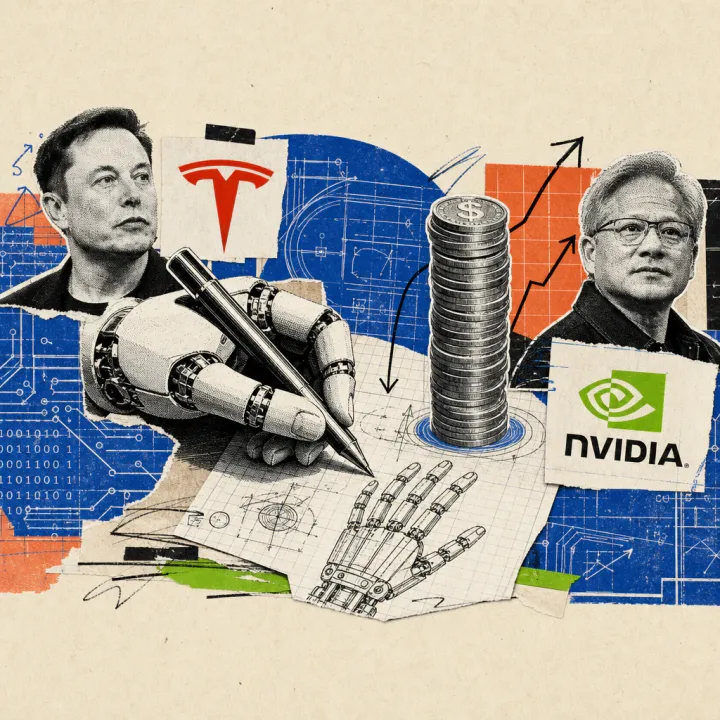
Nvidia has agreed on new financing platforms for AI data centers with six financial firms on August 10, 2026. Apollo, BlackRock, Blackstone, Brookfield, Goldman Sachs, and KKR are to provide more than $500 billion in external capital for the expansion of computing infrastructure. Nvidia’s own chips will serve as collateral for the loans for the first time.
Six Partners Structure Loans for Data Centers
The new platforms are being established as independent financing vehicles outside of Nvidia’s balance sheet, the company announced in a press release. Apollo provides a broad, long-term capital base, BlackRock connects institutional capital with infrastructure, and Blackstone is further expanding its existing commitment in the Nvidia ecosystem. Brookfield brings experience in scaling AI factories, Goldman Sachs takes on investment and distribution roles as well as the establishment of new credit markets, and KKR deploys long-term infrastructure capital.
Binding contracts are still pending: the six firms have only signed letters of intent with Nvidia so far, and there is no timeline for the first transactions. The goal is to give Nvidia customers – AI labs, companies, and cloud providers – access to long-term loans at attractive conditions for building data centers, rather than relying solely on equity or traditional bank loans.
For Nvidia, the construction has another advantage: until now, the company financed part of its customer relationships through its own equity stakes and advance payments, such as with OpenAI and CoreWeave. The new platforms shift a large portion of this capital requirement to external investors, relieving Nvidia’s own balance sheet while Nvidia continues to earn on every chip sold.
Nvidia Chips Become Collateral for Billion-Dollar Loans
The core of the construction is that Nvidia’s computing chips are treated as valuable, durable assets. CEO Jensen Huang told Yahoo Finance that this is “the first time that technology chips have become an investable asset class.” Data center hardware generates recurring revenue, can be flexibly redeployed among customers, and is kept usable for years through Nvidia’s CUDA software.
For individual projects, Nvidia is said to assume a residual value guarantee of up to 25 percent if the financed infrastructure loses value – independently unverified, as neither Nvidia nor its partners disclose details of individual capital commitments. The participating institutional investors each independently assess how robust customer demand, cash flows, and the resale value of the assets are before providing capital.
Unlike traditional corporate loans, creditworthiness here does not hinge on the credit rating of individual AI startups but on the value of the Nvidia hardware itself. That makes financing easier even for young, still unprofitable companies that would have little chance as standalone borrowers with banks – a model Nvidia has already tested on individual data center projects and is now rolling out broadly through six partners.
Stock Falls Despite Record Sum, Critics Warn of Circular Deals
Despite the historic sum, the stock market reacted cautiously: Nvidia’s stock fell about three percent on the announcement day in regular trading and recovered only 0.7 percent after hours. Since the start of the year, the stock is up nearly 17 percent – well behind the Philadelphia Semiconductor Index, which climbed more than 74 percent over the same period.
Part of the caution may stem from growing concern about circular financing, as The National reports: Nvidia has already signed hundreds of billions of dollars in deals with customers from its own AI ecosystem in recent months, which some investors view as artificially inflated demand. That includes the 9.3 percent stake in AI cloud provider Nebius disclosed in July. The new platform joins a series of similar financing constructions, including the $200 billion chip deal between Google and Anthropic and Anthropic’s new data center joint venture Theseus Infrastructure with Macquarie and the sovereign wealth fund GIC. The AI Infrastructure Partnership founded two years ago by BlackRock, Microsoft, and the UAE’s MGX investment vehicle follows a similar model.
The real crux is whether the asset managers involved genuinely assess independently how much value computing infrastructure retains over ten or more years of loan duration, as new chip generations devalue older assets faster than is typical for traditional data centers. So far, both signed final contracts and a public timeline for the six financial partners’ first transactions are missing.