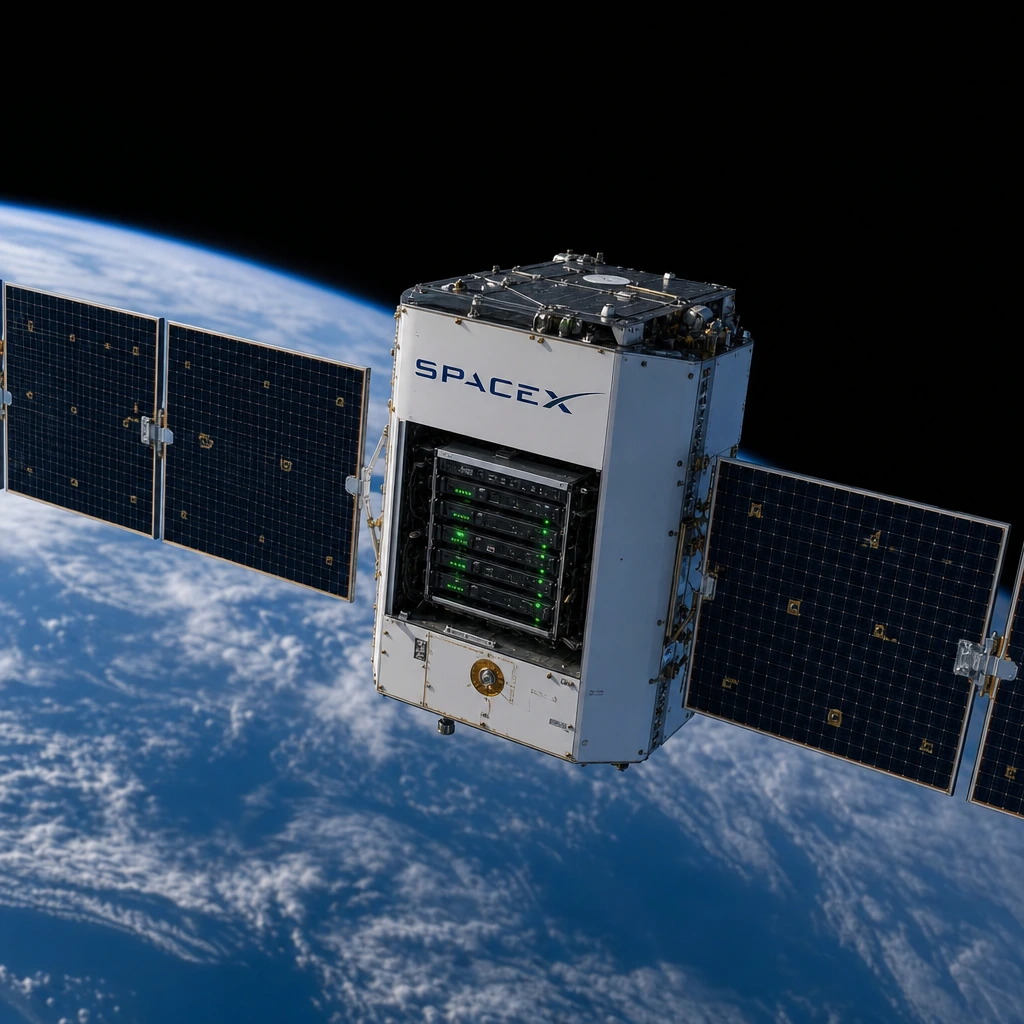
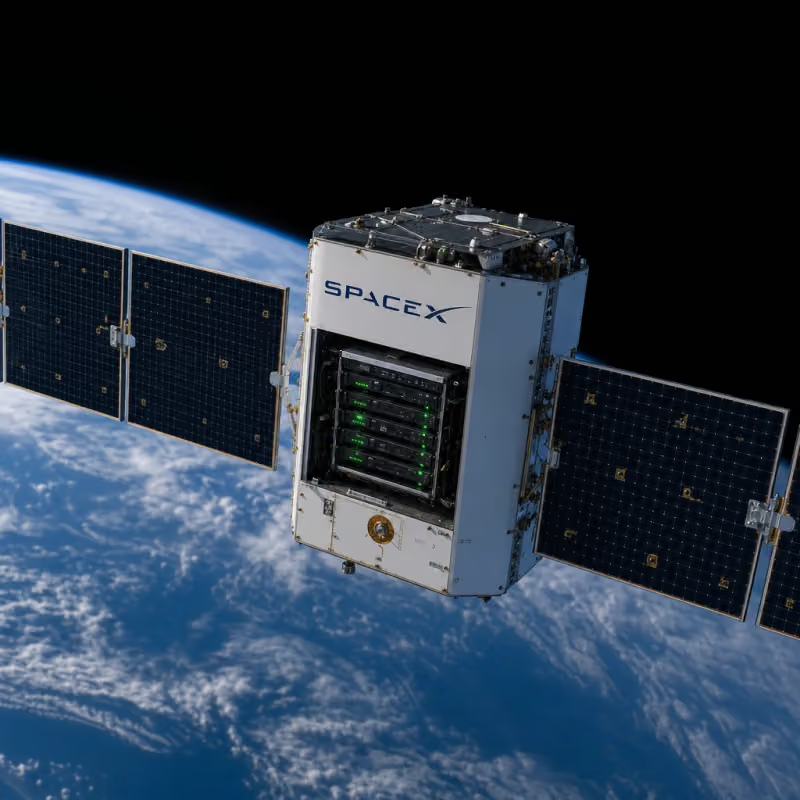
SpaceX says it plans to deliver one gigawatt of compute capacity for artificial intelligence using satellites in Earth orbit by the end of 2027. The first craft in the series, AI1, is set to launch as a prototype as early as next year.
Independent market analyses doubt, however, that such orbital data centers will become economically viable before the 2030s.
SpaceX Is Building a Gigafactory for Orbital Satellites
Elon Musk's space company SpaceX revealed the technical details as part of its IPO in June 2026.
The first satellite in the series, AI1, measures about seventy meters tip to tip, making it wider than a Boeing 747. A roughly 110-square-meter liquid radiator is meant to dissipate the waste heat from the compute chips in the vacuum of space.
According to the company, a single satellite delivers up to 150 kilowatts of compute power at peak, and around 120 kilowatts on average.
The satellites are set to be built at a new factory called Gigasat in Bastrop, Texas. It spans roughly 400 hectares and is meant to eventually cover up to a million square meters of production space.
The first prototypes are planned to launch in early 2027, with the commercial fleet meant to grow to one gigawatt of compute capacity by the end of that same year. In the long run, Musk says the fleet is meant to grow to as many as a million satellites, a scale far beyond the plans detailed so far.
SpaceX put its own valuation at around $75 billion at its IPO that same month. The company also justified the high valuation with the potential of orbital data centers as an additional business alongside its classic rocket and satellite operations.
Google and Startups Are Pursuing Their Own Satellite Plans
Other companies are also working on data centers in orbit. Google announced its Suncatcher research project in November 2025: a network of solar-powered satellites carrying its own Tensor Processing Units, meant to eventually run machine learning workloads in space.
Together with partner Planet, Google plans to put two test satellites into orbit in early 2027 to test the hardware under real conditions for the first time.
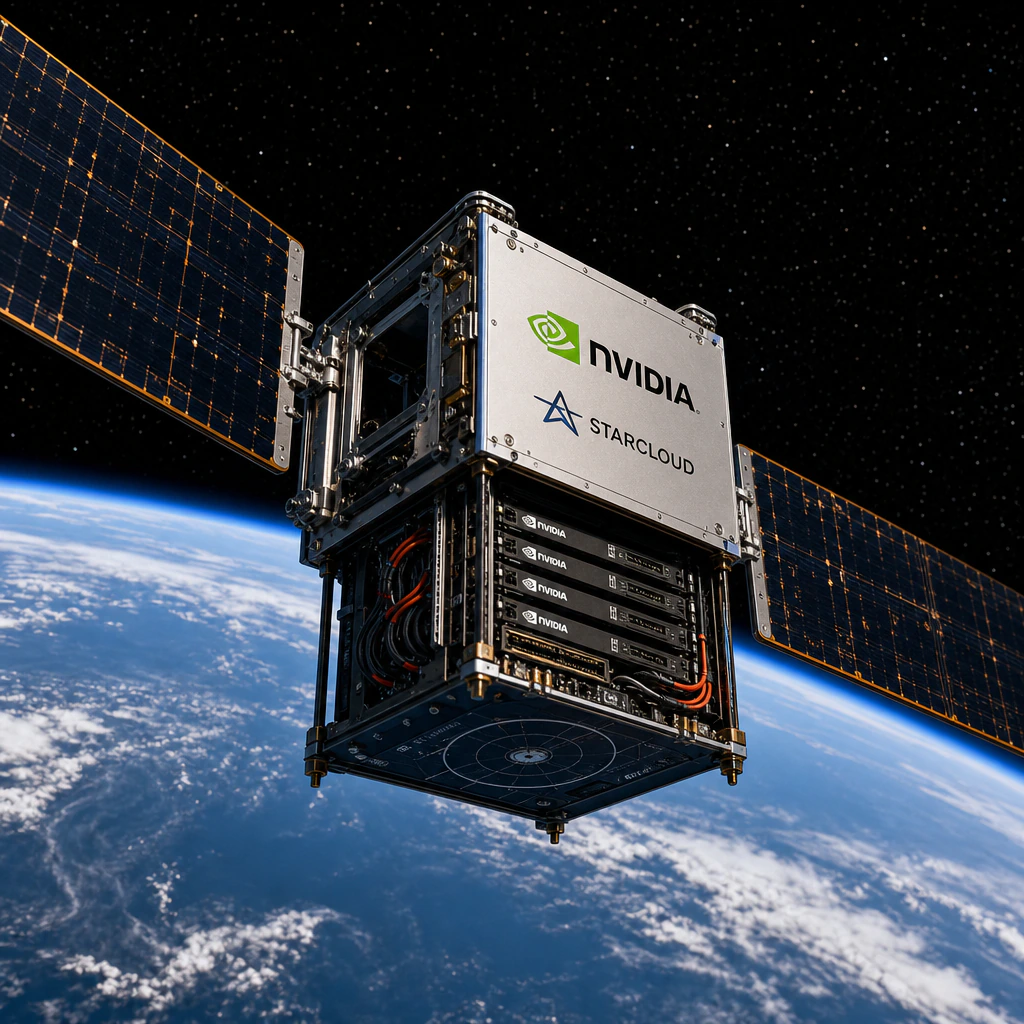
The Nvidia-backed startup Starcloud says it trained the first AI model in space in December 2025 and is preparing a larger satellite with a GPU cluster called Starcloud-2.
The similarly young company Cowboy Space raised $275 million in a Series B round led by Index Ventures in May 2026, at a $2 billion valuation.
The company, led by Robinhood co-founder Baiju Bhatt, wants to repurpose spent second rocket stages directly as data center containers. Each module is meant to deliver about one megawatt of compute power using roughly 800 graphics processors.
Both ventures are still in an early testing phase and have not yet demonstrated compute power at industrial scale in orbit.
Analysts Doubt the Economics of Orbital Computing
Several market analyses question whether data centers in space will pay off any time soon. Wood Mackenzie puts the cost of a one-gigawatt orbital data center at around $170 billion, about three times a comparable ground-based facility.
Roughly sixty percent of that, according to the analysis, goes toward rocket launches and satellite construction. Research director Robert Liew says a roughly seventy percent cost reduction would be needed to match ground-based facilities.
The analysis firm SemiAnalysis reaches a similar conclusion: compute power in orbit currently costs about four times the terrestrial equivalent, working out to roughly $10.91 per GPU-hour versus $2.49 on the ground.
Analysts expect cost parity no earlier than around 2040, provided SpaceX lowers the launch cost of its Falcon 9 rocket from the current roughly $1,400 to $1,800 to about $250 per kilogram. That timeline is independently unverified and depends on several cost reductions happening at once.
There are also technical uncertainties: no company has yet proven cooling, maintenance, and networking of large satellite fleets at commercial scale.
The debate was fueled this week by a public clash between former OpenAI co-founders Elon Musk and Sam Altman. The dispute followed Apple's lawsuit against OpenAI over allegedly stolen trade secrets.
Altman wrote on X that Musk was selling stock market investors short-term space data centers, prompting Musk to respond that the fleet would be flying as soon as next year.
What will matter is whether the test flights planned by Google and SpaceX for early 2027 confirm the hardware is reliable in the harsh orbital environment. So far, that remains unproven for both projects.