Salesforce, together with Nvidia, introduced its own CRM model called Koa on September 15, 2026. It is designed to solve complex customer inquiries within the in-house agent program Agentforce, without company data leaving its own system. According to Salesforce’s own, independently unverified claims, the model makes three times fewer errors in typical CRM tasks than previously used models.
Koa learns from 27 years of CRM experience
Koa was created by retraining Nvidia’s open Nemotron-3 model with a specially created synthetic dataset. This dataset, according to the company, reflects experiential knowledge from 27 years of CRM use across more than fourteen industries, from manufacturing to financial services to the travel industry. Real customer data, according to Salesforce, was not included in the training; instead, supervised fine-tuning and reinforcement learning using the Group Relative Policy Optimization method were employed.
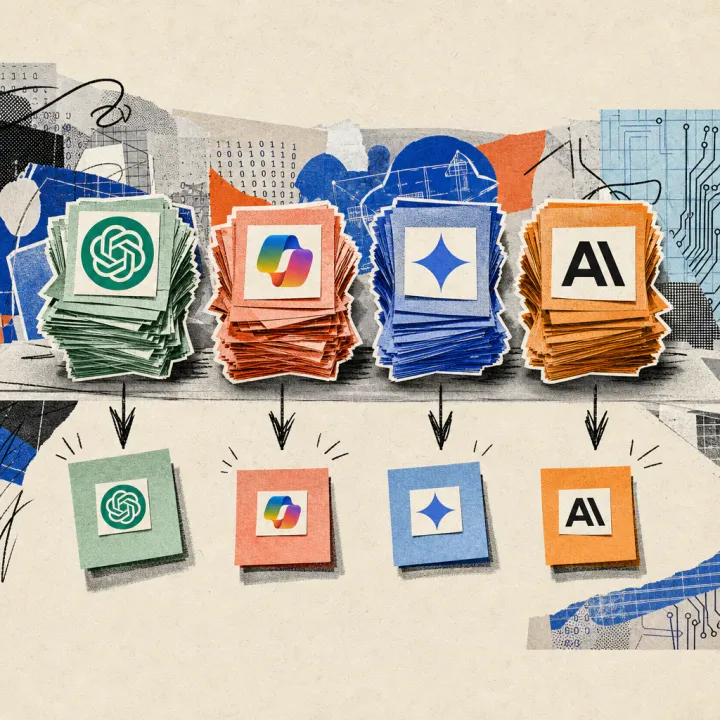
The model is intended to help agents independently work through multi-step workflows such as updating a sales opportunity, forwarding a support case, or scheduling a follow-up appointment. Salesforce CEO Marc Benioff emphasizes that the knowledge is embedded directly in the model itself and operates entirely within the customer’s own trust boundary – an argument that is likely to appeal to regulated industries such as banks or hospitals. Koa is not the only model in Agentforce: just in August, Salesforce launched Claudeforce for a closer integration with Anthropic’s Claude. The software automatically routes tasks to the appropriate model based on requirements, with Koa serving as an in-house, cheaper alternative to Claude or ChatGPT for CRM routine tasks.
Pilot customers test Koa before the winter launch
Selected customers are already testing Koa, including Formula 1 racing, the credit union Baxter Credit Union, and the accounting service 1-800Accountant. Salesforce plans general availability for winter 2026 – initially exclusively in the USA. A variant for government and regulated organizations called Missionforce Operations is already running in the USA, where selected customers will also gain access to retrained Nvidia models starting in October 2026. Whether and when Koa will also launch in Germany or the EU remains open, according to Salesforce.
Salesforce did not provide a separate price list for Koa. Access is through the existing Agentforce billing via Flex-Credits, where a corporate account purchases credit packages and each individual agent action consumes credits – approximately ten US cents per action based on the current model. An internal mediation system automatically decides which model operates in the background based on the task, so customers do not need to select Koa separately. Additionally, Nvidia CEO Jensen Huang points to the economic advantage of smaller, specialized models: every company needs useful AI tailored to its own knowledge, rather than purchasing an expensive all-purpose model for every task.
Announcement falls into heated security debate in the industry
The presentation took place at the same Dreamforce conference in San Francisco, where Nvidia CEO Huang and Anthropic CEO Dario Amodei publicly debated the right pace of development in the industry, as beckmann.ai reported. While there was a struggle over regulation and security standards, Salesforce simultaneously demonstrated with Koa how software companies are increasingly using their own, smaller AI models instead of the large systems from OpenAI or Anthropic for specific business tasks. For sales and service teams, this means that inquiries should be processed faster in the future, without sensitive customer data leaving the Salesforce system towards a foreign AI provider.
It remains to be seen whether the path taken by Salesforce – replacing expensive all-purpose models from external providers with cheaper, task-specific trained models – will gain traction across the industry. If Koa maintains the announced error rates in practice, other software manufacturers are likely to follow suit with their own specialized models, rather than relying permanently on the computing power of large AI labs. A first test will follow with the US availability announced for winter 2026, before it becomes clear how quickly Salesforce will offer the model outside the USA.