OpenAI has reduced the prices of its most expensive language model GPT-5.6 Sol by more than 20 percent on August 21, 2026. One million input tokens will now cost four instead of five US dollars, and one million output tokens will cost 20 instead of 30 US dollars. This marks the first time Sol undercuts the competing model Claude Opus 5 from Anthropic in both values.
Sol becomes cheaper than Claude Opus 5
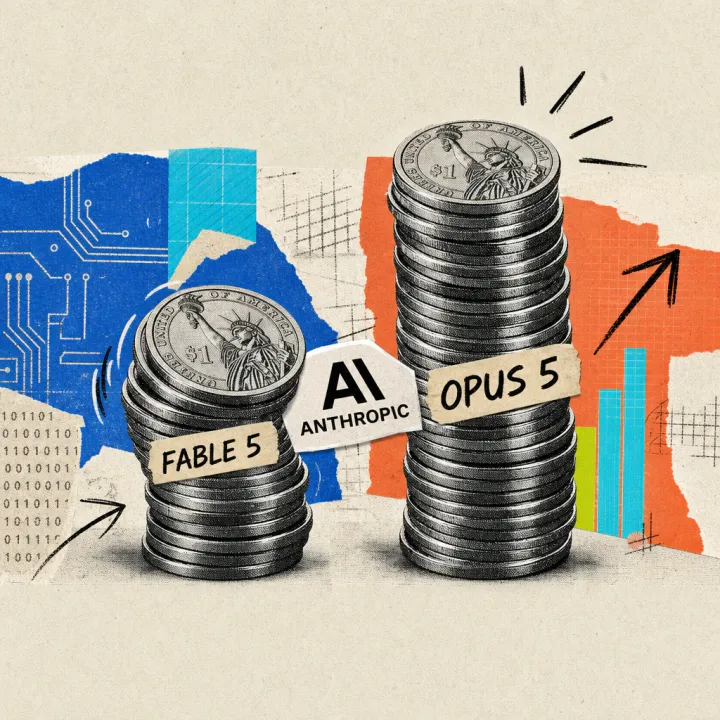
According to its own statements, OpenAI is reducing the Sol prices starting August 21, 2026, for at least three months, with the promotion running until at least November 21, 2026, according to the company. Cached input tokens (cache hits) will also decrease from 0.50 to 0.40 US dollars per million. In everyday terms: for four US dollars, a document of about 750,000 words can now be processed as input, whereas the same amount previously cost a whole dollar more. Anthropic’s own price list lists five US dollars per million input tokens and 25 US dollars per million output tokens for Claude Opus 5. After the reduction, Sol is now below Opus 5 in both values – a shift from the previous situation, in which Sol was the more expensive of the two flagship models. Output tokens remain five times more expensive than input tokens for Sol; the reduction does not change this ratio. For developers with high volumes of output text, such as automated reporting, the discount is most noticeable, since output tokens now cost a third less than before. Whether Anthropic will respond to the new price gap remains open; the company has made no announcement of its own so far.
Discount applies only to API, Codex, and ChatGPT Work
The reduced prices apply to direct API access, to credits in the coding tool Codex, and to eligible plans of ChatGPT Work, the agent product for businesses. According to OpenAI, the cut is rolling out gradually across eligible plans; the company does not name a fixed date for full completion.
Consumer subscriptions Free, Plus, Pro, and Business remain explicitly unchanged – anyone using ChatGPT as a private individual or through a standard business plan without API access continues to pay the previous price. A region such as Germany or the EU is not mentioned separately in the announcement; as with earlier cuts, the API prices apply uniformly in US dollars worldwide, and local taxes may be added on top of billing. Companies get access as usual through their OpenAI account; there is no separate application process for the discount.
The cut continues OpenAI’s pricing strategy from the summer
Sol was still untouched during the first cut to the GPT-5.6 family on July 30, 2026: at the time, OpenAI reduced the prices of the cheaper models Luna by 80 percent and Terra by 20 percent, while the flagship only got a faster processing mode. At the market launch on July 9, 2026, OpenAI had positioned Sol at the now also-reduced starting prices. Reuters frames the current Sol cut as a response to growing competitive pressure from Anthropic and Chinese providers. That pressure includes DeepSeek’s V4-Pro with a one-million-token context window, Alibaba’s Qwen3.8-Max, and SpaceXAI’s Grok 4.6, priced around 60 percent below the previous Sol price at two and six dollars per million tokens, respectively. Kimi K3 from Moonshot, the largest open-weight model published so far, adds further price pressure, though a direct comparison to Sol is difficult given the lack of a uniform pricing structure. Google, too, had already responded on August 13 with a price cut for Gemini 3.7 Flash. Price competition among language models is thus shifting increasingly from pure performance comparisons to cost per completed task.
What will matter is whether Anthropic responds to the new price gap at Opus 5 or instead bets on higher model quality, as it has done in previous rounds of competitors’ price cuts. If the Sol promotion ends as announced on November 21, 2026, it will become clear whether OpenAI keeps the lower prices permanently or was merely reacting to the current competitive pressure.