Update, August 11, 2026: Anthropic has launched another data center initiative with Macquarie Asset Management and the sovereign wealth fund GIC – the platform Theseus Infrastructure. Unlike the Volta deal, this is not a single facility but an entire platform for multiple future US sites.
Anthropic has secured multi-billion dollar data center capacity from the just seven-month-old startup Volta, according to Bloomberg sources. The $10 billion contract runs for six years and provides Anthropic with Nvidia computing power from a new facility in Norway. Volta itself refers to the customer in its own statement only as a “leading AI lab.”
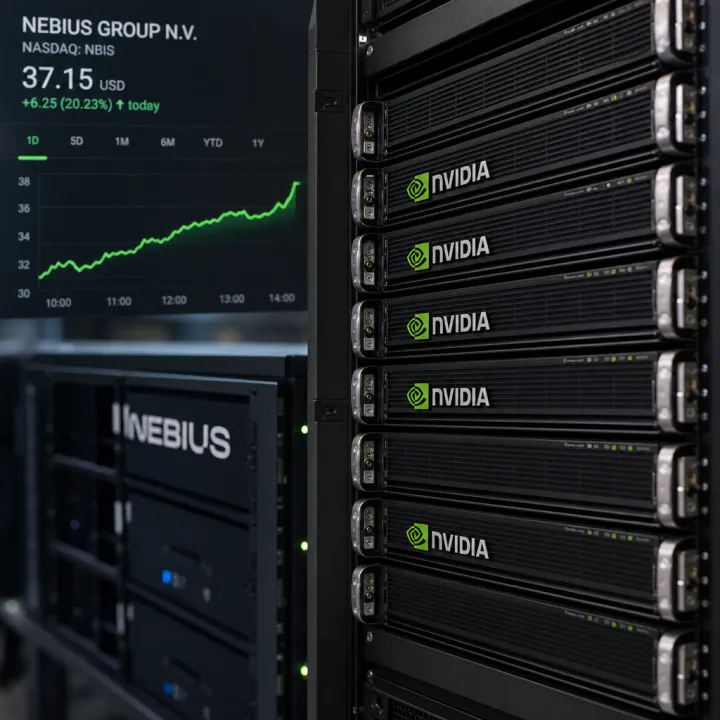
Volta builds data center in Norway with Nvidia chips
The facility is being built in Tydal, Norway, and is expected to be one of the largest and most energy-efficient AI data centers in the country upon completion, with a power usage effectiveness (PUE) of around 1.1 – close to the physically possible optimum – fully powered by renewable hydropower from the region. The infrastructure company Bitdeer, known primarily as a cryptocurrency miner, has signed a 16-year colocation contract worth $4.7 billion for the space, with an option to extend for an additional eight years, which could raise the total to up to $8 billion. For Bitdeer, this is the largest step yet away from its core business of crypto mining towards rented AI infrastructure.
The 133 megawatts of IT capacity are to be fully equipped with Nvidia’s new Vera Rubin systems. Financial institutions including JPMorgan are securing around $1.3 billion of the facility through letters of credit. Bitdeer plans to complete the first of two roughly equal construction phases by the end of 2026, with the second phase by the end of March 2027. Norway’s cool climate and inexpensive hydropower make the country increasingly attractive for energy-hungry AI data centers, alongside locations in the USA.
Startup finances computing power like infrastructure instead of software
Volta was founded in January 2026 by former Brookfield managers Ricard Boada and Sofia Gumuzio, who previously built the infrastructure division of the asset manager. According to its own statements, the company raised $300 million in a seed and Series A round, led by Andreessen Horowitz and Altimeter Capital, with participation from Nvidia and Michael Dell’s family office. This values the startup at $2.4 billion. “Volta is building the Neocloud for Little Tech,” an a16z partner said of the investment. Around 100 employees are already spread across offices in London, Palo Alto, and New York.
Unlike traditional cloud providers, Volta combines capital structuring and operations: for customers without their own credit rating, the company arranges letters of credit, project capital, and debt financing instead of just renting out compute. With the acquired Genesis Cloud, the startup already brings existing cloud operations dating back to 2018. An additional $5 billion program with investment partner Azora is meant to finance further data centers; by 2030, Volta is targeting several gigawatts of capacity across North America and Europe.
Anthropic expands computing power through several parallel deals
The alleged Volta contract joins a string of similar agreements. Just this August, Google tied credit agreements worth around $200 billion with Broadcom, Apollo, Blackstone, and Morgan Stanley to supply Anthropic with computing chips. At the same time, Anthropic was reportedly negotiating with Meta over another $10 billion deal for computing capacity, according to reports from the New York Times and Reuters. Hours after the Volta report, the company also confirmed it is building an in-house chip design team meant to cut inference costs for Claude.
Anthropic justifies its hunger for capacity with growing demand for its Claude models; the company last raised fresh capital in May 2026 at a valuation of $965 billion. So far, there is no official confirmation from Anthropic for either the Meta or the Volta deal.
What matters now is whether Boada’s bet pays off – financing compute as a tradable infrastructure asset rather than a software investment – just as investors on the Nasdaq grow more skeptical about the returns on billion-dollar AI spending. The first construction phase in Tydal is set to go live by the end of 2026; whether Anthropic officially confirms its customer status by then remains open.