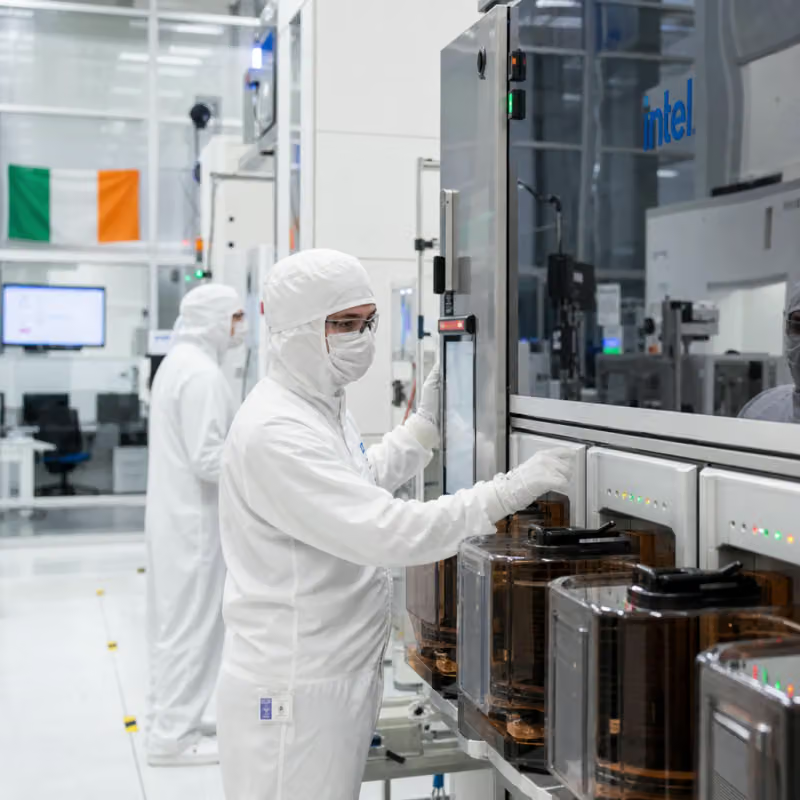
Intel is investing €5 billion to expand its chip plant in Leixlip near Dublin, the company announced in a press release.
The expansion upgrades the existing factory to manufacture Xeon 6 series processors, which are increasingly used in AI data centers. Most of the sum will flow through 2027 and will create hundreds of new skilled jobs.
Expansion Upgrades Fab 34 for Intel 3 Manufacturing
The expansion centers on Fab 34, which Intel opened at the Leixlip site in 2023. There, the company is installing new manufacturing equipment and extending the automated transport system that links the individual factory modules.
At the center is the Intel 3 process, which the company describes as the most advanced chip technology currently manufactured in Europe. It underpins the already-available Xeon 6 processors as well as a still-unannounced next Xeon generation for cloud data centers, networking, and AI workloads.
Naga Chandrasekaran, Intel's technology and manufacturing chief, called Ireland one of the company's most reliable bases over the past 35 years in the announcement. The investment amounts to roughly a third of Intel's annual capital budget, the company said.
Most of the work should be completed by 2027. Beyond several hundred permanent technical jobs, the project will create roughly 2,000 temporary jobs for construction and installation specialists.
Intel currently employs just under 5,000 people in Leixlip and says it has invested more than €30 billion in the Irish site since 1989 — a cumulative figure that has not been independently verified.
Investment Contrasts With Intel's Global Job Cuts
Politically, the expansion is seen as a vote of confidence in the site. Irish Taoiseach Micheál Martin called the decision, according to the Irish Times, a strong vote of confidence in Ireland's skilled workforce.
IDA Ireland CEO Michael Lohan pointed to the site's role in the European Union's push for technological sovereignty, which the bloc has pursued for years through its own Chips Act aimed at bringing more semiconductor manufacturing back to the continent.
Intel remains, for now, the only company manufacturing advanced logic chips in Europe. The announcement comes alongside Intel's own, considerably less upbeat corporate overhaul: Intel CEO Lip-Bu Tan had announced in 2025 that the company would shrink its global workforce by about 15 percent to roughly 75,000 employees, cutting management layers and costs.
The backdrop is continued losses at the foundry division, which trails Taiwanese contract manufacturer TSMC, whose factories have long run at significantly higher utilization. The Leixlip investment is therefore aimed squarely at the fast-growing AI and cloud processor business, even as Intel keeps cutting costs elsewhere in the organization.
What will matter is whether the bet on AI processors pays off before the Leixlip expansion is completed in 2027. In the market for specialized AI accelerators, Intel remains a laggard behind market leader Nvidia, unlike in traditional server processors such as Xeon.
Whether the added capacity in Ireland also wins new major customers in that segment will only become clear once the upgraded facility is up and running.