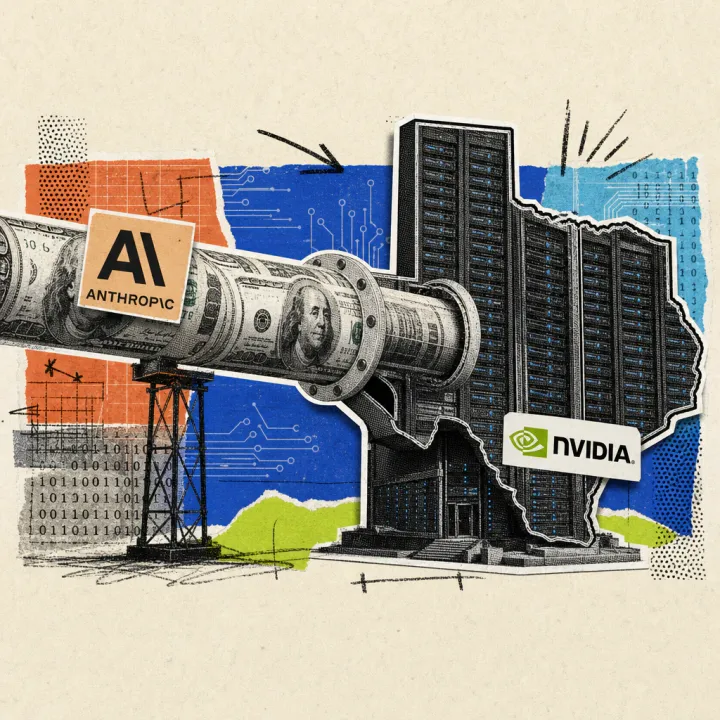
Meta and Anthropic are reportedly negotiating a computing power deal worth up to ten billion dollars, according to consistent media reports. Anthropic is expected to pay for the capacity from Meta’s own data centers in monthly installments over two years. Both companies declined to comment on the ongoing discussions.
Deal includes monthly payments with exit option
The New York Times was the first to report extensively on the talks, with Reuters independently confirming them, citing a person familiar with the matter. Anthropic reportedly proposed the deal back in June, and Meta is currently reviewing the offer without making a decision. Both parties could terminate the potential contract early, with payments made in monthly installments.
A Meta spokesperson did not respond to a request for comment, according to Reuters, and Anthropic declined to comment. Meta’s stock fell by more than two percent on Friday amid a broader decline in technology stocks but slightly reduced losses after the news of the talks broke. The negotiations are complicated by the fact that Meta currently has no established business for reselling its own computing power.
Observers view the recent hiring of Dave Brown, a long-time Amazon Web Services manager, as a sign of Meta’s ambitions in the cloud business. He is expected to help shape the development of an offering for external computing capacity.
Computing power becomes a tradable commodity for Meta
CEO Mark Zuckerberg stated back in May that entering the cloud business is “definitely an option” – companies are asking almost weekly for access to Meta’s computing capacity. A deal with Anthropic would provide Meta with an additional revenue source alongside advertising income and put the company in competition with specialized providers like CoreWeave and Nebius.
This year, Meta has already significantly increased its external computing capacity: in March for 27 billion dollars with Nebius, and in April for 21 billion dollars with CoreWeave. Its own capital expenditures for 2026 are expected to rise to as much as 145 billion dollars, more than double the 72 billion dollars from the previous year.
Analysts from Bloomberg Intelligence view the potential deal, according to a report from TheNextWeb, as a sign that prices for computing power have shifted significantly since previous comparable agreements. Those who secure capacity long-term today are said to be locking in terms that would be harder to replicate in an increasingly tight market.
Anthropic’s hunger for computing power grows with Claude Code
The growing demand at Anthropic is closely linked to the proliferation of Claude Code, the company’s programming tool, according to reports. The usage generates recurring loads in inference and context windows that require additional computing capacity. Anthropic is already paying SpaceX around 45 billion dollars over three years for access to the Colossus data center as part of an agreement reached in May. This amounts to approximately 1.25 billion dollars per month.
Google is also reportedly sourcing computing power from the same environment and pays around 920 million dollars monthly for it. The scale of such agreements illustrates how tight computing capacity has become for top models – and why leading AI providers are increasingly reaching out to direct competitors instead of relying solely on traditional cloud providers.
According to its own statements, Anthropic is currently unable to build additional computing capacity as quickly as demand for Claude is growing, and is therefore temporarily limiting the use of advanced models. Additional capacity access through Meta would at least partially alleviate this bottleneck.
It remains to be seen whether Meta will actually finalize a contract despite its lack of experience in reselling computing power or if the talks will end without results. Should the deal go through, a company that has so far been purely an advertising firm would become an infrastructure supplier for a direct competitor in the AI race. The role reversal shows how even well-funded providers like Anthropic are now reliant on external data centers. A date for a potential conclusion is not yet known.