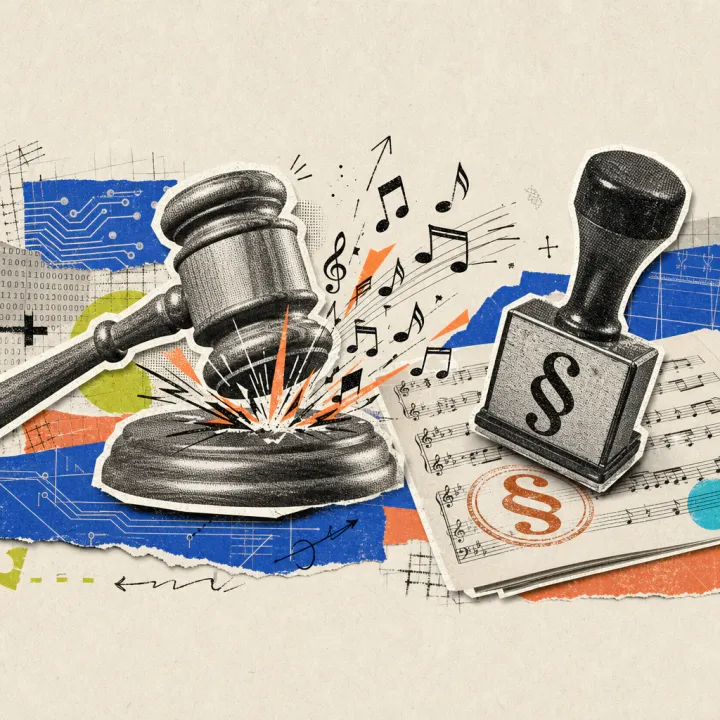
The Commission for Licensing and Supervision of the State Media Authorities (ZAK) issued decisions against Google and Perplexity for the first time on July 14, 2026, classifying their AI search functions as independent content providers. As a result, the AI responses lose the liability privilege of the Digital Services Act and will henceforth be subject to German media law. Google immediately announced its intention to appeal.
ZAK justifies classification with lack of forwarding function
The ZAK issued the decisions jointly with the Media Authority of Hamburg/Schleswig-Holstein and the Media Authority of Berlin-Brandenburg. Affected are Google’s AI overviews in search as well as the chatbot from Perplexity, which answers search queries with AI-generated text responses including source references. According to the authority, the liability exemption of the Digital Services Act for mere forwarding does not apply here. Both services select content from third-party sources, weigh it, and summarize it into new responses instead of merely forwarding links.
ZAK Chairman Thorsten Schmiege stated: “AI search engines and chatbots are content providers.” German media law therefore applies to the affected services from now on, he further explained. The basis for the decision is, according to ZAK, among other things, a legal opinion by legal scholars Jan Oster and Christoph Busch, which classifies AI search responses as independent, attributable content. The authority also accuses Google of placing AI-generated responses visibly before classic links in the search results. Journalistic offerings would thus be disadvantaged in terms of discoverability – a violation of the diversity protection obligations for media intermediaries under the Media State Treaty.
Google announces appeal, Perplexity remains reserved
Google announced that it would contest the decisions, as reported by ad-hoc-news. AI overviews represent a contemporary form of information dissemination that is in line with applicable law, the company argues. Under German administrative law, there is a regular deadline of one month from delivery of the decision for the appeal; Google and Perplexity can subsequently file lawsuits before the competent administrative courts. Perplexity did not comment on the specific allegations and instead referred to its own data protection compliance and a SOC 2 Type II certification, without addressing the media law classification itself.
Until a judicial clarification, the decisions remain effective and must be followed immediately. Support comes from the media industry: the collecting society Corint Media, which represents the rights of private broadcasters such as Sat.1 and Antenne Bayern as well as numerous publishers, welcomed the step. Managing director Christine Jury-Fischer called the decision an important regulatory signal and emphasized that AI offerings from global platforms do not operate outside applicable media law. Publishers hope the classification will bring more visibility for their own links alongside the AI-generated summaries.
Munich court ruling had already prepared the ground
The decisions are part of a series of legal initiatives against Google’s AI search function in Germany. On May 28, 2026, the Munich I Regional Court had already ordered Google, in case 26 O 869/26, to cease false AI-generated fraud allegations against a publishing house. The chamber classified the AI response as the company’s own, attributable statement. A few days earlier, the Higher Regional Court of Hamm had held a clinic chatbot liable for invented specialist titles.
Both rulings concerned individual erroneous outputs; the ZAK classification goes beyond this and aims at the structural classification of the services as content providers with permanent transparency and diversity obligations. Observers view the step as a possible precedent that could also affect other AI search products with comparable summarization functions, should the competent media authorities identify similar characteristics there. How much publishers actually lose in reach due to AI overviews has not been independently verified; the studies referenced by the media authorities yield different results. For Google, alongside search integration, the advertising marketing of its own AI responses is also at stake.
It will be crucial whether the announced lawsuits by Google and Perplexity hold up in the administrative courts or whether the media law classification as content providers prevails. If the decision favors the media authorities, it could serve as a blueprint for the regulation of AI search functions in other EU countries. No other country has made a comparable classification so far.