
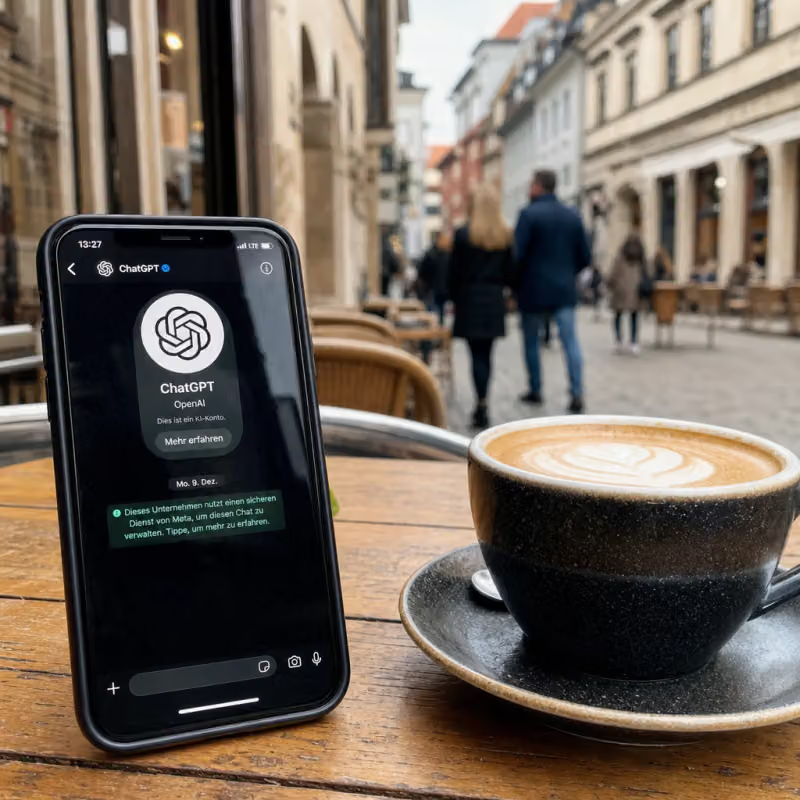
Since July 13, 2026, ChatGPT works again directly inside WhatsApp – with no extra app needed. An order from the European Commission forces Meta to reopen the messenger to outside AI chatbots. The service is free and starts with a single saved contact number.
Meta Reopens WhatsApp for ChatGPT
Since mid-January 2026, Meta had excluded outside AI chatbots from the WhatsApp Business API. ChatGPT was affected too, even though it had been reachable for years through the contact „1-800-CHATGPT" and was used by roughly 50 million people every month.
The European Commission treated the block as an abuse of market power and opened proceedings against Meta. On June 9, 2026, it ordered interim measures.
Meta had to reopen WhatsApp within five working days, under the same free terms that applied before October 2025. Non-compliance could bring a fine of up to ten percent of worldwide annual revenue, according to the Commission.
OpenAI confirmed the comeback in its own announcement: ChatGPT was again available on WhatsApp across the European Economic Area. Access covers all 27 EU member states plus Iceland, Liechtenstein, and Norway, though the rollout may vary by phone number.
Germany, as an EU member state, is included as well. The order remains in force until the antitrust case against Meta is fully resolved.
In Daily Office Work, the Chat Handles Quick Questions
The advantage in daily office work: nobody needs to install an extra app or sign in. A receptionist gets an English inquiry from a business partner on her work phone.
Instead of switching to a computer, she forwards the text in the same chat to the ChatGPT contact. Within seconds, she gets a German translation and a polite reply suggestion back, ready to use directly.
The same works on the go for quick calculations, help wording an email, or explanations of technical terms, say during a train ride to a client meeting. Questions about an Excel formula or rephrasing a short note work the same way, without any separate sign-up.
The chat remembers earlier messages within the ongoing conversation, so follow-up questions need no re-explaining. Anyone who wants to can also send photos, say of a handwritten note, a receipt, or a table, and have the content summarized in bullet points.
For quick questions between two meetings, the WhatsApp chat often replaces the detour through a notepad or a separate search app.
Access, Cost, and Setup in a Few Steps
Use is completely free, no subscription needed. An existing ChatGPT account is not required.
Anyone who has one can link it voluntarily and gets a higher usage limit as well as a shared history with the ChatGPT app. Without linking, a lower but still workable daily message limit applies for occasional questions.
OpenAI has not published exact numbers so far. Getting started takes just a few steps:
- Open WhatsApp and add a new contact.
- Save the number +1 800 242 8478 under the name „1-800-CHATGPT."
- Start a chat with this contact.
- Send a question as text, photo, or voice message.
- Optionally link your own ChatGPT account in the settings.
Important: fake contacts with similar names are circulating, aimed at fraud. Use only the officially verified number, recognizable by the blue checkmark next to the contact name in WhatsApp.
Companies that already use WhatsApp for customer contact can set up the same verified contact on company devices too. OpenAI keeps publishing further details on features and limits in its official release notes.
What matters now is whether Meta keeps respecting the Commission's order once the ongoing antitrust case concludes, or restricts access again later. It also remains open how long the current no-account setup will stay this simple.
For daily office work: anyone sending confidential customer or company data to ChatGPT via WhatsApp should check internal policy first. The messages leave the company network either way and are processed by OpenAI.