Google integrates artificially generated images directly into Google Search: For the 25th anniversary of Google Images, the new model Nano Banana 2 Lite creates its own images in the AI summaries when the open web does not provide a suitable motif.
At the same time, Google Images receives a personal homepage with a collection feature for registered users. Both innovations will initially launch in the coming weeks in English.
Nano Banana 2 Lite generates images in Google Search
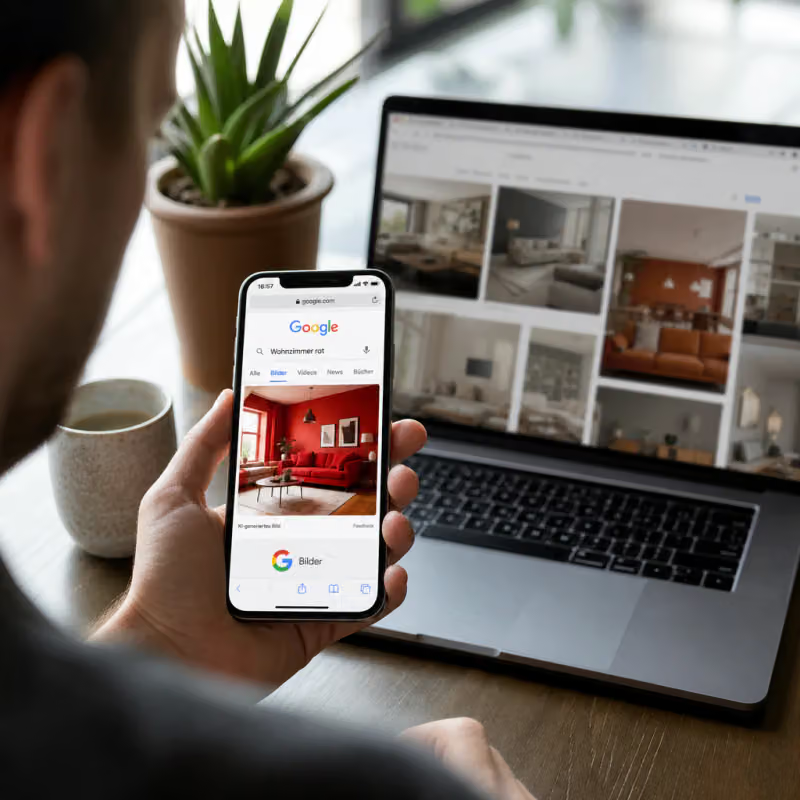
The AI summaries of Google Search will soon show not only found images but also self-generated images. If someone searches for a motif that does not exist on the web, Nano Banana 2 Lite creates a suitable image from the text of the query.
As an example, Google mentions a room painted red. If someone wants to know how a room looks in a specific color, they receive a specially generated visualization instead of a regular search result.
Nano Banana 2 Lite is based on the model that went viral last year under the name Nano Banana as a fast image feature in Gemini. As TechCrunch reported, Google had already opened the Lite version for developers via the Gemini API at the end of June 2026 before it now also moves into search.
The new feature in the AI summaries will roll out in the coming weeks. The launch will initially be in English, in regions that already support image generation in the AI mode of search. Unlike traditional image search results, the motifs are created entirely anew, without reference to an original page on the web.
New homepage consolidates personal image gallery
Google Images is also getting a revamped homepage at images.google.com. For registered users, the page will now display a dynamic gallery of images that match their interests, similar to a personalized feed.
A new collection feature allows users to save images in categories such as travel ideas or home decor and find them later. The collections can be named by themes and expanded at any time. TechCrunch classifies the redesign as a nod to Pinterest.
The magazine views it as an attempt to engage users more with Google, rather than letting them drift to external image generators. The rollout of the homepage is initially limited to desktop users in the USA with English language settings; a Google account is required.
A mobile version or an international launch has not yet been announced. The overhaul coincides with the 25th anniversary of Google Images.
The impetus for Google Images is said to have originated in 2000 from a notably high number of search queries for a dress worn by Jennifer Lopez. This led to the creation of the standalone product Google Images in 2001.
Google expands the race for image generation
The expansion of search to include image generation is part of an industry-wide race for visual AI tools. OpenAI, xAI, and Midjourney already offer image generators with ChatGPT, Grok Imagine, and their own tools, which are increasingly appearing in everyday applications like chat apps.
Google is responding by embedding the feature directly into the world's most used search engine, rather than offering it only as a separate product. For publishers and image agencies, this potentially means less visibility, as users may click less frequently on external photos in the future and instead receive an AI image directly in the search result.
Google has not yet published official figures on how much click traffic to image sources on the web is affected by this. Nano Banana 2 Lite itself is only a few weeks old.
Google initially released the fast and inexpensive image model at the end of June 2026 for developers via the Gemini API. It is now also moving into search and AI summaries.
The expansion shows how quickly Google transfers new models from the developer interface to mass products. This gives users three ways to generate an AI image at Google for the first time: via the Gemini app, the developer API, and now directly in search.
It will be crucial whether Google permanently marks AI images in search clearly from real photos when users share them. It also remains to be seen how publishers and image agencies will react, as their motifs may be linked less frequently directly due to the new feature.
The next indication is likely to be the international rollout, for which Google has not yet provided a date beyond the coming weeks.