Meta's personal AI agent Muse reaches 1.8 million iOS downloads in the USA and Canada in the first twelve days, surpassing ChatGPT's comparable figure of 1.3 million at its own launch. At the developer conference Connect, Meta also showcased the handheld device Muse Charm, which will allow the app to be used without a smartphone in the future.
Muse surpasses ChatGPT in downloads and daily users
Market researchers Apptopia and Appfigures analyzed the first twelve days after the Muse launch on September 8, as TechCrunch reports.
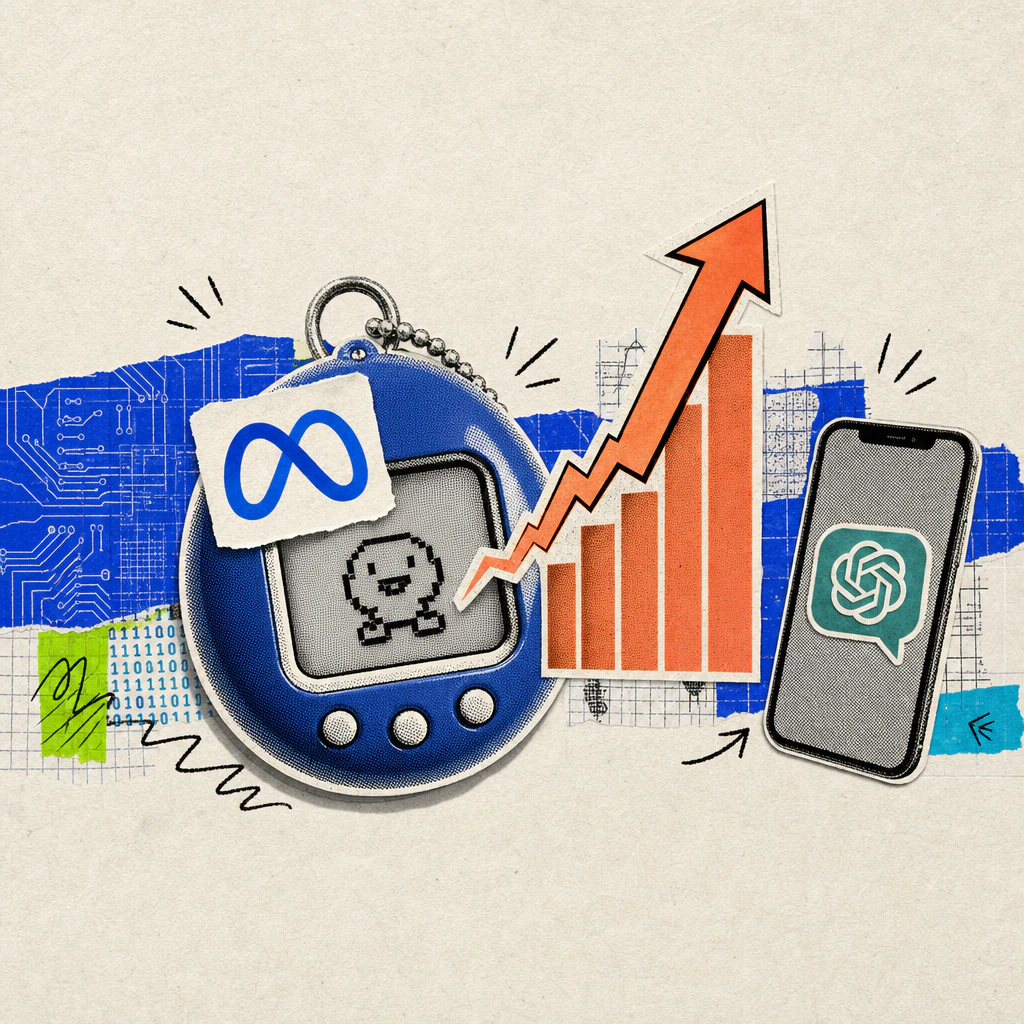
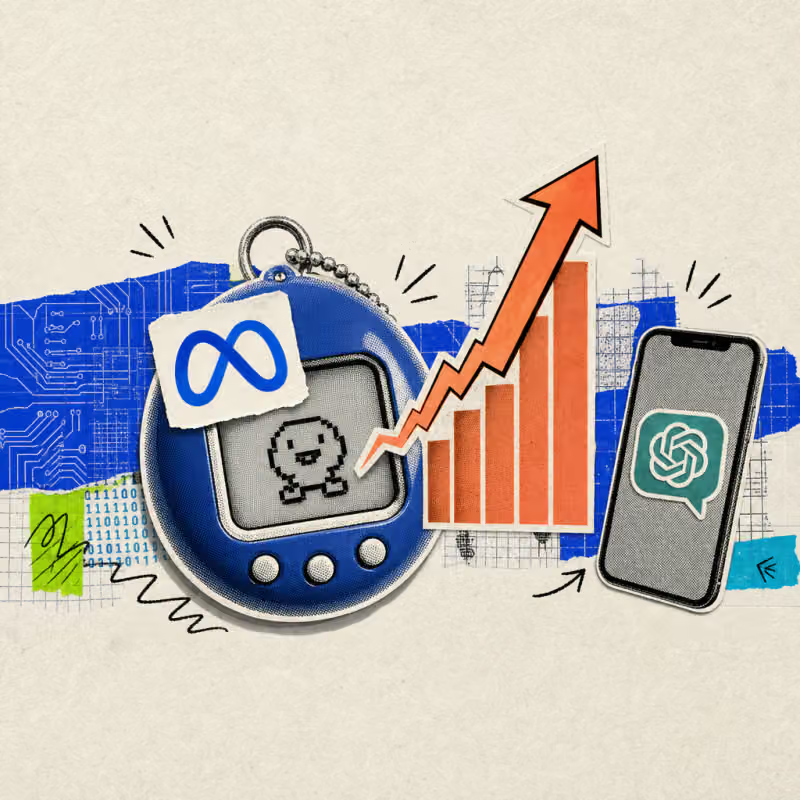
Accordingly, the app achieved 2.8 million installations worldwide, with 1.8 million on iOS in the USA and Canada alone – ChatGPT reached 1.3 million at its own launch. In terms of daily active users in the USA, Muse also leads with 642,000 compared to ChatGPT's former 231,000, of which 359,000 are on iOS alone.
The figures come from independent app analytics firms and have not been officially confirmed by Meta or OpenAI – thus, they are independently unverified.
According to analysts, a key driver is the close integration with Meta's existing platforms: 95 percent of Muse users are also registered on Facebook, and 63 percent on Instagram. Since its launch in early September, Muse has quickly risen to the top of the US App Store charts, but soon after got into a dispute with Amazon, which excluded the agent from its online store due to lack of labeling and unclear data usage.
The download lead shows that the dispute has not harmed growth so far.
Muse Charm turns the AI agent into a wearable device
At the developer conference Connect on September 23, Meta presented the accessory device Muse Charm according to a post in its own newsroom.
It features a roughly five-centimeter OLED screen with an animated Muse avatar, a dedicated 5G modem, front and rear cameras, as well as speakers and microphones – technically similar to a stripped-down smartphone, as TechCrunch describes.
The device was developed by a newly established design team led by former Apple interface chief Alan Dye.
Operation is as simple as using a fingerprint sensor: touching it allows direct communication with Muse, without needing to unlock a smartphone or open an app first. The device fits in a pocket or can be attached to a backpack with a lanyard.
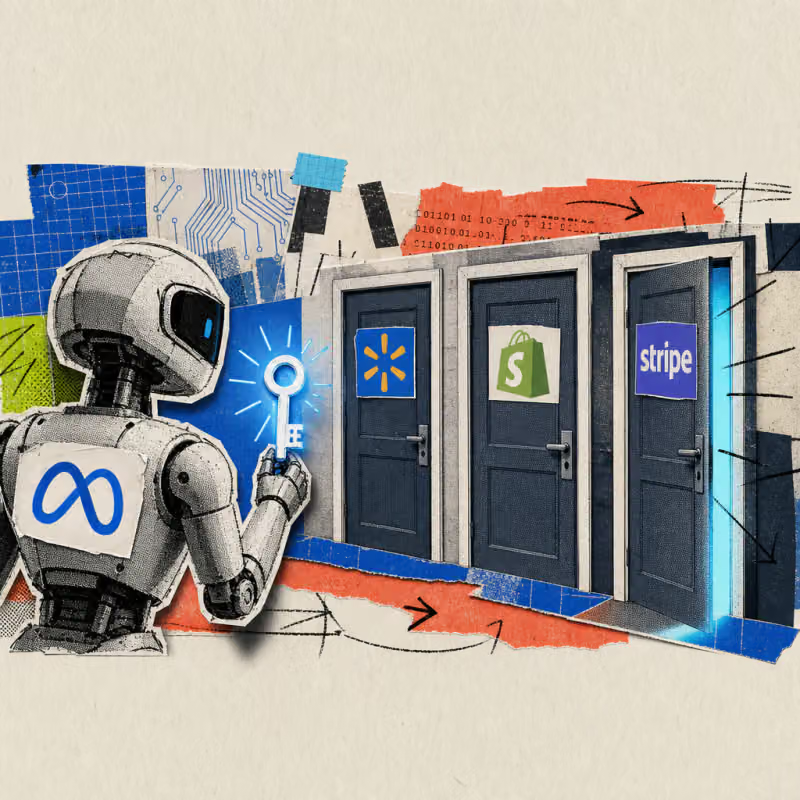
At the same time, Meta is also integrating Muse into its AI glasses Ray-Ban Meta, Oakley Meta, and Meta Glasses, where the agent is expected to see what users are currently looking at by voice command. New shopping integrations with Walmart, Best Buy, Sephora, and other retailers, as well as payment services like PayPal, expand the functionality.
Meta has not yet announced a price for Muse Charm; according to its own statements, the device is expected to be delivered in December.
Germany and the EU are still waiting for Muse
Those who want to try Muse or Muse Charm in Germany will find the app currently unavailable in the German or any other European app store. Since the launch, Meta has restricted access to users aged eighteen and older in the USA and Canada, and the company does not provide a timeline for additional countries in its newsroom post.
Meta's general assistant Meta AI also only reached Europe about a year after its US launch, after data protection authorities expressed concerns about the processing of European user data.
The General Data Protection Regulation and the EU AI Act are likely to impose a similar pace on Muse, especially since the agent can independently send emails, shop, and initiate payments. Additionally, the Muse Charm may face further labeling and testing obligations in the EU due to its built-in camera and microphone.
While those working exclusively with an American Apple or Google account can technically test Muse, they would be violating the terms of service, which explicitly restrict the service to the two countries.
It will be crucial whether Meta can maintain the pace of its surprise success outside North America or whether Muse will experience the same regulatory delays as Meta AI did before. A price for Muse Charm and a launch date outside the USA are still pending – both are likely to be clarified only during the Christmas season when the device is scheduled to be delivered according to Meta's own timeline.