The Problem: Social Engineering Evades Traditional Defenses
Social engineering fundamentally differs from classic cyberattacks. A hacker using malware or stealing credentials attacks a system.
A fraudster guiding a person over the phone to transfer large sums attacks a human. This differentiation is central to Apple's new understanding.
This makes social engineering particularly insidious: Multi-factor authentication does not help when the legitimate user is acting authentically. Biometric security does not protect when the biometric authorization is given under duress by the victim.
Authentication only confirms who is performing the action – not whether that person is acting freely or under coercion.
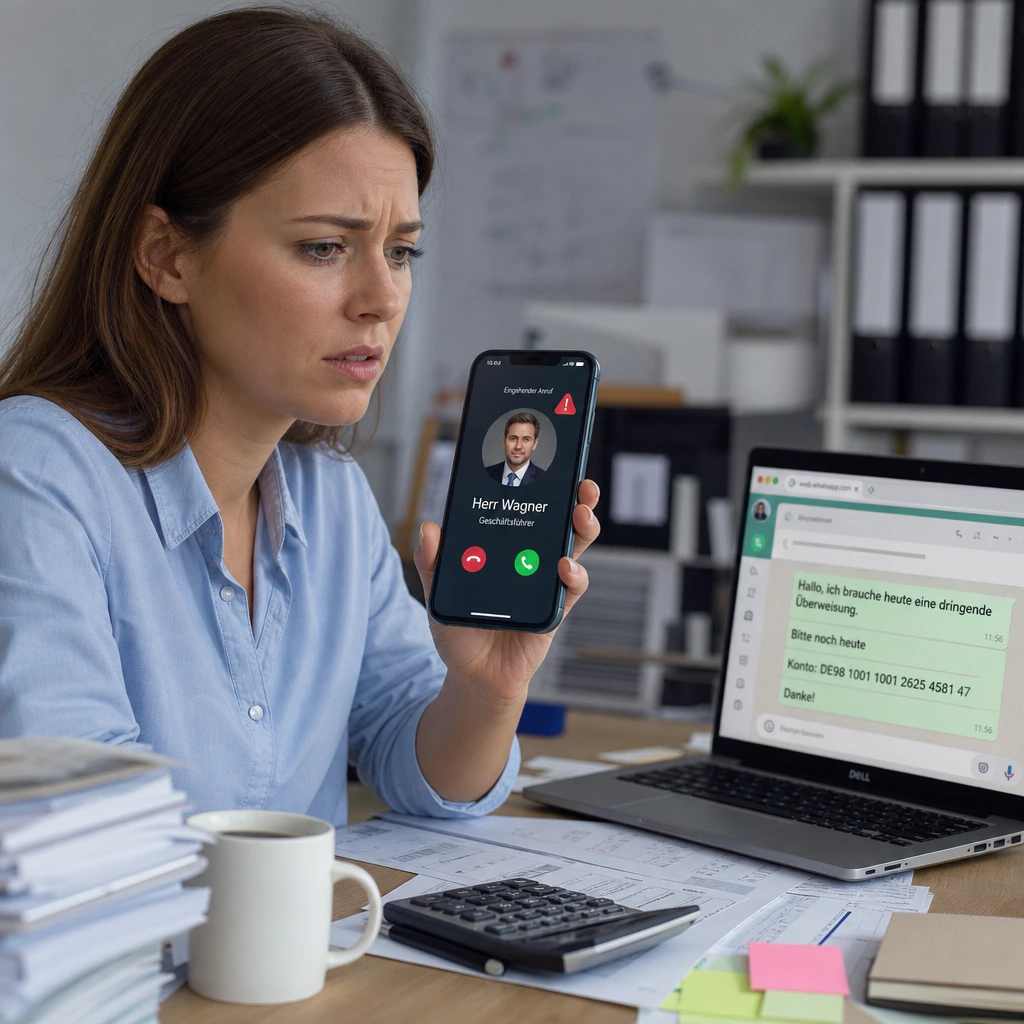
Tech support scams, false authority calls ("You are speaking with the police"), and "family emergency" scams are on the rise. These scams are amplified by AI-driven deepfakes – such as synthetic voices of relatives or supposed bank officials that are nearly indistinguishable from real recordings.
The victim often finds themselves in a coaching scenario: A voice in their ear guides them step by step through the criminal act. The victim actually inputs the commands, sees the authentication prompts in front of them, and responds cognitively.
The fraudster remains invisible and cannot directly access the devices. Traditional security is helpless.
The New Paradigm: Behavioral Analysis Instead of Content Inspection
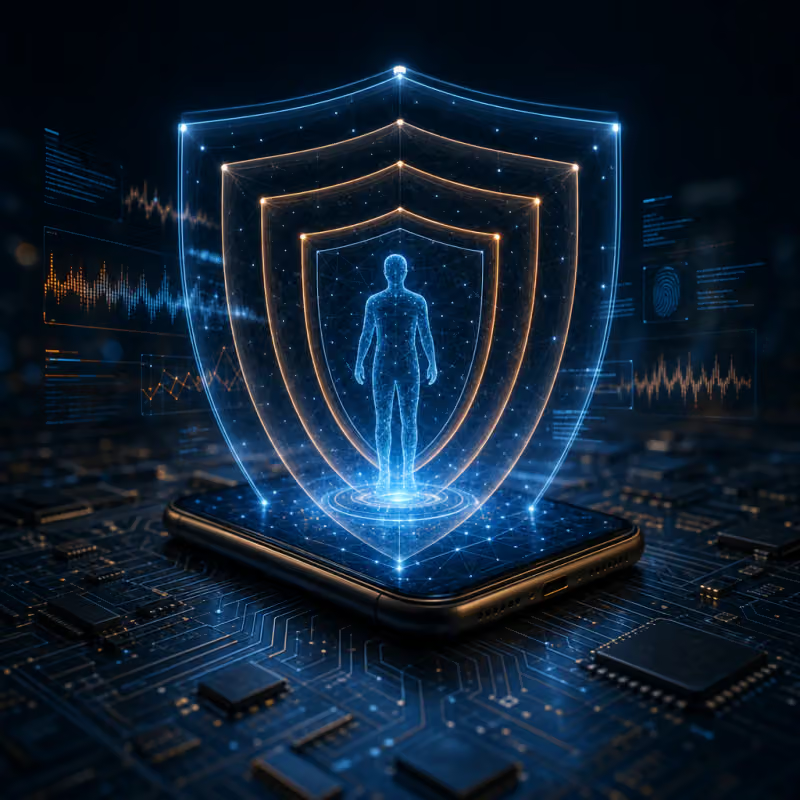
Apple announced a new framework at WWDC 2026 called "Trust Insights." This framework runs on iOS 27 and analyzes not what a user communicates, but how and when they do it – and whether the behavioral patterns indicate coercion.
This is a crucial privacy boundary: The framework does not look at message, email, or call contents. It does not read private conversations, listen for voice patterns, or try to understand who is on the other end of the line. Instead, it analyzes structural behavioral characteristics on the device itself:
- Response Timing: Does the user respond unusually quickly or hesitantly to prompts?
- Deviation from Normal Patterns: Does the user use their device at unusual times or with atypical speed?
- Contextual Signals: Are there indications that the user is acting under guidance or pressure?
- Limited Sensor Data: Accelerometers, motion sensors, and similar can show stress indicators.
All of this analysis occurs entirely on the device. Apple's systems never see the raw data. Instead, the iPhone performs the ML inference locally, deletes the original data afterward, and sends only a single value to Apple's servers: a risk score.
How Trust Insights Works Technically
The framework classifies transactions into categories. Each category has specific behavioral patterns that can be indicators of fraud:
Payment: Financial transfers, asset shifts, in-app purchases
Account: Updates to account data or security information
Resources: Requests that consume large or limited infrastructure (e.g., AI inferences)
Communication: Sending messages, filling out forms, signing documents
Other: Categories that do not fit into the above
For each category, Apple has trained machine learning models that learn characteristic behavioral patterns correlating with "free" action vs. "guided" action.
When the framework detects indicators of medium or high risk, it can initiate several actions:
- Display Warning: The user is made aware that something is unusual.
- Verification Steps: Additional confirmations or authentications are enforced.
- Delay Transaction: The bank or app can delay the transaction to give the victim time to think.
Privacy as an Architectural Foundation
Apple's approach fundamentally differs from alternative anti-fraud systems that rely on cloud-based content analysis. The framework was explicitly designed to never inspect message contents.
This means:
- No centralized data collection of chats or email contents
- No profiling of user communication styles
- No possibility for Apple's servers to see whom users contact or what they say
Instead, Trust Insights works with "privacy-preserving machine learning." The raw data remains on the device, is processed there, and is immediately deleted.
The server only receives the result: "Risk Score: medium" or "Risk Score: high."
This architectural principle fits into Apple's broader WWDC 2026 strategy. Apple has established "Private Cloud Compute" as an infrastructure standard, with complex computations running in encrypted, user-controlled enclaves – not on centralized, Apple-controlled servers.
Threat Models Addressed by Trust Insights
The framework is explicitly designed against these common social engineering fraud patterns:
Tech Support Scams
A "tech support agent" contacts the victim via phone or email and claims to have found a security issue. The agent instructs the victim to grant remote access or transfer money for alleged software. Trust Insights detects the unusual sequence and time pressure.
False Authority Calls
The fraudster impersonates a bank official, police officer, or government representative. Modern AI deepfakes make this convincing.
The fraudster pressures the victim to transfer money immediately or share account information. The coaching nature (step-by-step instructions) is recognized.
Family Emergency Scams
The fraudster claims that the victim's child or grandchild is in distress (car accident, arrest) and needs money immediately. The emotional manipulation is intense. Trust Insights recognizes the atypical access patterns and the timing pattern (in the middle of the night, for example).
AI Deepfake Fraud
Synthetic voices and video recordings are used to create fake calls and video messages impersonating family members or employers. Trust Insights can detect the behavioral deviations (rapid, repetitive instructions).
Challenges and Limitations
Adoption Dependency: Trust Insights only works if app developers integrate it. Apple has not announced that all iOS apps are automatically protected. It is an opt-in framework for developers.
This means that startups or small apps may not implement the Trust Insights code – leading to a fragmented protection base.
False Positives: A system that warns too aggressively about fraud quickly erodes trust. A false warning during a legitimate, time-sensitive transaction (for example, a ticket purchase during a rapid sales phase) could frustrate the user and lead them to disable the feature.
Scammer Adaptation: Fraudsters will learn to adapt their coaching techniques to detection systems. They may reduce time pressure, fragment transactions, or use other patterns that are not recognized as suspicious.
Model Transparency: Apple has not made transparent which exact behavioral patterns are classified as suspicious. This creates security through obscurity – but also uncertainty about whether the model is fair or disproportionately flags certain user groups.
Privacy Guarantees: Apple states that data "stays on the device," but a single risk value is sent to Apple's servers. Over time, these aggregates could reveal information about user behavior (when they conduct transactions, how often they are whispered to).
Strategic Positioning
Trust Insights signals Apple's differentiation approach in the AI security space. While Google, Microsoft, and OpenAI rely on cloud-based models and centralized data processing, Apple doubles down on local, device-side intelligence.
This has business implications:
- Lock-in through Security: Users relying on Trust Insights are less likely to switch their iPhones.
- Cost Effectiveness: On-device ML costs Apple nothing per transaction; cloud ML would incur infrastructure costs.
- Regulatory Advantages: Systems that do not send personal data to centralized servers face less regulatory pressure.
At the same time, the model is not risk-free. If fraudsters systematically circumvent it or if false positives increase, the feature could lose effectiveness.
The coming months will show how aggressively Apple's implementation is and how quickly the fraudster community adapts.