The US robotics manufacturer Agility Robotics presented the fifth generation of its humanoid robot Digit on September 15, 2026. According to the company, Digit 5 operates for the first time without physical safety barriers directly next to humans. Customers have already committed to multi-year orders for the new model worth over 300 million dollars.
Sensor technology replaces the safety barrier
Previous Digit generations had to operate within fenced areas, as has been customary in industrial robotics for decades, according to Agility Robotics’ official announcement. Digit 5 detects people in the vicinity using cameras, depth sensors, and an independent safety control system, and it brakes or sits down before a collision occurs. The company refers to this feature as “cooperative safety” and sees it as a prerequisite for humanoid robots to be deployed in factories and warehouses beyond individual pilot projects.
The safety technology was developed in collaboration with Nvidia: Digit 5 uses the industrial computer IGX Thor and the software Halos Core, with which Nvidia has been offering a complete safety stack for robots since June 2026. Agility is the first partner to integrate Halos components into its own safety system and additionally has its model tested in Nvidia’s Halos test lab according to the industrial standards IEC 61508 and ISO 13849. Compared to its predecessor, payload capacity increases by 40 percent to over 22 kilograms, battery life is 90 minutes, and it recharges in nine minutes – a ratio of ten to one instead of the previous two to one.
Multi-year orders exceed 300 million dollars
Digit is already in use with a cumulative more than 65,000 operating hours at customers such as Schaeffler, GXO Logistics, and Toyota Motor Manufacturing Canada, among other tasks for sorting and transferring packages. For the new generation, multi-year orders of over 300 million dollars are already in place, depending on contractually agreed milestones. Initial customers are expected to receive individual Digit 5 units later this year, with a broader market launch including Europe and the UK planned for early 2027, and general availability by the end of the same year. Agility Robotics has not yet disclosed a price.
Unlike Digit 4, which was only allowed to operate in fenced areas, the new generation, according to CEO Peggy Johnson, is intended to remove a central hurdle for scaling humanoid robots in industry. Strategic investors include Nvidia, Amazon, SoftBank Vision Fund 2, and automotive supplier Schaeffler, which also uses Digit itself.
The robots are built at the RoboFab facility in the US state of Oregon, designed for an annual capacity of 10,000 units and more than 500 jobs. About three-quarters of Digit’s components come from US manufacturing, the company says. At one logistics customer, Digit achieves a success rate of around 98 percent on sorting tasks previously done by hand, according to Agility.
IPO via SPAC merger values company at 2.5 billion dollars
Alongside the product launch, Agility Robotics is preparing for an IPO: in June 2026, the company announced a merger with shell company Churchill Capital Corp XI, which values Agility at 2.5 billion dollars and is expected to generate gross proceeds of over 620 million dollars. The merger is still subject to shareholder approval and regulatory clearances. Upon completion, the stock is expected to trade under the ticker symbol AGLT.
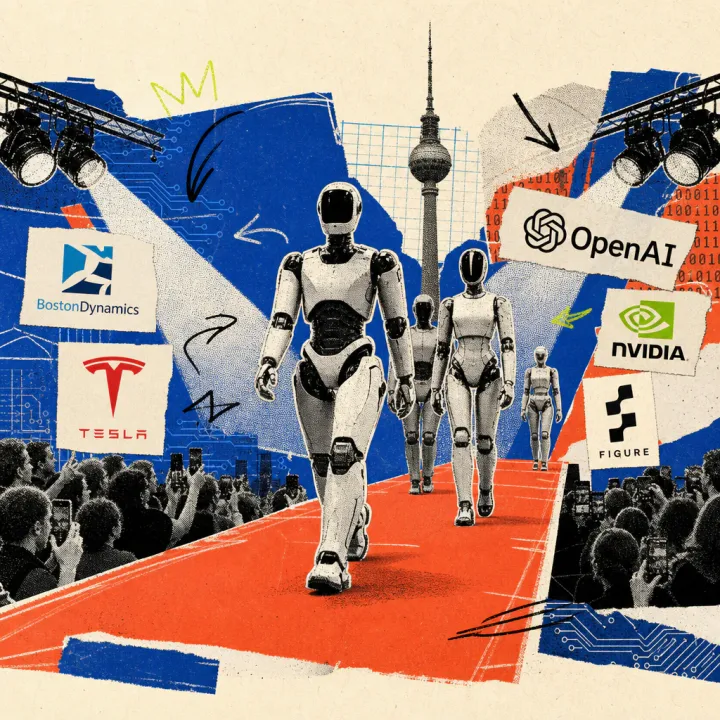
With this step, Agility would become the first publicly traded pure-play humanoid robotics company in the US – while Chinese rivals such as Unitree had already debuted on the Shanghai Stock Exchange in August, driving their market capitalization there to as much as 66 billion dollars within hours. At IFA in Berlin, Chinese exhibitors recently drew attention with around 300 humanoid robot models, while the US restricts comparable imports on security grounds.
What will matter is whether Agility can actually convert the promised 300 million dollars in orders into delivered revenue before shareholders vote on the SPAC merger. The combination of a still-unproven safety promise and an upcoming IPO makes Digit 5 a test case for whether humanoid robots can truly establish themselves in industrial daily life without a safety fence – or whether the promised cooperative safety still needs to be proven under real factory conditions.