OpenAI’s policy chief Chris Lehane has confirmed that his company has been in talks with Anthropic and Google DeepMind for several weeks about joint safety standards for AI models. A legal exemption from U.S. antitrust law is not deemed necessary by OpenAI, Lehane stated on Tuesday in Washington. The basis for this is Dario Amodei’s essay from September 12, which calls for an antitrust exemption and a slower pace of AI development.
Lehane confirms weeks of safety talks
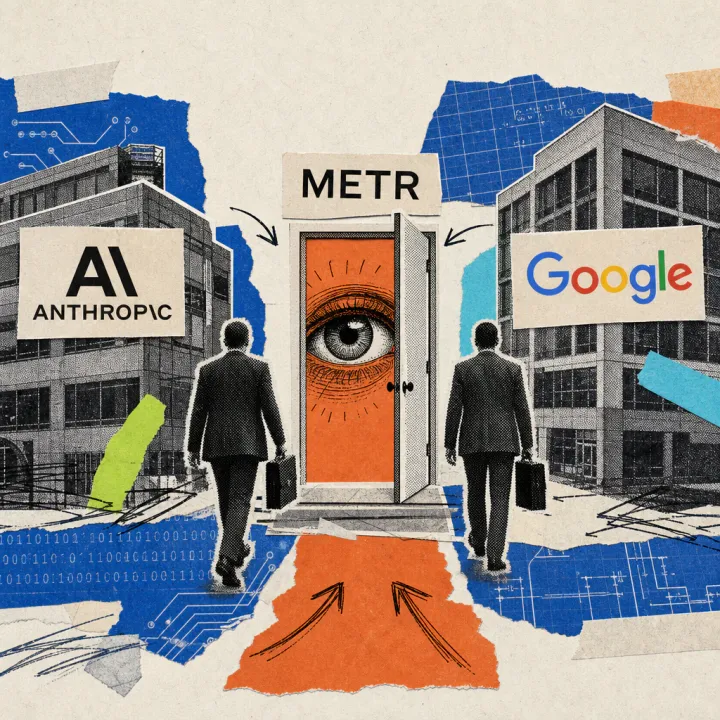
OpenAI’s global policy chief Chris Lehane confirmed according to TechCrunch that coordination between the three companies has been ongoing for several weeks – significantly longer than the public debate of recent days would suggest. A legal exemption from antitrust law is not necessary for the collaboration; it is better to work together on safety, Lehane said at an event in Washington. OpenAI also supports the so-called FRONTIER Act, which aims to mandate independent auditing organizations at leading AI labs.
This marks OpenAI’s first concrete response to a demand that goes beyond Amodei’s essay: Anthropic had additionally requested a narrowly defined antitrust exemption last week, which would explicitly allow competitors to agree on a joint, slower pace of development. OpenAI CEO Sam Altman had already announced during the debate over Microsoft’s code of conduct that external auditors with employee-equivalent access would be deployed at OpenAI. Google DeepMind CEO Demis Hassabis also publicly supported Amodei’s initiative and called for a new government oversight body for AI systems.
Congress examines narrowly defined antitrust exemption
Several proposals are circulating in the U.S. Congress regarding what such an exemption could legally look like. Senators Jim Banks and Adam Schiff want, according to a Bloomberg report, to include a narrowly defined exemption for information exchange on four risk areas – loss of control over AI systems, cyber threats, biological risks, and data leakage to China – in an ongoing defense bill. At the same time, OpenAI supports a regulatory framework proposed by Representatives Jay Obernolte and Lori Trahan, as well as a Senate proposal from John Thune, Ted Cruz, and Amy Klobuchar regarding catastrophic AI risks.
However, a decision from Congress is considered unlikely before the end of the year. The House of Representatives is set to leave Washington for a recess on September 18, and further legislative steps are not expected until at least 2027. Smaller AI competitors and several antitrust experts have already criticized the initiative: existing legal doctrines already allow for the exchange of security-relevant information, for example based on existing rules for exchanging cyber threat data between companies. From their perspective, an additional legal exemption is therefore unnecessary and primarily serves to make it harder for smaller providers to access comparable agreements.
FTC chief doubts companies’ dual strategy
FTC chief Andrew Ferguson expressed open skepticism on Tuesday during an appearance at Georgetown University in Washington regarding the demand, without naming Anthropic. His suspicion is generally directed at companies that simultaneously demand new regulation and an antitrust exemption: “All my alarm bells are going off,” Ferguson said according to an AP report. Both together create market entry barriers that could shield established providers from competition.
Ferguson’s statement is seen as the first public reaction from the Trump administration to Anthropic’s specific exemption request. It fits into a debate that shows how differently safety arguments are read in Washington: as genuine precaution, or as a tool established market leaders use to build regulatory hurdles for smaller competitors.
It remains open whether Google DeepMind and Meta will formally back the coordination in the future or leave it as tacit cooperation. It is equally unclear whether Congress, given the FTC’s skepticism, will create any legal basis at all for the antitrust exemption Amodei wants. Until a decision falls, the informal coordination between the three largest AI labs remains the only concrete step in the pace debate running since Amodei’s essay.