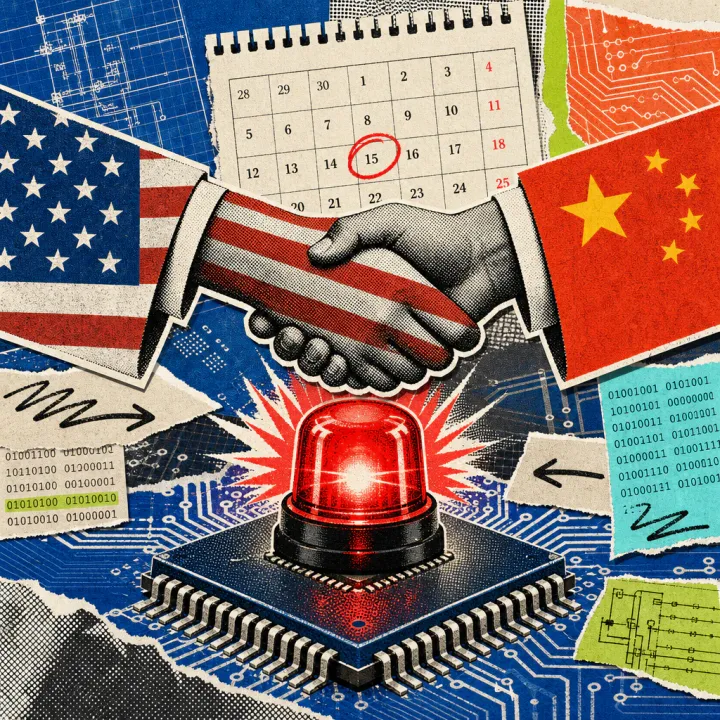
The USA and China officially confirmed the warning channel for AI incidents outlined four days earlier at the summit in Washington on September 24, 2026, and established their own dialogue on so-called superintelligence. According to the White House, the next exchange is scheduled for November 2026.
White House Names Its Own Superintelligence Dialogue
According to the White House, Donald Trump and Xi Jinping agreed at the state banquet in Washington on the “U.S.-China Super Intelligence (SI) Dialogue,” through which both countries will discuss the risks and benefits of advanced AI systems in the future. Additionally, both governments are establishing their own communication channel for so-called SI incidents – essentially formalizing the reporting mechanism that Treasury Secretary Scott Bessent and Vice Premier He Lifeng outlined four days earlier in New York. Washington has not yet disclosed what specifically qualifies as an SI incident and which authorities will operate the channel. The next exchange under the new format is to take place by November 2026 at the latest. This is the first named AI dialogue mechanism between the two governments since their AI rivalry intensified in 2022.
Xi Urges Human Control, Trump Rejects Joint Rules
The two heads of state clearly represented different positions at the meeting. Xi Jinping stated, according to the state news agency Xinhua, that humans must “retain control over AI technology,” associated with a human-centered approach. Trump, on the other hand, explicitly rejected joint development or regulation of top models with China: the USA is far ahead in the AI race, and a linkage of both sides’ AI efforts is out of the question for him. On his platform Truth Social, he also stated that the issue of AI security should remain exactly as it is – a stance that aligns with his recently announced federal agency AI Force without binding rules. According to Chinese sources, the AI dialogue was part of an eight-point consensus from the summit, which Beijing says also included a reduction of mutual tariffs by $30 billion; this tariff figure has not been independently verified.
Second Channel Alongside China’s Own AI Alliance
The new bilateral dialogue comes alongside China’s own multilateral AI diplomacy: in July, Beijing had already established an alliance with 29 other states through the World AI Cooperation Organization, in which Washington is not involved. Chip export controls were again reportedly left out – a point of contention that has remained unresolved since the US allegations against several Chinese AI companies for alleged model copying. Xi thus became the first Chinese head of state to visit US soil since 2017; the summit followed the eight-hour preliminary talks between Bessent and He Lifeng at JPMorgan’s headquarters in New York.
It will be crucial whether the named dialogue format actually produces defined reporting thresholds and responsible authorities by the next meeting in November – or whether the name suggests more substance than has been agreed upon so far. It also remains open how Xi’s call for human control will square with Trump’s rejection of joint rules in the practical context of a specific incident.