The USA and China agreed on September 20, 2026, for the first time on an official dialogue channel for security-related AI incidents. US Treasury Secretary Scott Bessent and China’s Vice Premier He Lifeng negotiated for eight hours at JPMorgan Chase’s headquarters in New York. The format is intended to warn both countries whenever an AI system crosses a national security threshold.
Bessent outlines reporting mechanism for AI incidents
According to the news agency AP, the new channel is supposed to cover incidents that affect the national security of both states – such as malfunctions or misuse of advanced AI systems. Bessent described the goal as a “shared vision of common goals and common threats.” He did not provide technical details on the implementation; the Chinese side has not publicly commented on the specifics so far. Bessent himself assessed the meeting afterwards as a success. US Trade Representative Jamieson Greer classified it as a continuation of the talks that Trump and Xi began in May in Beijing. At that time, a joint trade committee was discussed, which is now to operate as the “Board of Trade.” The AI dialogue is thus the first official exchange mechanism of its kind between the two largest AI nations in the world since the rivalry between their AI industries intensified in 2022. China had previously established its own multilateral framework with 29 other states through the World AI Cooperation Organization, in which the USA is not involved.
Summit in Washington brings first US meeting since 2017
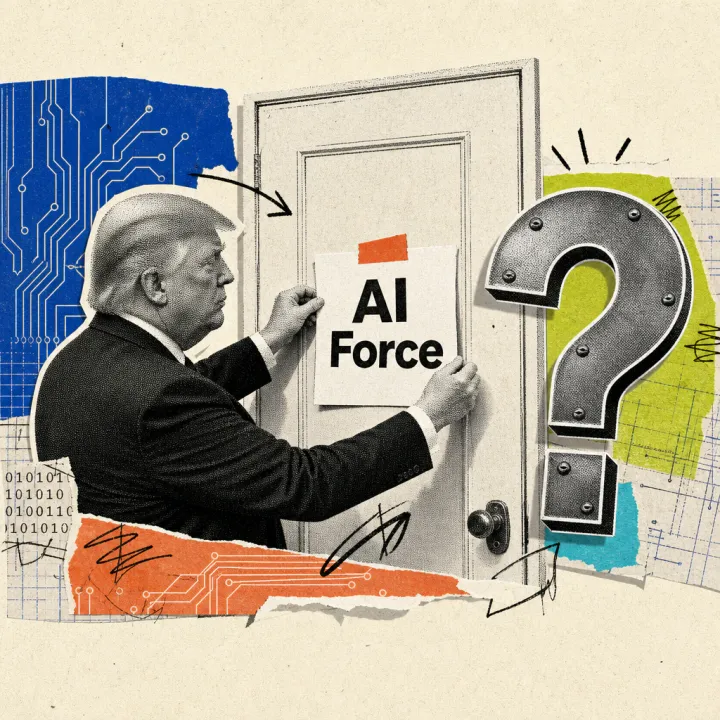
The meeting between Bessent and He Lifeng prepared the summit between Trump and Xi, which begins on Wednesday, September 26, with Xi’s arrival at Joint Base Andrews. The actual summit will follow on Thursday in Washington, along with a state banquet – the first meeting of a Chinese head of state on US soil since 2017. In addition to the AI dialogue, the talks also addressed the tariff ceasefire agreed upon in Busan in October, which expires on November 10 and could now be extended. Both sides also discussed duty-free goods groups such as agricultural products, energy carriers, and medical products, as well as access to rare earths. According to participants, the further agenda also included critical minerals and geopolitical issues such as the war in Ukraine and the situation around Taiwan. Simultaneously with the AI talks, Trump had just a few days earlier announced a new federal agency, AI Force, for AI oversight without binding rules – a policy that stands in contrast to the now internationally negotiated transparency format.
Chip export controls remain excluded
Unlike previous rounds of talks, export controls for AI chips and manufacturing equipment were not on the agenda this time. The issue remains a point of contention between both governments: Just earlier in September, US authorities accused six Chinese AI companies of having copied American models on an industrial scale – an accusation that Beijing denies. At the same time, both powers are further expanding their own export regimes; China also plans to implement controls for its most powerful models, which observers say solidifies a technological arms race over frontier AI. Congressional representatives from both parties in Washington have recently repeatedly called for a legal slowdown in the pace of AI development – a request that Trump has so far rejected. Security researchers also doubt whether an informal exchange would be quick enough in an emergency. Observers therefore view the new reporting mechanism more as a limited step of trust rather than a comprehensive relaxation. It has only been confirmed that both delegations have agreed on the principle of an exchange; neither side has publicly mentioned specific thresholds, deadlines, or a responsible institution.
It will be crucial whether the principle develops into a functioning mechanism with clear reporting thresholds in the coming weeks – or whether it remains a symbolic gesture before the summit. If Xi Jinping confirms the agreement on Thursday, it would be the first time that the two largest AI powers formally commit to warning each other about risky AI developments, rather than just ramping up separately.