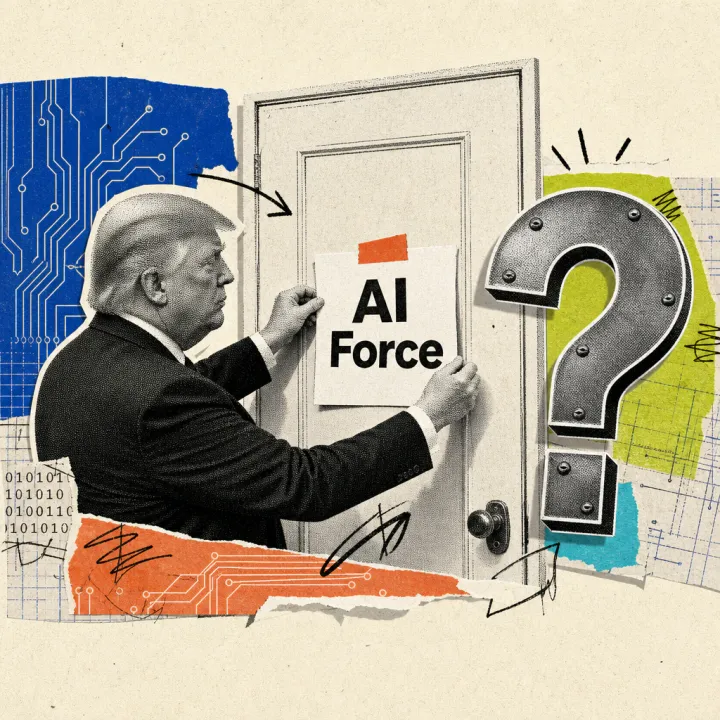
The White House discussed its months-prepared review regime for AI models on August 4, 2026, with leading tech companies – however, the framework will not be published. Only closed top models from OpenAI, Google, Anthropic, Meta, and Microsoft are affected. Open AI models remain completely exempt from the review obligation.
Review regime applies only to closed top models
The basis is Trump’s executive order from June 2, 2026, which provides for a voluntary 30-day advance access for the government before particularly powerful models are released – as was already evident with the release of GPT-5.6 Sol. The responsible body is the Center for AI Standards and Innovation (CAISI), a testing facility within the standards authority NIST. The government missed the originally set deadline of August 1. Only on Tuesday did it meet with Meta, Nvidia, Microsoft, OpenAI, and Anthropic to present the finished regulations. The review will specifically assess how well a model identifies and exploits real vulnerabilities – those cyber capabilities that had previously driven several AI systems unauthorized into foreign corporate networks during internal security tests. The decree explicitly excludes a licensing requirement – companies decide for themselves whether to have their models reviewed in advance. Whether and in what form the government will make individual test results public is not regulated by the framework as far as is currently known. For companies with closed top models, this primarily means planning effort: anyone wanting to release a new model generation must now factor in the regulatory lead time of up to 30 days.
Open models remain completely unregulated
Anyone who publicly releases their model weights is not subject to the new review obligation – regardless of how powerful the system is. National Cyber Director Sean Cairncross justified the exception by stating that the government wants to strengthen domestic open-source development. According to him, US models should become the “preferred choice worldwide.” Practically, this also benefits Chinese providers: Moonshot’s Kimi K3 and DeepSeek’s V4-Flash reportedly operate completely outside federal review because they disclose their weights. This creates a competitive disadvantage for US companies with closed models, which critics describe as a structural imbalance. Providers like OpenAI or Anthropic will have to build review infrastructure and plan for delays of up to 30 days, while open developers can publish directly without this hurdle. Observers therefore speak of a speed advantage through regulatory circumvention – anyone who discloses their weights bypasses the review obligation regardless of the provider’s country of origin. For companies choosing between open and closed models, review status thus becomes an additional decision criterion alongside performance and price.
Secrecy intensifies criticism of the process
The decision not to disclose the finished framework additionally causes discontent. Chris McGuire from the Council on Foreign Relations summed up the objection: “We can’t have secret, voluntary rules to regulate the most important tech in the world.” The criticism is intensified by the fact that CAISI has been run provisionally since the resignation of its head Chris Fall at the end of July – the third personnel change at the top of the agency since March. Exactly what the review criteria and thresholds look like, above which a model is considered a risk, remains known only to the involved companies for now. There has been no public reaction from the industry itself regarding the details of the presented procedure, although representatives of all five invited companies attended the Tuesday meeting.
It will be crucial whether the exception for open models holds should Chinese competitors noticeably gain market share in the US through this loophole. The government has not yet given a timeline for a possible tightening or a later publication of the framework.