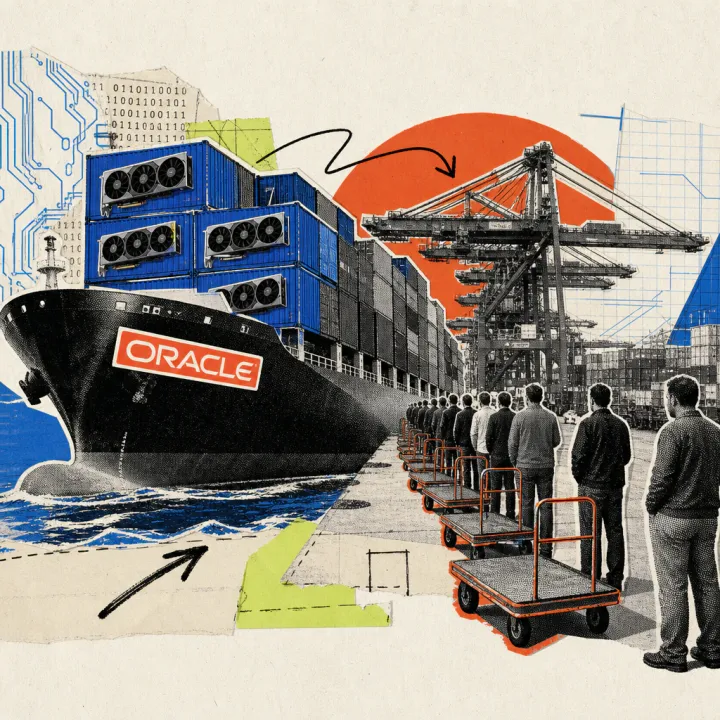
Amazon has raised its planned investments in data centers and artificial intelligence for the current year from $200 billion to $220 billion. The company announced this on Thursday when presenting its quarterly figures and referred to rising prices for memory chips. At the same time, profits tripled to $62.6 billion, mainly thanks to capital gains from its stake in Anthropic.
AWS is growing faster than it has in four years
The company’s revenue increased by 20 percent in the second quarter to $200.6 billion, and operating profit climbed by 43 percent to $27.5 billion. The North American business grew by 16 percent, while the international business grew by 15 percent. However, the main driver was the cloud division AWS: according to the quarterly figures published on Thursday, it grew by 36.7 percent to $42.2 billion – the fastest growth in 18 quarters, or more than four years. The operating profit of AWS increased by 63 percent, and the margin reached 39 percent. According to Amazon, the AI and chip businesses of AWS each reached an annual rate of more than $25 billion. The order backlog of the division grew in the triple-digit percentage range to $496 billion. This contractually bound future demand shows how strongly corporate customers continue to rely on Amazon’s cloud and AI capacity, even though competition from Microsoft and Google is vying for the same customers. The free cash flow of the past twelve months fell into the negative due to high investments.
Rising memory chip prices drive investment forecast
Amazon justifies the increase in capital expenditures by $20 billion primarily with rising prices for memory chips, according to a report by Fortune. The effect affects the entire industry: as beckmann.ai has already reported, Samsung has also raised its prices for AI memory chips by up to 20 percent because manufacturing capacities for HBM4 components are tight; market researchers expect a doubling of contract prices for such memory chips by 2027. These costs directly impact the construction of new data centers, as modern AI accelerators rely on particularly large amounts of high-performance memory. Even with the higher budget, Amazon will not be able to fully meet the demand for computing capacity this year, admitted CEO Andy Jassy according to CNBC. The same capacity gap is expected to persist in 2027. Notably high demand is already emerging for 2028, even though Amazon has not yet provided any figures for this. For corporate customers, this means longer wait times for new cloud capacity and possibly higher prices for computing power, should the bottleneck continue as announced until at least 2027.
Record profit raises valuation questions
Net profit rose from $18.2 billion to $62.6 billion. However, a large part of the jump does not come from the operational business but from a non-operational special effect of $53.4 billion, which Amazon mainly attributes to capital gains from its stake in Anthropic. The effect falls in a week when investors are critically questioning the AI spending of the entire industry: after comparable quarterly figures, the stocks of Meta and Alphabet temporarily fell significantly because investors doubted the short-term returns of the investments. As beckmann.ai has already reported on a stock sell-off at the Nasdaq, this skepticism has grown in recent weeks. Amazon’s operational AWS growth initially dampened the concern, but the predominantly accounting-based profit jump is unlikely to be repeated in this form.
It will be crucial whether the higher expenditures translate into measurable revenue growth before investors become impatient. Amazon itself had only admitted in July in an internal presentation that individual AI projects exceeded their budget by up to 860 percent – a contrast to the now aggressively communicated growth strategy. The next test will be the third quarter, for which Amazon is projecting revenue between $197 billion and $202 billion.