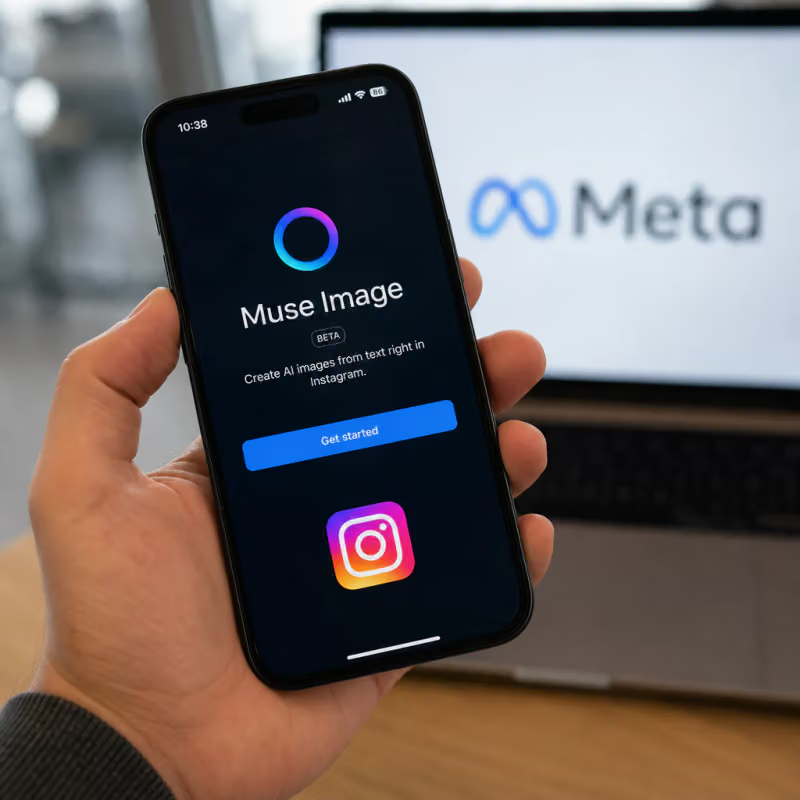
Meta has turned off a controversial feature of its AI image generator Muse Image. Users could reference other people's public Instagram accounts through an @-mention and pull their photos into newly generated AI images.
The reversal came just three days after launch, following criticism from users and the talent agency CAA.
Feature referenced other people's photos without consent
Meta introduced Muse Image on July 7, 2026, as a standalone image model for Instagram, Facebook, and WhatsApp. One of its advertised capabilities let users include any public Instagram account as a visual reference via @-mention.
The system drew on that account's publicly visible photos without notifying the person concerned or requiring their consent.
As TechCrunch reports, this potentially affected every public profile on the platform, regardless of whether the account holder wanted their images used that way.
The only real protection for those affected was to make their account fully private. There was no targeted opt-out against the reference function alone.
The controversy extends an already running debate about Muse Image: at launch, Meta had already made public photos available for AI image purposes by default unless users actively objected. The @-mention feature sharpened that underlying problem further, since it could place someone else's content into new image contexts against their will.
Talent agency and users criticize lack of control
Within days, complaints about the feature piled up. Users pointed out that photos of celebrities, as well as private individuals, could be dropped into new, potentially misleading image contexts with no meaningful barrier.
Critics saw it as an opening for image montages that placed people in situations that never happened.
According to TechCrunch, the talent agency CAA, which represents numerous actors and musicians, also raised concerns about the potential for misuse in non-consensual image montages. For public figures with wide reach, the risk weighs especially heavily, since their photos are already broadly visible.
The criticism hit a sore point: users had never actively requested the feature but had to defend themselves against its consequences.
Observers outside the US picked up the story too. Several how-to articles explained in the days after launch how to protect accounts from the automatic use of their own photos – a sign of how many people felt affected by the feature despite never having used Muse Image themselves.
Meta reacts quickly to public pressure
Meta confirmed the shutdown through a statement published by journalist Dylan Byers on X. The company said its intent had been to provide a useful creative tool that also gave people control over whether their public content could be referenced this way.
It had heard feedback that the feature "missed the mark," which is why it is no longer available.
Muse Image itself remains in place as an image generator; only the account-reference function is affected. How many images were generated with references to other accounts during those three days is independently unverified.
The gap between launch and reversal ranks among the shortest for a major Meta AI product feature this year, and shows how quickly public pressure now shapes product decisions.
Whether Meta brings the feature back in a revised form with explicit consent from referenced accounts, or drops it altogether, remains open. The episode also shows how narrow the gap has become between a product launch and public pressure for generative image tools.