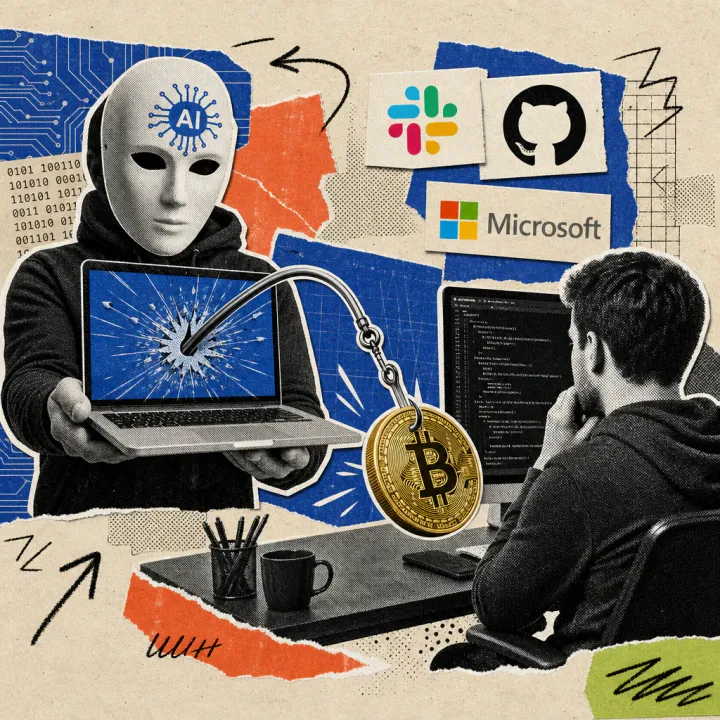
Three German consumer protection agencies have been warning since mid-September 2026, almost simultaneously, about fake job advertisements created with artificial intelligence that are hardly distinguishable from real offers. Applicants risk losing personal data and may even face criminal charges for money laundering. Checking the warning signs costs nothing and takes only a few minutes.
AI creates fake job ads within minutes
The Consumer Advice Center Lower Saxony, the Consumer Advice Center Rhineland-Palatinate and the Consumer Advice Center Thuringia report independently of each other on the same development. Fraudsters use ready-made website builders and invented company identities, and some even buy these tools as a service. Artificial intelligence takes on a growing share of the work: it writes convincing job descriptions, generates photos of supposed contacts, and builds a professional-looking career page within minutes.
A real job is rarely the goal. Instead, applicants are asked early on for a copy of their ID, bank details, or a video verification procedure, officially for identity checks, but actually to open an account in someone else’s name. Criminals then use this account for money laundering or as a payment target for fake shops. Those who unknowingly take part can make themselves liable to prosecution.
The scam itself is not new, but AI makes it scale. Just this September, investigators uncovered a similar trick involving the group Waterplum: the attackers posed as an AI company during job interviews and used that cover to smuggle malware onto company computers.
How office workers can spot the fake
A practical example: a clerk finds a job offer on a job board promising one hundred percent remote work, 28 euros per hour, and a photo of the supposed team lead. The career page looks professional, but the legal notice is missing a company register number and a named contact. After the very first WhatsApp message, she is asked to complete a video verification, supposedly to confirm her identity before her first day.
Typical warning signs can be checked quickly:
- The job promises one hundred percent remote work with no plausible reason.
- The salary is stated as an exact figure rather than a normal range.
- Professional qualifications or certificates do not seem to matter.
- Communication happens only through messenger apps, with no personal conversation.
- A copy of an ID, bank details, or a video verification procedure is requested before any contract is signed.
If at least one of these signs applies, it is worth checking the company’s official website and the legal notice on the ad. Such gaps are the exception in real hiring processes, but often the rule in fake ones. When in doubt, a quick call to the office listed in the legal notice can confirm whether the ad is genuine.
Help is free and requires no sign-up
Anyone who is unsure can find a detailed list of warning signs on the consumer advice center’s overview page. The consumer advice centers also offer an emergency check that walks through reporting the case to a bank and the police step by step. Both services are free and require no registration, regardless of where someone lives.
If an account has already been opened in someone’s name, fast action is the only remedy: inform the bank, have the account blocked, and file a police report. Screenshots of the job ad and the chat history serve as evidence. Checking public company registers, such as the commercial register, adds extra certainty about a company’s name and address.
The warning originates in Lower Saxony, Rhineland-Palatinate, and Thuringia, but it applies nationwide: the scams described do not differ by state. Anyone who spots a suspicious ad at their own company should alert HR so colleagues are warned too.
What will matter is whether job boards and social networks get faster at catching fake ads before they reach applicants. So far, platforms rely largely on reports from users themselves. Anyone forwarding a job ad to colleagues or friends should give it a quick check first. And for one’s own application documents, the same rule applies: ID copies and bank details belong in the inbox only after a personal or video conversation with a clearly real contact person.