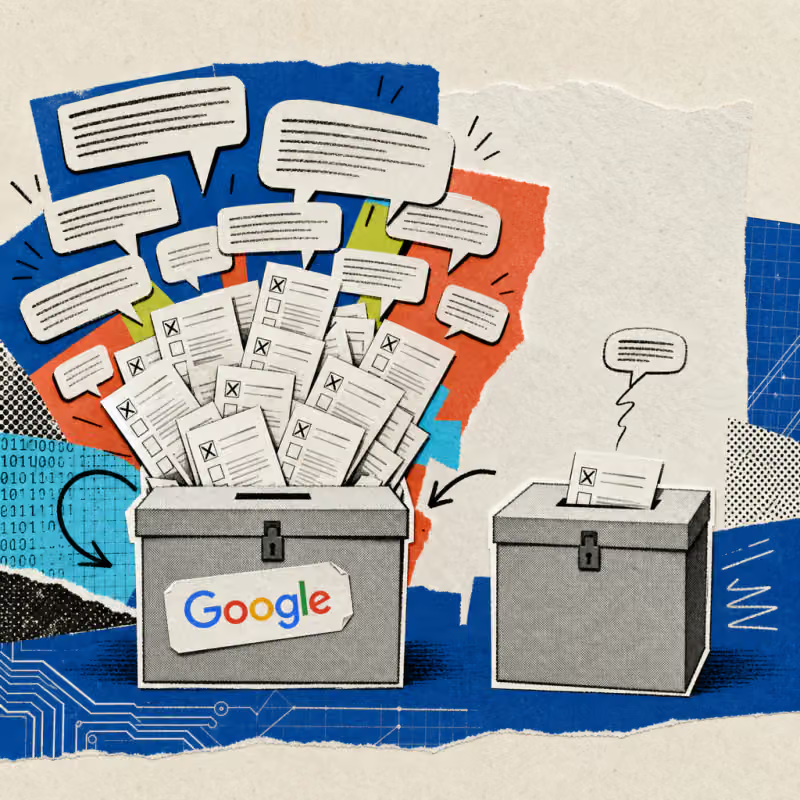
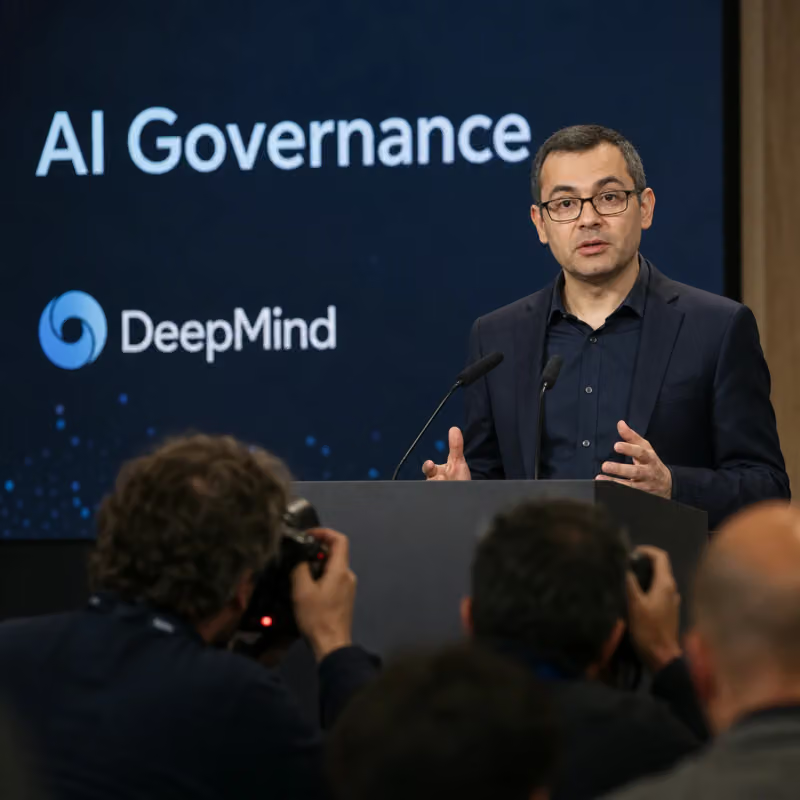
Google DeepMind CEO Demis Hassabis is calling for a new, independent oversight body for frontier AI models. In an essay published on Tuesday, he proposes a "Standards Body" modeled on the US financial regulator FINRA that would review models up to 30 days before their release.
The proposal is also meant to serve as an international template.
Standards Body Would Test Models Before Market Launch
According to Hassabis, the planned body would only review models that exceed a certain performance threshold and thus qualify as "frontier-class." This would affect leading providers regardless of country of origin or whether a model is openly or closed licensed.
Startups and academic projects without frontier models would be exempt from the review requirement.
Initially, providers would voluntarily submit their models for review up to 30 days before launch. After a validation phase, participation would become mandatory.
According to the concept, testing would cover cybersecurity risks, biological threats, and the ability of AI agents to bypass or deceive safety guardrails, among other things. The benchmarks used would be updated quarterly, and in the long run independent test batteries that are not publicly known are planned to prevent overfitting to known review procedures.
The Standards Body would be funded mostly by industry itself but led by a majority-independent board of experts, representatives of open-source projects, and safety specialists. According to Hassabis, the body could also coordinate slowdowns in model development if necessary.
Criticism of Past Government Reviews Drives the Proposal
Hassabis' proposal builds on previous, informal reviews by the US government. Before the release of Anthropic's Mythos model and OpenAI's Sol model, federal agencies had already conducted safety assessments.
However, these processes drew criticism because, according to TechCrunch, they lacked both technical expertise and transparency. The results of the reviews were reportedly never fully published.
A permanent, independent body is meant to close this gap and establish repeatable, traceable review processes, rather than evaluating each model individually and without fixed rules. In a separate interview with Axios, Hassabis said the Standards Body could be operational before the end of the current year.
He justifies the urgency with a narrow time window: within about eighteen months, dangerous biological or nuclear capabilities could also appear in openly accessible models if reliable review mechanisms were lacking.
FINRA, which oversees securities trading in the US and is funded mostly through fees from the companies it supervises, serves explicitly as the reference model. Unlike a classic government agency, FINRA is organized under private law but operates with a government mandate.
Hassabis wants to apply this model to the AI industry.
White House Has So Far Rejected Central AI Oversight
The proposal meets a government that has so far been skeptical of central AI oversight. Sriram Krishnan, the outgoing White House tech adviser, had already said in early July in an interview with the Financial Times that there would be "no FDA for AI." A mandatory licensing review would, in his view, mainly create bureaucracy.
In his view, it would slow technological development without meaningfully increasing safety.
Hassabis explicitly positions his proposal as technically focused, voluntary in its initial phase, and supportive of innovation, in order to address exactly this criticism. The predominantly industry-based funding and the renunciation of a classic licensing requirement are meant to lower the hurdle for political approval.
Whether the Trump administration would assess such a voluntary, industry-close review body differently than a state licensing authority remains open.
Leading providers such as Anthropic and OpenAI have not yet publicly commented on the concrete proposal. Both companies had, however, already subjected their most recent flagship models to the criticized, informal government reviews that Hassabis is now responding to.
What will matter is whether other major providers join the voluntary review process before a legal requirement is even up for debate. Without broad participation from competitors, the Standards Body would for now remain an offer from Google DeepMind to itself.
An early test of the idea is likely to come with the next generation of models from major US providers, expected by the end of the year.