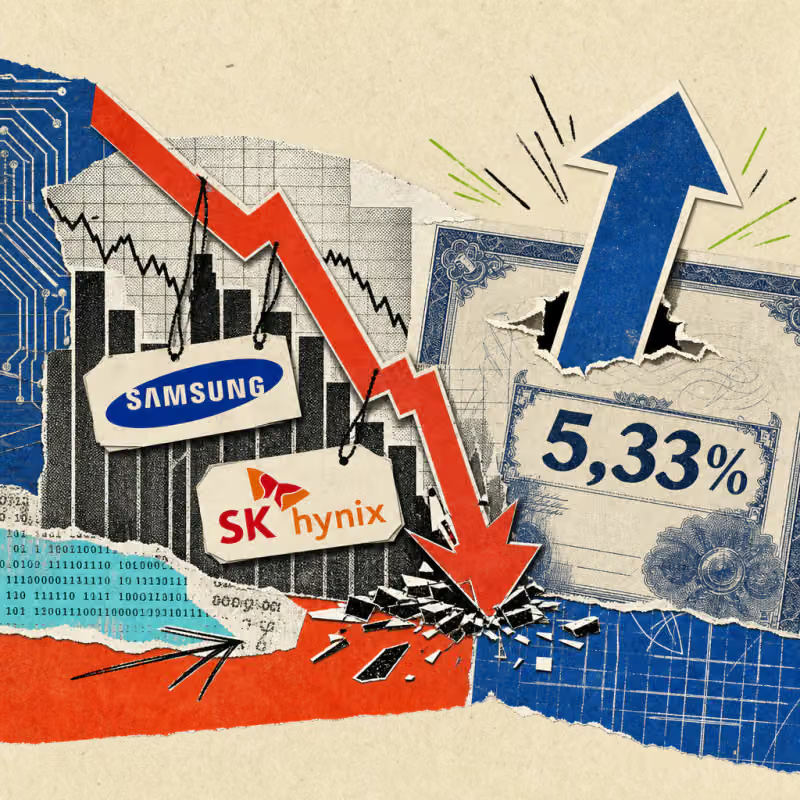
The yield on thirty-year U.S. Treasury bonds rose to 5.33 percent on Tuesday, the highest level since 2007. The increased financing costs triggered a sell-off in memory chip stocks in Asia on Wednesday: South Korea's benchmark index, the Kospi, lost about six percent, while Samsung Electronics and SK Hynix fell by 7.5 and nearly ten percent, respectively.
Kospi records largest daily loss in weeks
The Kospi opened on Wednesday down about five percent and briefly dropped to 6,401 points during trading, the lowest level in a week. Samsung Electronics and SK Hynix together account for nearly half of the Kospi index weight.
The futures exchange activated a five-minute selling sidecar for Kospi-200 futures, the 25th this year, after the futures fell by more than five percent. Foreign investors sold stocks worth approximately 790 million dollars, while institutional investors withdrew 168 million dollars.
In contrast, retail investors bought around 935 million dollars, pushing back against the trend.
The sell-off extended beyond Korea. According to Investing.com, Japan's SoftBank Group fell by more than ten percent, memory chip manufacturer Kioxia dropped about 13 percent, and chipmaker Renesas fell by nine percent.
In China, SMIC and Hua Hong Semiconductor declined by six and 13 percent, respectively. On Tuesday, U.S. stocks like Micron and SanDisk recorded significant losses of minus seven and minus nine percent, while Nvidia dropped about 2.3 percent.
Just at the end of July, the industry had already gone through a similar sell-off at Nasdaq, triggered by doubts about the returns on AI investments themselves rather than on capital costs.
Record issuance of corporate bonds drives interest rates
The rise in bond yields is fueled by several sources simultaneously. U.S. companies have already issued bonds worth nearly 1.7 trillion dollars this year, an increase of 27 percent compared to the previous year – a significant portion of this finances the construction of AI data centers.
Additionally, there is a growing U.S. budget deficit, which stood at 432.3 billion dollars in July alone, marking the highest value for that month since 2021, as well as rising oil prices due to the expired deadline for a U.S.-Iran agreement.
Ian Lyngen from BMO Capital Markets attributes the movement to the interplay of these factors: the record pace of corporate bonds has provided the U.S. bond market with noticeably additional supply. Anshul Pradhan from Barclays Capital also points out that three economic data points this month would have actually suggested falling yields – yet long-term rates have still risen.
Meanwhile, the U.S. Federal Reserve, chaired by Kevin Warsh, is keeping its key interest rate at 3.50 to 3.75 percent; since the low at the end of June, the thirty-year yield has risen by more than 40 basis points.
SoftBank plans record bond for Japanese retail investors
Amid the sell-off, a report emerged about SoftBank's financing plans: Investing.com reports that the technology investor is preparing a bond of around one trillion yen, equivalent to 6.3 billion dollars, for retail investors in Japan.
It would be the largest retail bond ever issued by a Japanese company. The terms are expected to be finalized in early September, with a proposed interest rate in the upper range of four percent for a seven-year term.
According to the report, SoftBank stated that the information did not come from the company itself and declined to comment further – the specific figure is thus considered independently unverified. The company had previously repeatedly used loans, bonds, and equity sales to finance its investments in AI stakes like the chip designer Arm, aligning itself with the industry-wide trend of debt financing for AI expansion, which is also behind the overall rise in interest rates.
It will be crucial whether the U.S. Federal Reserve reacts to the rising long-term rates or allows the financing costs for AI expansion to continue climbing. If the thirty-year yield remains permanently above five percent, cloud providers and memory chip manufacturers may need to recalculate their planned investment budgets for 2027 – a development that could be seen earliest in the next quarterly results from Samsung and SK Hynix.
This article is journalistic reporting, not investment advice.