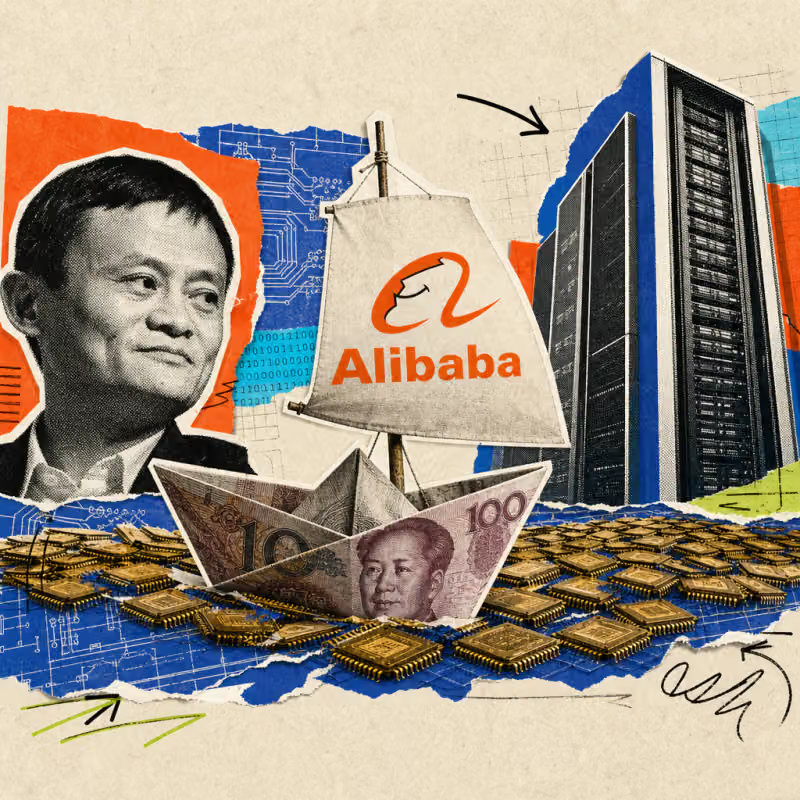
Alibaba places new shares worth approximately $10.2 billion on the Hong Kong Stock Exchange on August 23, 2026. The Chinese technology company intends to invest all net proceeds into its own chips, data centers, and AI models. This is the largest follow-on share sale by a company listed in Hong Kong.
Placement funds the entire AI stack
Alibaba issues 710 million new shares at HK$112.70 each, a discount of 3.6 percent to the last closing price, as stated in a stock exchange announcement.
The total volume is around HK$80 billion. Settlement is scheduled for August 26, 2026, subject to customary closing conditions.
The company frames the move as strengthening its global leadership in artificial intelligence: the capital flows entirely into the complete AI stack, from proprietary processors to data centers to further development of in-house models like Qwen3.8.
US investors are excluded from the offering, since it is conducted solely outside the United States and is not registered under US securities law. Morgan Stanley, HSBC, UBS, and CICC are acting as bookrunners for the placement, as reported by Reuters.
The agency also ranks the volume as the third-largest capital raise by a publicly traded company worldwide this year, behind offerings from Alphabet and Intel – a classification that is not independently verified. Demand from institutional investors, including sovereign wealth funds, was reportedly strong.
The originally planned volume was increased after oversubscription. The shares are placed exclusively in Hong Kong, where Alibaba has held a second primary listing since 2019 alongside its listing on the New York Stock Exchange.
Quarterly profit falls on heavy investment
The placement follows quarterly results from August 20: revenue rose 9 percent to 268.95 billion yuan in the April-June quarter, while capital expenditure jumped 75 percent to 67.7 billion yuan – about $10 billion. Net profit fell 75 percent over the same period, as reported by Bloomberg.
CEO Eddie Wu argues the company must first build enough computing capacity to capture future growth at all. Once in-house chips replace externally purchased processors, he expects substantially higher gross margins and profitability.
Wu expects the AI capital spending to break even within three years at current average gross margins. Cloud revenue grew 45 percent in the quarter, and AI product revenue posted triple-digit growth for a twelfth consecutive quarter, according to the company.
For 2026 through 2029, the group has budgeted a total of 380 billion yuan, roughly $56.4 billion, for AI expansion. About half of that has already been spent as of the current quarter. The fresh proceeds from the share placement add to this ongoing budget rather than replacing it.
Investors reacted cautiously: Alibaba shares fell as much as 2.5 percent on the day of the announcement. What remains open is whether Wu's break-even forecast holds once in-house chips actually replace the processors currently bought from outside suppliers in Alibaba's data centers – and whether other Chinese tech companies follow suit and route fresh capital straight into their own AI infrastructure.