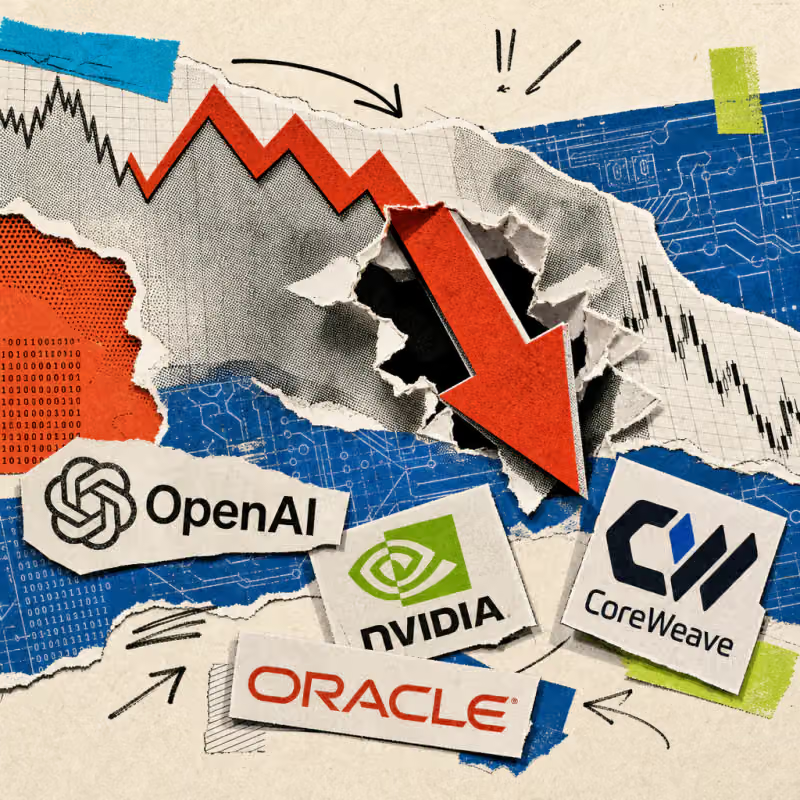

Update, August 14, 2026: Oracle is preparing another round of job cuts to help fund its AI buildout, due to take effect before September 1, according to a Business Insider report. Capital expenditure rose to $55.7 billion in fiscal 2026, with the funding gap covered by $43 billion in new debt.
Rating agency S&P Global downgraded Oracle's creditworthiness from BBB to BBB- on July 9, 2026, just one notch above junk status.
S&P cites Oracle's growing dependence on OpenAI, which by its own estimate accounts for roughly half of the company's outstanding order backlog. Oracle shares lost more than six percent on July 13.
Half the Order Backlog Rests on One Customer
S&P bases the downgrade on the concentration of Oracle's order backlog in a single large customer. The outstanding order backlog, known in financial terms as Remaining Performance Obligations, stands at roughly $638 billion.
About half of that, according to the rating analysis, comes from contracts with OpenAI. Should the company fail to meet its payment obligations, S&P analysts Andrew Chang and Christian Frank estimate Oracle would be left holding long-term data center leases.
These could hardly be canceled on short notice. Handing them to new tenants would only be possible on markedly worse terms.
Oracle signed a multibillion-dollar infrastructure deal with OpenAI last year. The deal made the company its biggest growth driver over the past twelve months, but also its largest concentration risk on the balance sheet.
Credit-default-swap premiums on Oracle bonds already rose noticeably after the contract was signed, climbing to roughly 184 basis points, an early warning sign from bond markets. S&P had already set Oracle's rating outlook to negative beforehand, signaling early on that the agency was watching the growing reliance on one large customer with concern.
Spending Plans Double the Expected Cash Shortfall
The rating agency's second concern involves Oracle's pace of investment in AI infrastructure. S&P expects fiscal 2027 capital expenditure of $90 to $95 billion, well above the previously forecast $60 billion.
At the same time, the projected free operating cash-flow deficit has nearly doubled to about $42 billion, up from an earlier estimate of roughly $24 billion. That figure rests on S&P's own model and has not been independently verified in full.
To close the gap, Oracle plans a $20 billion capital raise later in 2026. Additional debt and equity financing worth several tens of billions of dollars is expected over the next three years.
Oracle already issued $5 billion in mandatory convertible preferred stock in February 2026. Total debt now stands at roughly $160 to $167 billion. S&P expects the leverage ratio to climb to about 4.5 times earnings before interest, taxes, and depreciation by fiscal 2027, up from 3.3 times a year earlier.
Apple's Lawsuit Adds Further Pressure on the Stock
Investors initially shrugged off the downgrade: Oracle shares even edged higher after the July 9 announcement. Sentiment shifted on July 13, when the stock fell more than six percent and briefly touched a fresh 52-week low of around $132.
Over the past month, the shares have dropped roughly 28 percent. Investment outlet Motley Fool cites Apple's lawsuit against OpenAI over alleged theft of trade secrets as an added drag, arguing it fuels fresh doubts about OpenAI's financial stability.
Investors worry the legal dispute could weaken the startup's ability to meet its multibillion-dollar payment obligations to Oracle. News outlet 24/7 Wall St. also points to this link and quantifies the stock's monthly decline.
Over the same period, Apple posted sizable gains, according to Bloomberg, as investors shifted some capital out of more AI-exposed names like Oracle and into seemingly safer technology stocks.
Oracle vice chairman Jeffrey Henley had already sold large blocks of stock in late June at prices between $156 and $165, well above the current level. The slide continued: Oracle kept losing ground in the AI Stock Week roundup from August.
The credit story is not the whole picture, though: our coverage of Oracle's first-quarter fiscal 2027 results tracks how its underlying cloud business has performed since.
The key question is whether Oracle can place its planned $20 billion capital raise on manageable terms without heavily diluting existing shareholders. Should its credit rating fall another notch, Oracle would for the first time in its history be rated as junk debt, with markedly higher financing costs for future data center projects.
The episode illustrates how tightly the balance sheets of major cloud providers are now intertwined with the solvency of individual AI startups.